2 minutes ago
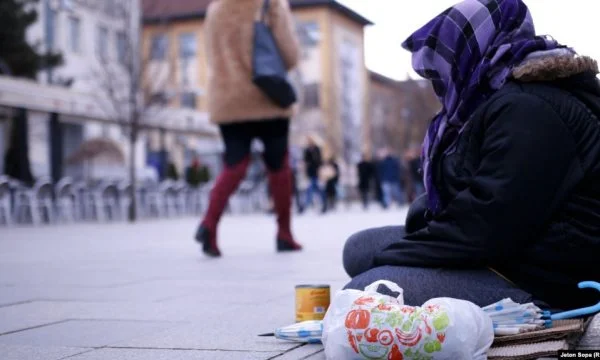
Pandemia boosts poverty rate in Kosovo
Periskopi(6 years ago)
(6 years ago)The situation, created in Kosovo by the pandemic COVID-19, has contributed to job loss, decline in economic activity and resulting growth in the poverty scale. In Kosovo, data from some mechanisms shows that the number of families entering the category of poor families has increased during this time. According to [...]
In Kosovo, data from some mechanisms shows that the number of families entering the category of poor families has increased during this time.
According to data from the Ministry of Finance and Transfers sent to Radio Free Europe, it is confirmed that during March, May, during the time when Kosovo has faced the pandemic and corruption, the number of households with social assistance has increased to about 700.
“According to May data, users of social assistance in Kosovo are 24,864 families, which compared to March 2020, the number of households has increased for 666 families”, says Finance and Transfers Ministry spokesman Muharrem Shahini.
The amount of resources these families receive from the Kosovo government is between 50 and 150 euros a month, depending on the number of members.
About 70 thousand families apply to receive 130 euros in assistance from Emergency Pack
On 16 April, Kosovo's incumbent Government has begun applying the 15th measure of the Fiscal Emergency Pack, which envisions 130 euros for two months (April and May) monthly assistance to families that have no employees.
To benefit this 130-euro assistance, Muharrem Sahini from the Ministry of Finance says the number of families who need assistance and do not have income is very high.
“Based on data collected by the Centres for Social Work in Kosovo, the number of families that have applied to benefit from the Emergency Package (help of 130 euros) is about 70 thousand households, of them recorded 20,000 families, since not all of these families that have applied can result from no income, with 5,500 having received their income from 130 euro<x>, says Shahini.
The increase in the number of poor families during pandemic time also confirm on the Kosovo Red Cross.
Antigona Soopyan, co-ordinator for social welfare in the organisation, tells Radio Free Europe that the list of 14,000 needy families in the Kosovo Red Cross has been added to many more families during the time of pandemic.
She says they do not have an exact number of new families that have needed food and hygiene aid, but that the number of these families has increased in all Kosovo municipalities.
All the activities we planned during this year we have suspended and only taken care of with needy families. An increase in the number of these families has been observed. In addition to the needy families we have had numbered on the Red Cross, which have been constantly supported, there have been other families who have come and sought help - new families, which in most cases the family head has lost his job as a result of closing economic activities”, Sopijan says.
Compulsory closing of businesses and limiting economic activities to curb the spread of the coronary has caused many employees to be suspended. A survey of economic organisations in Kosovo noted that 30 percent of the companies surveyed have claimed to have reduced the number of employees.
Economics Professor Musa Limani tells Radio Free Europe that poverty will be a problem that will pass on Kosovo unless proper fiscal policies can be developed to increase employment.
By the end of the year, we will have an economic problem, an economic downturn, since months have not been activated businesses, a number of workers will be out of work, which affects the economy greatly negatively, increases the social problem, increases unemployment, and thus increases poverty, which is also a large”, says Professor Limani.
The World Bank's latest poverty data in Kosovo dates back to 2017. This data shows that over 23 percent of Kosovo's citizens live in poverty.
According to this World Bank data, about 18 percent of Kosovo's population lives in poverty at less than $2 a day, while 5 percent of the population lives below the border of extreme poverty or less than $1.50 a day.
To ease this level of poverty, adds Professor Limani, Kosovo must have an investment policy which, in a short period, would yield its effects.
The top “must be lowering taxes or in some form supporting fiscal policies of businesses and population. That would help the economy, otherwise we will face major social problems and poverty growth”, says Professor Limani.
A reduction in economic growth from -2 to -4 per cent, according to predictions from the Central Bank of Kosovo.
The World Bank has also reported an increase in the poverty rate in the world as a result of COVID-19, the disease caused by coronary.
World Bank President David Malpas long ago said that up to 60 million people in the world will face extreme poverty as a result of the coronary.
Our assessment is that as many as 60 million people will be driven towards extreme poverty that destroys the progress made in eliminating poverty in the last three years”, he has warned.