7 minutes ago
That's how much money Kosovars borrowed during the pandemic

Periskopi(6 years ago)
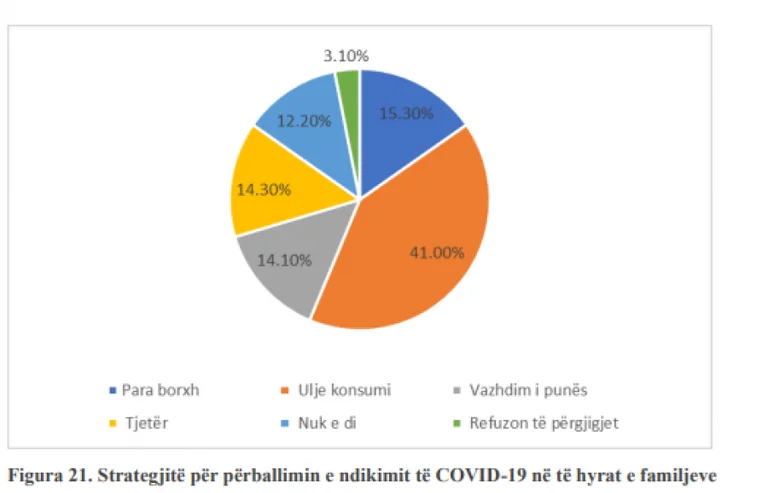
(6 years ago)65.9 percent of UNDP respondents have said the coronary pandemic has had a negative impact on their economic well-being. As a strategy to cope with the influence of the coronary, 41 percent have said that they have reduced the consumption of 15 percent of their debt. 40.7 percent [...]
40.7 percent of citizens surveyed by the UNDP, in a recent poll, have said that the pandemic has had an impact on physical health, 59 percent having negatively affected mental health.
According to the survey, the economic welfare of women (68.4%) was more affected than that of men (63.6%). Women were most affected in their mental health by 60.9%, unlike men from whom 57 percent said that pandemic has had a negative effect on their mental health. The negative impact of COVIDD-19 has been at a rate of about 40 percent for both genders in terms of physical health.
The main strategy for dealing with pandemic was to reduce consumption (41%) of debt (15.3%). And 14.1 percent of respondents have said that they kept working to cope with the problem. The declassified data by the gender has shown great differences regarding strategies used to cope with the influence of the coronary.
As far as community polls are concerned, according to the survey, the Serbian community has come up with the highest percentage of those who have continued to go to work during the crisis, with 24.8 per cent of Serbian respondents saying they have continued working. 13.4 percent of Kosovo Albanians continued working during this period, while the percentage for other communities was 15.5 percent.
In this measurement of the public Pulsus, respondents have shown that the main source of information regarding the Coronavirus was TV and radio programs by about 40 percent, followed by 25 - percent of the social networks.
78 percent of respondents were declared satisfied with the public institutions' response to the crisis. 81.1 per cent of Kosovo Albanians and 77 per cent of members of other communities were left happy, but they have stated from the Serb community, from which only 26.2 per cent were satisfied with the measures of Kosovo institutions.
These findings are presented on the basis of a UNDP poll, supported by USAID, with 1305 Kosovo citizens over the age of 18.
The first coronavirus cases in Kosovo were recorded on March 13th. So far, 1064 infected persons have been registered, of which 829 have recovered and 30 have died.