a few seconds ago
Informal Businesses Not to Be Helped by the State
Periskopi(6 years ago)
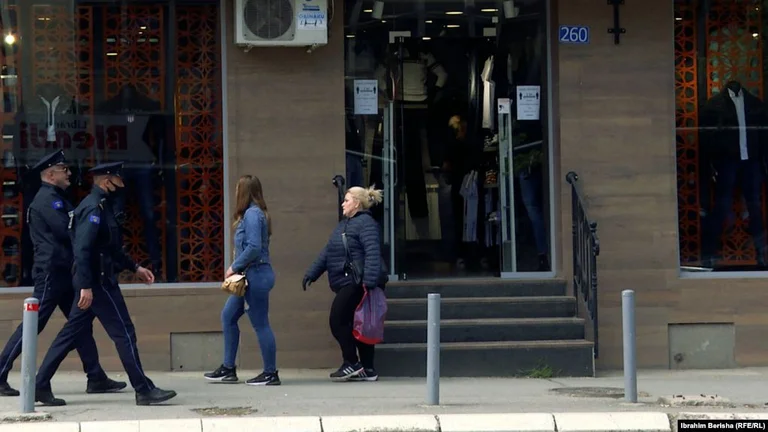
(6 years ago)Despite the authorities' efforts in Kosovo to fight the informal economy, numerous businesses in Kosovo have continued their economic activity in this form by fleeing their tax obligations to the state. According to reports by local and international mechanisms, the informal economy in Kosovo constitutes more than 30 percent gross product [...]
Despite the authorities' efforts in Kosovo to fight the informal economy, numerous businesses in Kosovo have continued their economic activity in this form by fleeing their tax obligations to the state.
According to reports by local and international mechanisms, the informal economy in Kosovo constitutes more than 30 per cent gross domestic product, translated into numbers, is around 1.8 billion euros annually.
These informal businesses, like many other economic activities, were forced to close their doors after measures to prevent the spread of the coronary.
Compulsory closure caused financial losses and no income remains very employed in these businesses.
The World Bank's latest report on economies of Western Balkan countries, which includes Kosovo, notes that these are businesses or informal activities that will be more vulnerable to the financial crisis, which will cause the COVID-19 pandemic, but it is also harder to rely on through conventional measures.
D.M. The popular name for the editing is the owner of a bar in Malisheva.
In 2008 he had returned from Germany and had opened a restaurant where, he says, he had worked for years as a formal business, but that in recent years he has avoided state tax obligations.
We came with family and opened this business where I have six employees. We failed to work properly (as a formal business) and are now working two years like many others working here in Malisheva. We are not registered as a business if I go there (Kosovo Tax Administration) to inform them that I had the bar and that I worked as I did. They don't take you into account, and I haven't even tried to get help from”, he says.
According to the World Bank report, the supplementary support tailored to the local context may be necessary to help all vulnerable groups in Western Balkan countries.
The executive director of the American Economic Ode in Kosovo, Arian Zeka, tells Radio Free Europe that despite institutions' efforts to fight the informal economy, it has not been achieved enough.
For years, Zeka adds, these businesses have created uneven competition in the market, but now they will be the ones that will be hit most by the crisis, as they will not be able to receive the aid that will be provided by the state or even other mechanisms.
“Pandemia will influence that a large number of companies cannot survive due to economic activity restrictions due to the decline in revenues in general, and in this respect the companies that belong to it are informal economies, they will be more hit. As a result, the role of the state and those assisting in this regard is limited, since it would be meant to support those who for years have operated contrary to legal provisions”, Zeka says.
The incumbent Kosovo government has begun implementing the fiscal emergency package, which amounts to about 180m euros. With some of these tools, the government has seen to help businesses.
The second fiscal package, which will focus on economic recovery, is also in preparation. This package, according to Minister of Finance and Transfers in Kosovo Besnik Bislimi, will be worth about one billion euros.
But, says Kosovo Tax Administration General Director Ilir Murtezaj, says no informal business will benefit from the emergency package or the package of economic recovery.
No business and no informal employee can take advantage of emergency packages or even other economic packages because there is no legal basis to take advantage of”, says Murtezaj for Radio Free Europe, adding that the informal business has two sides: if a informal business goes bankrupt then they disappear jobs, but if it is on the market it creates uneven competition.
The informal economy, such as the biggest problems in Kosovo's economy, was also highlighted in the annual European Commission enlargement package, which defines the progress countries have made aimed at integration into the European Union.
Murtezaj adds that the record of informal economies that speak of a figure of over 30 percent is in 2017 and that the up - to - date economy has not been in recent years, since, he says, there has been a decline in informal economics because tax revenues have been detected.
Economy and Finance Minister Besnik Bislim told Radio Free Europe that informal businesses have been assisted only in the work case.
We have told businesses to use this period and understand the importance of formalism and within the 14th measure of emergency fiscal package we have offered to register workers and here we have had 8 thousand applications”, Bislimi says, adding that this move has helped formalise the economy in Kosovo.
Through emergency fiscal package, the government has enabled workers who have worked unregistered by employers to sign agreements with their employer at least a year in order to benefit from 130 euros for the months of April and May.
The owner of business from Malisevo, who will not be helped recover from the state, says he has made a plan on how to resume work after the pandemic.
The employees I've suspended from work will get back to work, they keep the family with the income they get from their work here. The location is 300 square meters, but I have a roof of 500 meters and I have a hope that the terrace will save our business, because if the bars are opened, physical distance will be required and I can create this”.
But if it doesn't open until June 1st so I can see if I can get the pace of the job I've had or if I can afford to survive if business doesn't go well, I have plan B going to Germany”, he says.
Economic activities that entered the gastronomial sector enter the third phase of easing restrictive measures, which, according to the Kosovo Government's decision, entered into force on 2 June.
The International Monetary Fund, in a recently released report, has warned that the most disturbing situation is expected to be in developing markets and developing economies, including Kosovo.
The World Bank in its latest report released on March 29th envisions an economic decline of 4.5 per cent in Kosovo if restrictive measures can be lifted by the end of June.