5 minutes ago
Against change of borders ? Bundestag debates Kosovo
Periskopi(6 years ago)
(6 years ago)On Wednesday, Bundestag debated the extension of the Bundeswehr mission under KFOR, where it again highlighted how German MPs view the resolution of the Serbia-Kosovo political conflict. It's the same procedure every year: By mid-May, German deputies vote by majority extending the commitment of German KFOR soldiers [...]
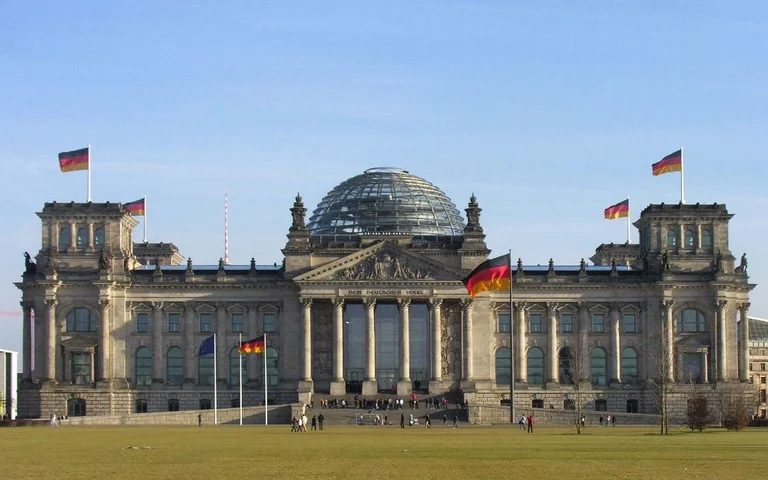
On Wednesday, Bundestag debated the extension of the Bundeswehr mission under KFOR, where it again highlighted how German MPs view the resolution of the Serbia-Kosovo political conflict.
It's the same procedure every year: By mid-May, German MPs overwhelmingly decide to extend the engagement of German KFOR soldiers in Kosovo. A decision that formally requires Bundestag's approval. And it is always debated twice, once the German government's request is applied to lawmakers, and then, when approved. And German MPs dealing with the Western Balkans do not miss the opportunity to reminisce their attitudes towards the Kosovo War, the legitimacy of the Bundeswehr mission and the country's current problems.
On Wednesday was the first debate, from which it also became clear that in addition to the two ideologically extreme parties -- the leftist -- and the Alternative for Germany, the four central parties -- the two coalition parties, the Christian-Democratic Union/ Christian Union- Social (CDU / CSU) and Social Democrat Party (SPD), as well as liberals (FDP) and Gellbret (Grüne). They will vote for the extension of the mandate.
The very four parties flatly reject even territorial exchange as a solution between Kosovo and Serbia, as highlighted by their speakers' statements.
Maas: Leaving Border Solutions
The German government plans to make up up to 400 Bundeswehr soldiers under KFOR. As Foreign Minister Heiko Maas announced, 70 Bundesweh soldiers currently operate in Kosovo. The Social Democrat minister described the security situation relatively stable, but said that politically relations between Kosovo and Serbia have deteriorated, and promised Germany's further commitment to continuing dialogue, and in the framework of the German EU presidency, which begins on 1 July. Maas took the opportunity to reject the idea of exchanging territories:
The goal is to turn away from border solutions, which have been set up at the table not only by the parties but also by others who want to exercise influence there. But it would achieve only one claim-progress, if it was called progress, given the situation there. Games with such ideas simply push the solution to complex problems and lead nowhere but blind. ”
Left and AFD for Border Change
Anton Friesen, from the AfD, as expected, rejected the argument for Bundeswehri's engagement in Kosovo, which, according to him, began with a lie since 1999. „Operation Patkoi has never existed”, said the deputy of the right-wing populist party, Friesen, adding that the tale continues today.
Even those who distribute it here” do not believe the fairy tale of a multiethnic Kosovo, Freesen said.
„instead of continuing with these eternal lies, the German government would do well to engage in a exchange of territories so that Serbs in northern Kosovo can be protected within their state, and Albanian areas prone to destabilisation in southern Serbia, be stabilised by joining Kosovo territory”.
Alexander Neu, from the Left Party, though ideologically against National AFD, argued more closely on the right-wing extremist line: Neu spoke out in favour of exchange of territories, giving as argument that the idea is supported by the two presidents -- Thaci and Vucic and Russia -- and several voices in the EU.
„Who's against? German government! Because the exchange of territories can bring destabilisation to Southeast Europe”, said Neu, calling Kosovo for this cause „a German colony”.
Sarrazzin; Trump Colony
Manuel Sarrazin, in a replica with AfD deputy. He criticised the US role in Kosovo.
Kosovo is being treated by Mr. Trump as a colony. Not from the European Union. And we should refuse this by saying there will be no exchange of territories, because people in Kosovo and Serbia are against. ”
Renata Alt, from the liberal FDP, also stressed the influence of other countries in the Balkans, such as Russia, China and Turkey. KFOR sends an important political signal instead of nato continuing to engage in stability in the Western Balkans, she said. The liberal MP recalled the European perspective and called on Western Balkan countries „not to turn their backs on the EU but to continue the path of reforms”.
The German Bundestag decided for the first time on June 11, 1999, to station German soldiers in Kosovo. Since then, Bundeshowi has continued to operate on the basis of UN Security Council Resolution 1244, June 10, 1999. German Armed Forces act in line with rules of a mutual collective security system ( NATO and the United Nations) in line with Article 24 (2) of the German Founding Law. According to the German government, the total cost of additional Bundeswehri duties by the end of 2021 is about 16,63m euros. The German government's request went to Wednesday for consideration of the Parliamentary Commission for Foreign Affairs. / DW