4 months ago
BEC: 45 thousand requests to postpone loan payment in Kosovo
Periskopi(6 years ago)
(6 years ago)Kosovo's Central Bank said that since the beginning of the COVID-19 pandemic, around 45 thousand subjects have demanded postponement of credit payments due to declining activities and revenues. In a conversation about the Voice of America, Governor Fehmi Memeti says the decline in budget revenues, and [...]
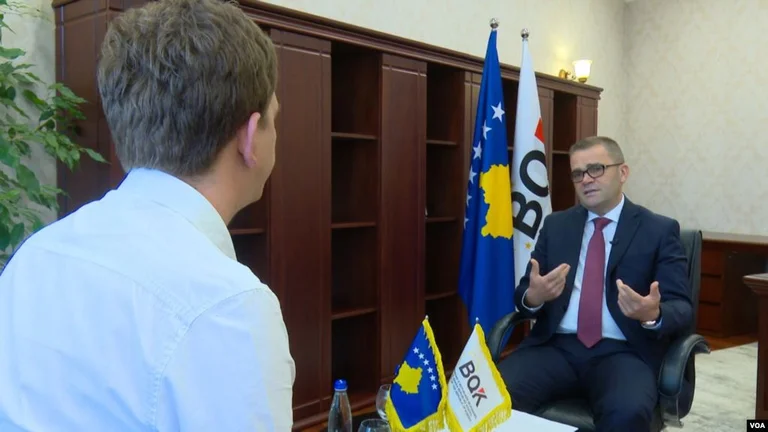
Kosovo's Central Bank said that since the beginning of the COVID-19 pandemic, around 45 thousand subjects have demanded postponement of credit payments due to declining activities and revenues. In a conversation for Voice of America, Governor Fehmi Mehmeti says the decline in revenues in the budget, remittances from the diaspora, and the closure of some of the businesses would affect the economic downturn and force the country to seek loans from international institutions.
Voice of America: Governor, Kosovo is facing a pandemic that has also affected the country's economy. What are the main concerns you see in the country's economy?
Fehmi Mehmeti: It is now known that we are going to face economic difficulties, and the economy has continued to decline on a global level not only in Kosovo, it will be affected negatively by all economic and economic activities at the level of Kosovo, but also at a global level, and actually this has driven all European countries, and on a global level also Kosovo to correct or make possible economic forecasts, even though it is difficult to make accurate macroeconomic forecasts in this period I take into account that we do not know what the consequences of the pandemic will be, however, not known how long it will last, but how many Central Bank assessments that we have to make up for the sake of economic growth and economic developments that we have to look at it.
As for economic growth in the country, there's going to be an economic decline of minus 2 to minus 4 percent, the projections of the International Monetary Fund are that Kosovo will have an economic decline about minus 5 percent, but once again I'm saying these should be taken into account the fact that today it's hard to make an accurate forecast of economic growth in view of the effects or factors that we don't know how long it will last, and which will be its size, and all countries are correcting their macroeconomic forecasts to consider the factors mentioned earlier. All economic activities are affected or will have negative impacts like budget revenues that will necessarily have a reduction in budget revenues that we estimate so far that there will be about minus 200 million and will also be affected by remittances because countries that have been affected, such as Germany, Switzerland and other countries, are affected, even though in an assessment we have up to April, there are about 53 million remittances that have been accepted only through paying financial institutions, that means I'm talking about April of 2020, and then April 20th, including all the total income we've had in from April to 68 million dollars already have been in charge of the year-to-year finance institutions that have been carried out for the next year or no-year operations.
But yet we expect there to be a decline in remittances, remittances are a very important source of financing for Kosovo's economy in view of the fact that somewhere around 12 percent participates in the Bruto Local Product or Kosovo GDP, and the measures that have been taken by the Kosovo government, similar to the measures taken by all other governments, a complete isolation or closure because of the virus has not affected many businesses to close down, to disrupt many economic activities that have already affected many or in part of the work.
It is an emergency package that has been approved by the Kosovo government, we consider it to be a good injection of Kosovo's economy over this period of time in order to maintain liquidity and keep alive the activity of businesses affected by the pandemic, but we need to keep in mind that it is an emergency package and it is not enough to address the needs and challenges Kosovo's economy has, and therefore it requires that we have a recovery plan, a clear plan to inject capital resources into the economy in order to preserve the liquids of businesses and support investment projects. This commission, in terms of the recovery plan, has only begun since yesterday and we expect to soon have a concrete plan of economic recovery, and our expectations are that the value of this recovery fund is very large and to address the needs of Kosovo's economy. But here we have to keep in mind that this will affect or be dedicated mainly to investment projects in order for the economy to return to the level it was in. The effects or negative impacts are only being seen during this second three months, and the third month, according to Central Bank estimates, will be negative, while this year's fourth three months are expected to have a recovery, and next year we expect to have a much better or full recovery and the International Monetary Fund, which is similar to our expectations, is that next year we will have an economic growth of about 7.5 per cent.
Voice of America: You mentioned a recovery plan, in your opinion, how long should this amount go to help the economy?
Fehmi Mehmeti: On the basis of a survey conducted on businesses somewhere around 40 percent of the total businesses are completely closed and almost their activity has dropped, it has to be a literal analysis to see what the impact of economic pandemic has been on these businesses and other businesses that are largely affected to come to an accurate figure, but what's important is that we like our Central Bank advice is that I've even applied to the group to plan economic recovery plan that is good for our government to come to an effective level, but the government's going to support the economy and that's going to raise the budget, and that's going to give you a lot of benefits, and that's going to give you a lot of it a lot of opportunities that's going to give you a lot of money and that're going to get a chance and that's going to buy you and that're going to get a lot of that's going to give you're going to give you a lot of that're going to be a real business and that's going to be able to be able to be able to do that've got you've got a new CVCCCVCCCCCCCCCC
Voice of America: One issue the Central Bank of Kosovo has undertaken has been the extension of credit payments on the part of citizens and businesses. How many people and businesses have so far applied for this, and how long will this delay be?
Fehmi Mehmeti: We've been very active since March 16 when we've made decisions and along with the banking association that initially put off until April 30th, and then with the bank's demand, it's made the decision that the delay is made for three months including this period that I mentioned earlier until June 30th, and what's good to say about the public is that the regular interest will be calculated but it won't be paid for immediately but it will be divided by a minimum of six months later, and so far there are about 45 thousand requests that have been applied for the 12 thousand legal loans, and that have already been applied for 98 percent for the remaining persons, while the remaining 48 percent are affected, and that's already affecting them. What has not been approved or is under way are demands that have been submitted by those employed in the public sector, including the Central Bank, and that they rightly have no reason to ask for a loan payment extension considering that in a material way the crisis in question has not affected them and that wages are taking time and the same as they received before.
Voice of America: You oversee banking and insurance systems, how much pandemics in these two sectors have affected and do you expect to be in trouble with liquidity?
Fehmi Mehmeti: We've made a cut when the pandemic started in Kosovo which is the March 16th and we've made a cut from that time and every day we're tracking the liquid report, which we're reporting to The IMF on a daily basis, the liquid report on March 15th has been 35 per cent, while the data I have today's liquidity report marks 35.7 per cent, so we have an increase of 0.7 per cent of the liquidity report that shows that the liquidatitis is better today than it was when the pandemic was presented so this shows that we have a liquid sector, also the capital adequate ratio marks 16 per cent that is above the required regulatory minimum, so I can say that we have a financial, liquid and well-addicted capital system. The most affected of this crisis is the insurance sector where we have a grossly written prime decline, if we take the March 15th period alone until March 15th, about 2m euros have been realised as grossly written or as an income for insurance companies already only from March 16th to March 31st are 920 thousand. If we compare this to March 2019 it was especially suppose to be around 5m euros in revenue for insurance companies. On the other hand, companies are forced to pay damages at around 10 million euros, even though they haven't collected or collected a lot about 50 percent of what they have planned, what's good to say is to call on all those who own vehicles who have the opportunity to make automotive insurance via online payments, and it's a good opportunity that is given as long as they're closing the vehicle registration centers for them to move only with insurance policy.
Voice of America: Kosovo will have to borrow from abroad to cope with this economic crisis. How much can Kosovo borrow?
Fehmi Mehmeti: It is the assessment of all international experts in the area of economic and finance from the IMF and the World Bank that this crisis will afford countries with low public debt. Kosovo is part of those countries with very low public debt. Public debt marks 17.4 percent in the report with GDP, so we have a very low public debt compared to countries in the region and more broadly, and the possibility of public debt growth is necessary and it needs to be done, but what needs to be done is to know what is being taken in public debt, which means it's dedicated to activities that have added to the economy, so when one time it's not a large public debt until it's worth more in the economy, it's big if there's no value to add to the economy and it's used for something that didn't add to the economy. We have a low economy debt and we have the opportunity and the needs are to increase this debt, but once again, it needs to be known what is being used so it needs to be used in order to devote itself to activities that have a growing value for the economy.