21 minutes ago
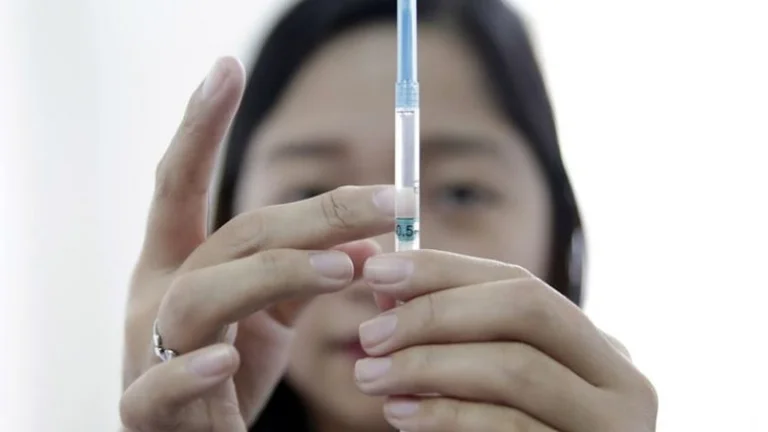
More than 100 vaccines for COVID-19 are being developed worldwide
Periskopi(6 years ago)
(6 years ago)A team of Oxford scientists developing a coronavirus vaccine has faced the first problem. They believe that the loss of the disease's infectiousness will make it more difficult to confirm whether the vaccine is successful, writes The Telegraph. This is a race against time and a virus that [...]
A team of Oxford scientists developing a coronavirus vaccine has faced the first problem.
They believe that the loss of the disease's infectiousness will make it more difficult to confirm whether the vaccine is successful, writes The Telegraph.
“This is a race against time and a virus disappearing”, Adrian Hill, director of the Jenner Institute, told the newspaper.
“at the beginning of the year, we said there was a chance of 80% that we would develop an effective vaccine by September. At this point, there's a 50% chance that we're not going to take at this time”, it's transmitting Telegrafi.
Hill expects fewer than 50 people out of 10,000 who volunteer for tests at Oxford will be infected with the new coronavirus. He believes the results will be useless if less than 20 people get infected. Oxford vaccine is currently one of the favorites to switch to mass production if its effectiveness is proven. But given Hill statements, the question is whether Oxford scientists will produce the vaccine or not.
More than 100 vaccines are currently taking place worldwide. The British government has invested more than 100 million in an Oxford research team and believes up to 30 million doses will be ready by September. Until then, it will be a challenge to find a vaccine that is effective.
Scientists at Rockefeller University in New York found that most of those cured of COVID-19 who did not go to the hospital had no antibodies.
This is very challenging. If a common infection doesn't give a high immunity, unless we're talking about a serious infection, what can a vaccine do? It could do better than that, we still don't know”, said Stanley Perlman, a scientist working on coronavirus research at the University of Iowa.