4 months ago
How the Virus Affected My Neural System
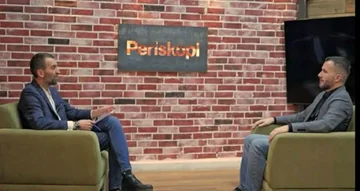
Periskopi(6 years ago)
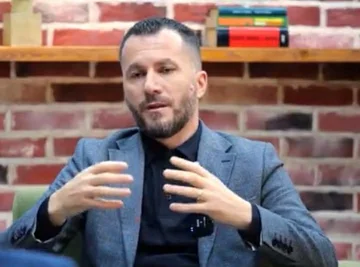
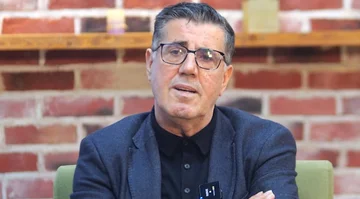
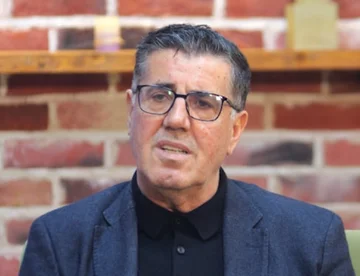
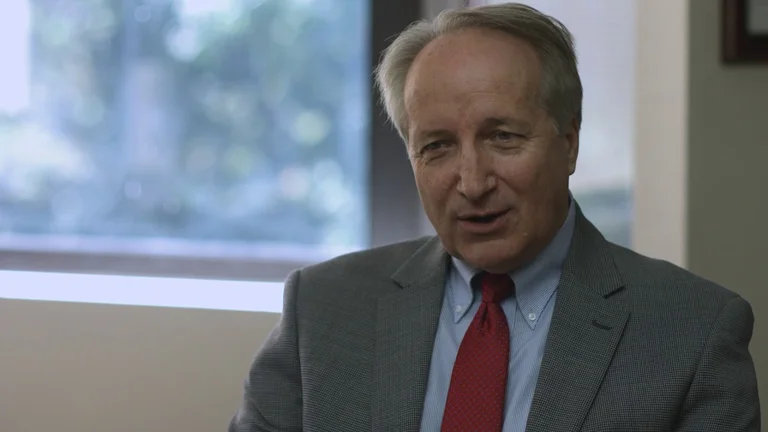
(6 years ago)Dr. Rifat Latifi is a surgeon at the Medical Center, Westchester, one of the early hot spots of the coronary in New York City. A few weeks ago, Dr. Latif became one of the doctors who was touched by COVID-19, as did his wife and daughter. Dr. Latif shows that [...]
Dr. Rifat Latifi is a surgeon at the Medical Center, Westchester, one of the early hot spots of the coronary in New York City. A few weeks ago, Dr. Latif became one of the doctors who was touched by COVID-19, as did his wife and daughter.
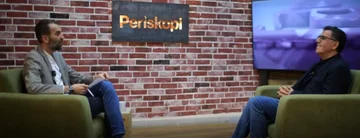
Dr. Latife relates how she experienced the sickness and challenges that the pandemic presents worldwide. Dr. Latifi, the creator of telemedicine programmes in Albania and Kosovo, spoke with colleague Keida Kostreci through the Zoo also about the possibilities this form of medicine presents in the new reality.
Voice of America: Dr. Latifi, I wanted to ask you first how you're healthy, because you and your wife and daughter had the choreography, so I wanted to know how you three are?
Dr. Rifat Latifi: Thank you for this question, it's very important of you. We're extremely good. Now we've been through the acute phase, I've been working for two weeks. I worked from home for two weeks. Now we're all safe and sound. We have no problem.
Voice of America: Explain to the public how you experienced the disease, what the feeling, the signs?
Dr. Rifat Latifi: This infection, this disease, two patients do not have the same symptoms. There may be various signs from those who are very serious, there are those who have lung insulin and should be assisted by respiratory aid to those who have no symptoms. I was somewhere in the middle. We've been with a dry cough, a nasty cough. I've had headaches, I've never had headaches, just on the right side, around the eye, behind the eye. I've never had a temperature, I haven't had a taste loss, but I didn't feel well 100, although even during those days here in our yard, we went out to exercise, we tried to live as normally. After four or five days of symptoms that did not pass, I was tested with my friend, and both of us proved positive. The girl was not tested, but she too had 100 percent, at least for a couple of days.
Voice of America: So what you're saying is that not all people experience this same disease, so...
Dr. Rifat Latifi: Absolutely, there were two other elements I didn't say. I had trouble sleeping for two nights and one night I couldn't close my eyes, because as soon as I closed my eyes, I thought my breath would stop, that I would forget to breathe. And another night I had so terrible hallucinations, so terrible dreams, that they didn't even let me sleep. So it is clear that this virus is affecting both the central nervous system and the heart system and the liver and the kidneys and other organs.
Voice of America: You think that's the result of the concerns you had, or that people in general, or that it's a medical symptom or a combination of both.
Dr. Rifat Latifi: It could be a combination of both, I've absolutely had no concern whether something terrible would happen with this, because I'm in very good physical condition, as is my friend and daughter, but I have the impression that the virus is affecting the nervous system, central, even the epithelic system of blood, as it is in my heart and other tissue.
Voice of America: The hospital where you are was at one of the hottest spots where there was a large number of cases with COVID-19. What that means for doctors in your center, including you. How do you cope?
Dr. Rifat Latifi: I'm writing an article about COVID-19 and in the foreword write that we've all become <x0-ex1> of COVID-19, diseases that we didn't know existed four months ago, but we really had to learn a new disease, new mechanisms and adapt to coping with this disease. Our Westchester Health Center hospital, which is in Westchester, in its pit, has had 90 patients in respiratory, so we've had 200-220 patients almost every day. Most of them are out of the hospital, but there's still a quiet number. He is not always the old man who dies of this disease. Young People Die, Even Those Who Have Not Been Sick Before
Voice of America: If we saw him on a global scale, how would you describe the coronary crisis?
Dr. Rifat Latifi: Just as the world health organization has described it - the pandemic. This is a great disaster, a terrible state for mankind. But remember, in 1918, 500 million of the world's population have been infected by the Spanish flu, of which 50 million have died. I don't think we're going to go into that situation, because we have other opportunities to keep people alive, but it's pretty heavy anyway.
Voice of America: What's the biggest risk in our current phase?
Dr. Rifat Latifi: The danger of the moment is that we relax very quickly, because now that we're not seeing the virus before us, we open up very quickly, open up countries, open up the economy and come back, like we were 4-5 months ago. This is going to be the biggest risk since it's very possible to have reinfectations, scientists are divided. I have to tell your viewers that I'm not a nilogic, I'm a surgeon. The fact that you have antibodies doesn't mean you're not in circulation. So we seriously need to be very careful to spread out as slowly as possible and not take the masks off your face and gloves.
Voice of America: You're saying we should be very careful not to rush into reopening states. As a medical expert, what would you say to those who say that in this country as large as the United States, not all states are alike. New York continues to be epiderre, but for example a state like Arizona where you've been before, can there not be so many cases?
Dr. Rifat Latifi: These are arguments of great importance and value. I still say that both in Arizona and in Georgia and in Carolina, people should be careful not to have massive openings, not to go to the stadium or the bar, not to be too close to each other. If countries open up, as the new phase is saying, then we still have to be careful, not reinfect each other, or infect each other. Although life must continue, we must be very careful not to open up very quickly.
Voice of America: Dr. Latif, you're the head of surgery at your hospital. How has your work been affected by the coronary?
Dr. Rifat Latifi: The work especially of surgeons and surgeons has been affected mostly by all other medical branches, because we have acute cases and now there are only emergency cases in our hospital, but cases are not yet being made. There is another victim who is not talking much about him, even though a lot is being said in scientific circles: It's those not necessarily affected by the virus, it's heart disease, lung disease, general medicine, those with tumors who need organ transplants. Many people are dying at home. People are afraid to go to a hospital. So it's Coddy's problem, but the bigger problem is that we're not doing normal surgery. I believe that when we open now, our cases will be much higher than last year.
Voice of America: Dr. Latifi, you are the creator of telemedicine programmes in Albania and Kosovo. In today's conditions, telemedicine is emerging as one of the main ways of treating patients. How does that make you feel?
Dr. Rifat Latifi: If I remember Coddy for something good, it would be because he has popularized telemedicine extremely much around the world. It's not just a great luxury now coming out of some enthusiasts, like me and my team of doctors around the world, but it's become part of reality. Every hospital, all over the world, I'm using it. Especially in the United States. We have to use telemedicine for two reasons: We help the sick, patients, our citizens in their homes until the doctor cares for them. Second: We protect doctors, protect nurses, protect other health workers in the hospital from exposure to the symptoms, but also those who are asmptomatic, because there have been cases around the world, that health workers, doctors, including that my very close friends, that I have carried out with, who died of coronary. And recently the telemedicine we have done for 20 years in Kosovo and 10 years in Albania, is being applied and will apply around the world. That makes me happy. If there's a positive thing, that's it. And he's also aware that policymakers are much easier and much cheaper, much better for the patient to be seen in a distance than to come and infect another 4-5 when the patient gets to the hospital.
Voice of America: Would you be willing to offer the services you have offered through telemedicine, even now in this difficult time?
Dr. Rifat Latifi: Absolutely! The telemedicine programme in Albania and Kosovo is independent of everyone else. At the telemedicine centre in Tirana and Pristina, all instruments, all elements that need to be rich in different countries. There is no reason for anyone to come from Korce to Tirana to prove whether Coddy has it. These can all be done from a distance. So with special pleasure I had helped them, but now she's in the Ministry of Health for both countries.
Voice of America: WHO says the coronavirus can be revived in autumn. How do you see the progress of this global crisis going on?
Dr. Rifat Latifi: I have the same opinion, like the medical authorities of the United States of America and WHO, that we can experience a new wave and maybe even next year, even further and we have to protect, build the infrastructure, a smart, functional infrastructure. If our world has changed 100 percent, there is no dilemma. So we're going to create a new normal. I don't know what normality will be: will I be wearing a mask all the time when I visit patients? I naturally have two masks when I have surgery. But will that be a new normal? I don't know that, because we don't know everything about this disease. Maybe viral science in the coming months, as soon as possible, can respond with vaccines, but I believe we will have a long way ahead.
Voice of America: And one more question: Is there reason for optimism and where these are for optimism?
Dr. Rifat Latifi: I've always seen the glass half full. I believe we'll get out because science, the science level has never been higher in life. Now we need technology co-operation with science and I believe that soon we will succeed. But that very quickly in scientific terms can last years, it can't be next week. In the meantime we'll have to guard and maintain all the bodies of those who are infected and we have to become good citizens and listen to those who give us orders, that we can't be closer than two meters from each other, that we can't go to weddings, or funerals. Our lives have changed dramatically. / VOA