2 days ago
Sneezing sprays can travel up to 8m
Periskopi(6 years ago)
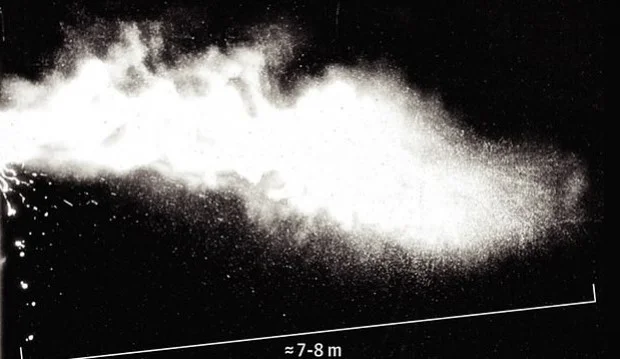
(6 years ago)People are advised to keep a distance of at least two metres, but turbulent gas clouds can be pushed four times more under warm conditions, writes the Daily Mail. A slow video shows the sneezing trajector that can reach about 8m. The glue can spread through the spray [...]
A slow video shows the sneezing trajector that can reach about 8m.
The sticky Coronervirus can spread through sneezing sprays and coughing.
American scientists filmed a healthy person's video clip during a test, which slowed from 25 seconds to half a minute.
They found that the sculpture found viral in coughs and sneezes can travel into a wet and warm atmosphere at speeds of 1030 meters per second. This creates an infectious and turbulent gas cloud capable of reaching some seven to eight meters away.
A wet and warm atmosphere within the troubled gas cloud allows sprays to avoid evaporation for much longer than usual.
The study suggests that the social distance limit because of the coronary is two metres or at least four times shorter if the sneez is considered.
Writing on the American Medical Association magazine (JAMA), Professor Lydia Bourouiba says that present - day social distance measures are based on older models.
Even though such social distance strategies are critical at the present time of pandemic, it may seem surprising that understanding the current ways of welcoming transmission in infectious respiratory diseases is preached in a pattern of transmission of disease developed in the 1930s that, according to modern standards, seems too simplified,” said Lydia Bourouiba.
The implementation of public health recommendations based on these old models can enhance the effectiveness of proposed interventions. These distances are based on the evaluations of the diapazone, which have not considered the possible presence of a high-speed cloud carrying the dots of”, it adds.
The sprays placed along the trajector of a sneez can contain surfaces, while the rest remain blocked and collected in the moving cloud.
Eventually, the turbulent gas leak loses its momentum and sprays within the cloud evaporate.