4 months ago
Quantination and closing of the borders for the Coronavirus has no scientific basis, it's ridiculous
Periskopi(6 years ago)
(6 years ago)As much of Europe imposed strict restrictions on public life last month to combat the spread of the Coronobrus, a state stood at hand. ♪ Nasuf Abdelini Sweden did not enter quarantine and set up tough policies for social distance. Instead, she made voluntary provisions based [...]
♪ Nasuf Abdel
Sweden did not enter quarantine and imposed strict social distance policies. Instead, she made voluntary provisions based on faith. He advised older ones to avoid social contact and recommended that people work from home, clean their hands regularly, and avoid travel for non - willful purposes. However, borders and schools for students under the age of 16 remain open, as do many businesses, including restaurants and cafes.
This approach has faced sharp criticism. Among them are 22 high profile scientists who last week published a letter in the Swedish newspaper “Dagens Nyheter”. It said that public health authorities have failed and asked politicians to intervene with stricter measures. They pointed to the large number of deaths from Corleone at homes of the elderly and the total mortality rate in Sweden, which is higher than in neighboring countries, 131 for a million people, compared with 55 deaths for a million people in Denmark and 14 deaths for a million people in Finland, countries that have imposed insulating measures.
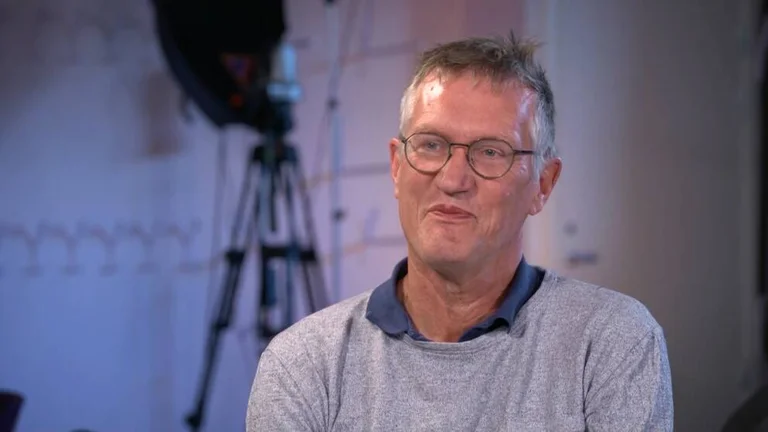
The architect of this strategy is Anders Tegnell, an epidemiologist at the Public Health Agency in Sweden, an independent body whose recommendations apply to the government. Tegnell spoke for “Nature” About this approach.
Can you explain Sweden's approach to controlling the coronary?
I think it's exaggerated how unique this approach is. As in many other countries, we intend to level the case curve by slowing the spread as much as possible otherwise, the health care system and society are threatened by collapse.
This is not a disease that can be stopped or eradicated, at least not until a vaccine is produced. We have to find long-term solutions that keep the number of infections acceptable. What every state is trying to do is keep people apart from each other, using the measures we have and the tradition that we have to implement those measures. That's why we ended up doing things a little different.
Swedish laws on infectious diseases are largely based on voluntary measures based on individual responsibilities. It clearly emphasizes that a citizen has the responsibility not to spread a disease. This is the core from which we started because there is not much legal responsibility to close cities in Sweden using the current laws. Karantina may be considered for small numbers of people or small areas, such as schools or hotels. But legally, we cannot put in solitary confinement a geographic area.
On what evidence is this approach based?
It's hard to talk about the scientific basis of a strategy with this type of disease, because we don't know much about it, and we're learning as long as we're acting, day after day. Isolation, quarantine, closure of borders nothing has a historical scientific basis, in my opinion. We've looked at some European Union states to see if they've published any analysis of the effects of these measures before they are taken and we haven't seen nearly any.
In my opinion, closing the borders is ridiculous because Coddy-19 is in every European state now. We have more concerns about movement within Sweden.
As a society, we are more obsessed with incentives, constantly reminding people of the use of measures, improving measures, where day after day we see that they need to be adjusted. We don't need to close everything, because that would have the opposite effect.
How does the Swedish Public Health Agency make decisions?
About 15 agency people meet each morning and update decisions and recommendations based on data collection and analysis. We talk to regional authorities twice a week.
The big debate we're facing right now is about nursing homes for the elderly, where we've recorded the very unfortunate spread of the coronary. This is true of the highest mortality rate in Sweden compared with our neighbors. Research is continuing because we need to understand which recommendations are not followed and why.
The approach has been criticised for being too loose. How do you respond to such criticism? Do you think that approach endangers people's lives more than necessary?
I don't believe there is this danger. The Public Health Agency has published detailed regional-based models that bring far less pessimistic conclusions compared with other researchers in terms of hospitals and deaths for a thousand infections. There has been an increase, but so far it's not traumatic. Of course, we're entering a stage of the epidemic where we'll see a lot more cases within the next few weeks with more people in the Intensive Care Department but this is the same as in any other country. No one in Europe has been able to stop the spread in considerable measure.
As for schools, I am confident that they will remain open at the national level. We are in the middle of the epidemic and, in my opinion, science proves that closing schools in this phase makes no sense. You must close schools pretty early in the epidemic to achieve an effect. In Stockholm, where most of the cases are recorded in Sweden, we are close to the curve, so closing schools is meaningless at this stage. Moreover, it is an instrument for mental and physical health for the new generation to stay active.
Scientists have criticised the agency for not fully recognising the role of drivers without symptoms. Do you think drivers without symptoms pose a problem?
It is possible that people without symptoms spread the virus, and some new studies show this. But the expansion is probably quite small compared with people with symptoms. In a normal motion of a bell - shaped curve, people without symptoms usually stay in the margin, while most curves are dominated by people with symptoms who really have to stop.
Do you think that approach has been successful?
It's very hard to know. It's too early, really. Each country must reach the stage of immunity in the flock (when a larger part of the population is immune to infection, largely restricting the infection of non-imune persons) in one way or another, and we will achieve it in a different way.
There are enough signals to prove that we can think of the flock's immunity, of resurface. Very few cases of reinfectation have been reported so far on the global level. As long as the herd's immunity lasts, we don't know, but there's definitely an immune response.
What else would you have done?
We have underestimated problems in the homes of the elderly and the way we apply the measures. We should have controlled this more comprehensively. On the other hand, the health system, which is under unusual pressure, has always been ahead of the curve.
Are you satisfied with the strategy?
Yeah. We know Coddy-19 is extremely dangerous for very old people, which of course is bad. But if we look at pandemics, there are much worse scenarios than this. Most of the problems we have for the time being are not due to illness, but because of measures that have not been implemented properly in some environments. Death among older people is a big problem and we are fighting hard.
Furthermore, we have data showing that the flu epidemic and the winter novirus have steadily fallen this year, which means that our social distance and hand washing are producing results. With the help of the company “Google”, we've seen that Swedish movements have dropped to a large extent. Our volunteer strategy has had a real effect.