16 minutes ago
The nurse's touching story shows the last moments of coronary patients
Periskopi(6 years ago)
(6 years ago)Getting access to a ventilator can mean the difference between life and death for patients who are seriously ill with Coddy-19. But sometimes even these breathing machines cannot save someone's life. The ventilation is part of Juanita Nittla's work. She's a leading nurse in the unit [...]
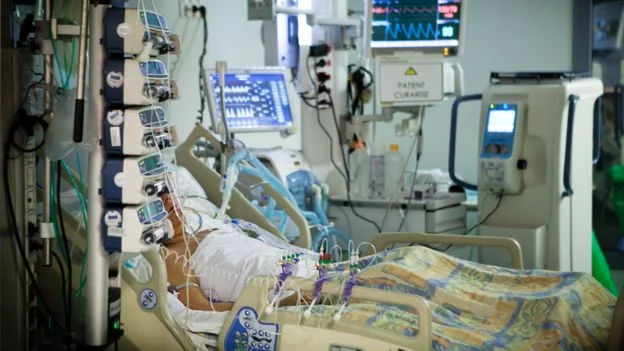
Getting access to a ventilator can mean the difference between life and death for patients who are seriously ill with Coddy-19. But sometimes even these breathing machines cannot save someone's life. The ventilation is part of Juanita Nittla's work.
She's a leading nurse in intensive care unit (ICU) at the Royal Free Hospital in London, and has worked for NHS as an intensive care nurse for the last 16 years.
Work is traumatic and painful, 42-year-old says. I sometimes feel like I'm somehow responsible for somebody's death”. Ventilators take over the body's breathing process when the coronary has caused the lungs to fail. This gives the patient time to fight infection and heal, but sometimes it is not enough.
Medical teams face difficult decisions when they have to stop treatment for patients who are not improving. The decision is made after careful consideration, analyzing factors such as patient age, basic health conditions, their response to the virus, and the likelihood of recovery, the BBC writes.
As soon as she took her shift on the morning of the second week of April, Nittla was told that her first assignment would be to cut off treatment for a nurse in her 50th with Avid-19.
She had to talk to the woman's daughter on the phone, and close family members would be able to see relatives dying to bid farewell according to the new instructions of the coronary.
I assured her that her mother would have no pain, and I also asked her about her mother's wishes and religious needs”, she said. “I closed the curtains and turned off all alarms. I put a phone in the patient's ear and asked her daughter to speak”, Nittla added.
She played the music the family had requested. Then he turned off the fan. I sat next to her, holding her hands until she died”, she says. The patient died less than five minutes after Nittla turned off the fan.
The patient's daughter was still conversing with her mother and saying prayers over the phone. Nittla got her cell phone to tell her she was done.
With the help of a colleague, I gave him a bath in his bed and wrapped him in a white sheet and placed him in a body bag. I put a sign of the cross on her forehead before she closed the” bag, she says.
I have nightmares. I can't sleep. I'm worried I'm gonna get the virus. Everyone's afraid of”, she said. Last year Nittla had left work for months after receiving tuberculosis. She knows her lung capacity has diminished.
People tell me I shouldn't work, but this is an epidemic. I have to do my job” she says. “At the end of the shift, I think about patients who died in my care, but I try not to think about anything when I get out of there “, Nittla concludes.