16 minutes ago
Japan makes the decision: Refuses total deadlock after the virus resurfaces
Periskopi(6 years ago)
(6 years ago)The doctor responsible for managing the coronary crisis in Japan has made the decision not to implement a national impasse, saying the elimination of the virus is impossible and that it is necessary to minimize damage to the economy. Japan, along with Sweden, has tried to limit the virus without placing it on [...]
The doctor responsible for managing the coronary crisis in Japan has made the decision not to implement a national impasse, saying the elimination of the virus is impossible and that it is necessary to minimize damage to the economy.
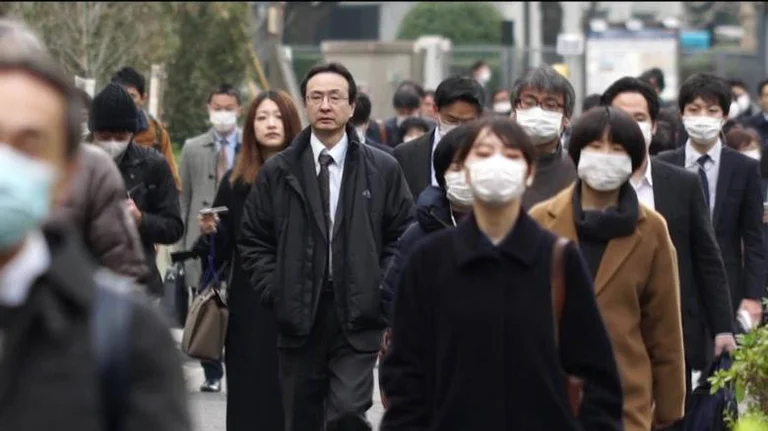
Japan, along with Sweden, has tried to limit the virus without putting it to a total freeze of economic activity or making social distance mandatory. “Japani wants to reduce the number of cases, but it is impossible to put it to zero because of the nature of the disease,” Dr Omi said. “will probably have a smaller wave or a larger wave depending on how people behave. I think this will go on for some time”, he said. “That's why we want to balance the maintenance of socioeconomic activity with managing this” explosion.
Abe declared the state of emergency in Japan's seven Prefectures on April 7th. But unlike the mandatory impasses in most of Europe and some US states, social distance is voluntary in part because of the constitutional right to free movement.
Some businesses, such as gyms, have been asked to close, but restaurants remain open. Business executives have criticised even these restrictions. Tadashi Yanai, founder of Fast Retailing, a retail salesman, said the state of emergency should have been declared only in limited areas. If you ask everyone to stay home, the economy will undergo collapse”, he told the Financial Times.
Good hygiene and effective contact tracking has caused the spread of the virus in Japan to become slower.
Dr. Omi urged the public to increase social distance, warning that disrespect means that the state of emergency will have to stay in power for longer.
“If 80 per cent of physical contacts can be avoided, then the infection curve will be drastically reduced, even without closing our citizens,” he said. If it's 70 percent, then it takes more than two months. By 60 percent, the situation won't change. This is our” account.
Dr. Omi said the goal was to reduce the number of cases to a level where they can be managed once again through interrogating contacts.
Dr. Omi said he wanted to expand the test to the point where any person with health problems could be tested.
But there is no plan to test healthy people. “