a minute ago
Chinese scientists create a disinfectant that protects the surfaces from the virus in 90 days
Periskopi(6 years ago)
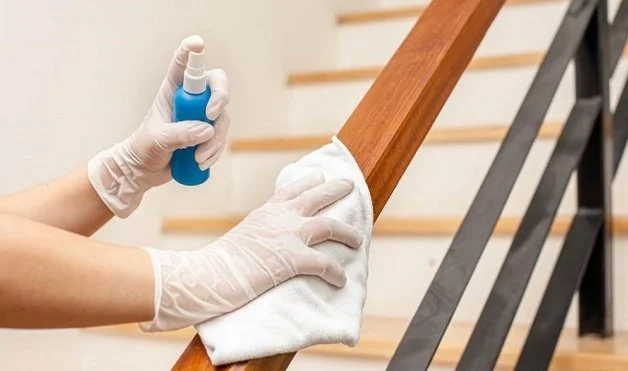
(6 years ago)Scientists from Hong Kong's University of Science and Technology (HKUST) have created a disinfectant that can protect different surfaces from coronary for three months. A layer called MAP-1 (Multilvesl Antimicrobal Polymer) effectively kills up to 99.9 percent of highly infectious viruses, such as those that cause liver, shytta, [...]
A layer called MAP-1 (Multilvesl Antimicrobal Polymer) effectively kills up to 99.9 percent of the highly infectious viruses, such as those that cause liver, shytes, rubella, and cat calcium, as well as multiple bacteria and certain spores.
Its efficiency has also been restored among drug resistant microorganisms in several field studies conducted at Kovlu Hospital and Haven of Hope Woo Ping Hospital.
Scientists say that the number of drug - resistant bacteria in the curtains of the intensive care unit at Cowlun Hospital has decreased by about 98.7 percent in three weeks.
MAP-1, which protects the surfaces of the Coronavirus, is priced at eight euros per bottle in Hong Kong. MAP-1 was established by a team of HKST experts led by Jung King Luna, professor at the Department of Chemical Engineering and Biological Engineering, and it took them ten years, Kosovo maintains.
Professor Jung says the disinfectant has been effective for up to 90 days and provides permanent protection and surface disinfection against germs. The product is intended for use in a variety of surfaces, including metal, concrete, wood, glass, plastic, skin, and textile, without changing the appearance of the material used.
In line with technical standards for disinfectation published by the National Health Commission in China's territory, the substance has proved to be non-toxic, safe for skin and environment, and can also be used in hand disinfectant, paint and clothing, in air and water cleaning filters, but also in the production of protective clothing and surgical masks.
This substance can be distributed through public spaces such as rails and elevators. These countries are often affected, allowing rapid transmission of the virus,” said Joseph Kwan, one of the best researchers of HKST.
The product was approved for official and massive use after clinical trials in February of this year.