5 minutes ago
71 years from NATO founding
Periskopi(6 years ago)
(6 years ago)Founded 71 years ago with the beginning of the Cold War, the North Atlantic Treaty Organisation (NATO) became the leading joint defence organisation with already 30 member states in Europe and North America. Founded 4 April 1949 in Washington, NATO initially had 12 founding states: Ten Europeans, [...]
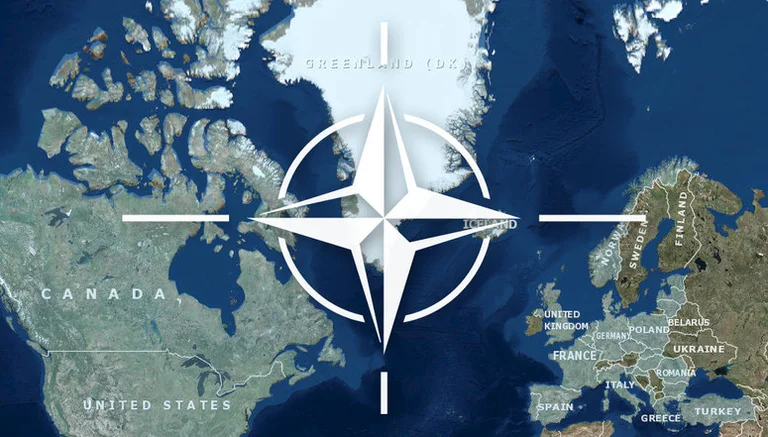
Founded 71 years ago with the beginning of the Cold War, the North Atlantic Treaty Organisation (NATO) became the leading joint defence organisation with already 30 member states in Europe and North America.
Founded 4 April 1949 in Washington, NATO initially had 12 founding states: Ten Europeans, the United States of America and Canada.
The alliance was intended to fight against the Soviet threat and was based on the principle of mutual solidarity among all its members, as defined at Article 5: “Plates agree that an armed attack against one or more of them, in Europe or North America, will be considered an attack directed against all parties”.
Over the years, Greece, Turkey (1952), Germany (1955) and Spain (1982). When the USSR dissolved, in 199 1, a new phase was being created for the Alliance and in May 1997, NATO and Russia would sign “Founding Act”.
NATO opened fire for the first time on February 28th 1994, shooting four Serbian planes in a banned UN flight zone in Bosnia and Herzegovina. On December 16, 1995, she held her first operation in Bosnia, where she distributed 600,000 troops of IFOR forces.
On March 24, 1999, NATO launched an air bombing campaign to stop Serb crackdown on Kosovo Albanians. This 78-day campaign, without the UN mandate, resulted in the withdrawal of Serbs from the province, who passed under UN administration, a NATO force (KFOR) of 400,000 troops who would maintain peace. Kosovo's Parliament declared the independence of this former Serbian province in February 2008.
In 1999, NATO welcomed the first countries of former communist Europe: The Czech Republic, Hungary and Poland.
In 2001, after the September 11 attacks, the United States of America is the first country to address Article 5. NATO then joins Washington in the “fight against terrorism”.
As such, in 2003, the Alliance took over leadership of the International Security Assistance Force in Afghanistan (ISAF), the combat mission that would last until 2014.
In March 2004, seven Eastern European countries join NATO -- Slovakia, Slovenia, Bulgaria, Romania and three former Soviet republics (Litviania, Estonia, Latvia), whose membership particularly irritated Moscow.
Albania and Croatia have joined these countries in 2009. In 2017, Montenegro becomes the 29th member, while this year Northern Macedonia became the 30th member.
On March 31, 2011, NATO took over command of Western intervention in Libya, implemented under a UN mandate on behalf of the protection of civilians. Operation “Unif ied Protector” of 7 months leads to the overthrow of Muammar Gaddafi.
NATO is also helping prevent piracy off the coast of Africa, and since 2016, it has deployed monitoring ships to combat human trafficking in the Mediterranean. The Alliance also helps its members strengthen their cyber defence.
In 2014, following Moscow's prosecution of Crime and Russia's actions against Ukraine, NATO suspended co-operation with Moscow. In 2016 the Alliance introduces four multinational tactical groupings in Estonia, Latvia, Lithuania, and Poland. This is the most important reinforcement of collective protection since the Cold War.
In November 2018, NATO carried out major military maneuvers since the Cold War in Norway, several hundred kilometers from the Russian border.