a day ago
6 seconds to avoid coronary infection
Periskopi(6 years ago)
(6 years ago)Social design, mask use, personal and environmental hygiene: rules are now known to combat the spread of the coronary. All are measures recommended by experts to reduce the dose of viruses with which we are in touch. But what is the quantity of David-19 to which we are exposed every day? “As with any other poison, [...]
Social design, mask use, personal and environmental hygiene: rules are now known to combat the spread of the coronary.
All are measures recommended by experts to reduce the dose of viruses with which we are in touch. But what is the quantity of David-19 to which we are exposed every day? As with any other poison, viruses are usually more dangerous in large quantities. Initial small exhibits tend to lead to mild or asimtomatic infections, while large doses can be fatal”Professor Joshua Rabinowitz and researcher Caroline Bartman tell the New York Times.
When you walk into a building or an office where there's been someone with coronarys, it's not dangerous enough to sit next to that infected person during an hour of train trip”They add.
Therefore, social distance and adequate hygiene help reduce the dose of viruses that we are exposed to. For this reason, explains Corriere, special care must be taken to prevent exposure to high doses of Coddy-19. “These dosages are more likely during close interactions with people, but even during the crowded local meetings or when we touch our faces after we get a considerable amount in our hands”.
Two researchers have actually clarified that “Human interactions are more dangerous in closed spaces and at a short distance, with an escalation of increased doses with exposure time”.
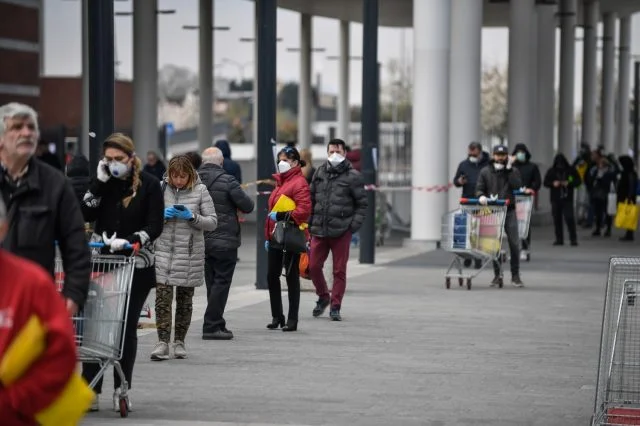
“As for transitional interactions, which violate the distance storage rule of 1.80 feet [1,80 m], such as when paying in a supermarket, they should be as short as possible, targeting the rule: “within one meter and eighty inches, just six seconds””.
O The BSH currently recommends preserving a minimum distance of at least three feet [1 m] from another person. This distance is also suggested by our Ministry of Health. However, for health experts in the United States, it is necessary to keep a distance of some 500 feet [180 m] from others. And if this measure is not possible, for example, when we pay in a supermarket, the rule that needs to be followed is that of short contact, at six seconds maximum.
Experts add “The clothing and food arrangements that are exposed to someone with the virus seem to represent a low risk of”.
The healthy subx0 characters, which are together in a store or at a workplace, have a tolerable risk, as long as they take measures like masks or distances”. All of this is data to be remembered to cope with the second emergency phase. / American Eye