3 minutes ago
30 Years of Freeding Adem Demach
Periskopi(6 years ago)
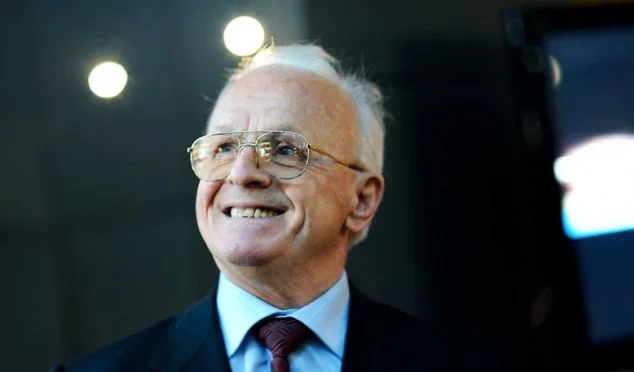
(6 years ago)Today, it is 30 years since the release of Adem Demach activity. At that time, he has been wonderfully received by thousands of citizens. After Demach was released, he immediately continued his political activity. He was arrested and sentenced three times, suffering 28 years in Yugoslavia's prisons. April 21, [...]
After Demach was released, he immediately continued his political activity. He was arrested and sentenced three times, suffering 28 years in Yugoslavia's prisons.
On April 21, 1990, Adem Demach and many friends from Croatia's prisons were released. In the first interview a day or two after his release from prison for Slovenian television, without expressing any hatred or revenge anger, Adam tried to pave the way and paths for finding acceptable and favourable solutions for all who not only in word but also in deeds were for freedom and equality in Balkan spaces.
During 1975 in Kosovo, Croatia, Bosnia and Herzegovina, Vojvodina, among the Albanians of Macedonia and Montenegro, became many prisoners and arbitraries, and many court processes were set up against people whom Serbian secret police considered dangerous and carriers of Yugoslavia's deintensive forces. To that end, on October 6, 1975, Adem Demaci was imprisoned in Pristina for the third time.
In the devised process, following cruel investigations, they were sentenced, to false witnesses and ruthlessly, Adem Demaci, Rexhep Mala (the deceased), Skender Kastrati, and 16 others. The sentences were cut by 15 to 5 years.
Although not innocent at all, Ademi Demac, did not give up on the idea that Albanians have the right to be free and equal to all other Balkan peoples and to pronounce his sentence on him for 15 years, he received him with smiles.
Now he was quite clear that Yugoslavia had entered the path of its safe defeat.
In March 1990, in the famous Stara Gradiska cazamat, where they stood firm, Adem Demach and thirty other Albanians, now fourteen years, for the first time, police authorities allowed International Red Cross officials to enter.
Then they allowed some journalists to enter. All journalists with whom he had the chance to meet, Adem Demaci, had told them that Slobodan Milosevic, with his policy works for Yugoslavia's defeat. Yugoslavia had already been involved in decomposing fever.
Demach tried to cause such decomposition to develop gradually, peacefully and without bloodshed. This seemed possible from the perspective and circumstances of the day.
On April 21, 1990, Adem Demach and many friends from Croatia's prisons were released.
In the first interview a few days after his release from prison for Slovenian television, without expressing any hatred or revenge anger, Ademi tried to pave the way and paths for finding acceptable and favourable solutions for all who not only in word but also in deed were for freedom and equality in Balkan spaces.
At a meeting in Ljubljana, ahead of a large audience, Demaci, did not hesitate to express himself against the version of the struggle for resolving non-companions with Serbia.
Otherwise, Adem Demaschi is also called Europe's Nelson Mandela. He led the Council for Human Rights and Freedoms (KMDLNJ) from 1990 to 1995.
In 1991 it was honoured by the European Parliament at the Sakharov Award. During the 1998/1999 period, when meetings were held in Ramboullet for Kosovo's future, he was the KLA's political spokesman. He was chairman of the Kosovo Writers' League (2005-2007).
Adem Demach passed away on July 26, 2018, at the age of 82.