14 minutes ago
The terrifying mask doctors used against one of the greatest diseases
Periskopi(6 years ago)
(6 years ago)The first confirmed epidemic of plague in history is Justinian, which lasted from 541-750 and disappeared among a quarter of the human population in the then known world, or about 50 million people. The spread of the plague continued from the 15th to the 19th century with 100 new epidemic eruptions [...]
The spread of the plague continued from the 15th to the 19th century with 100 new epidemic eruptions in Europe, causing some 200 million deaths.
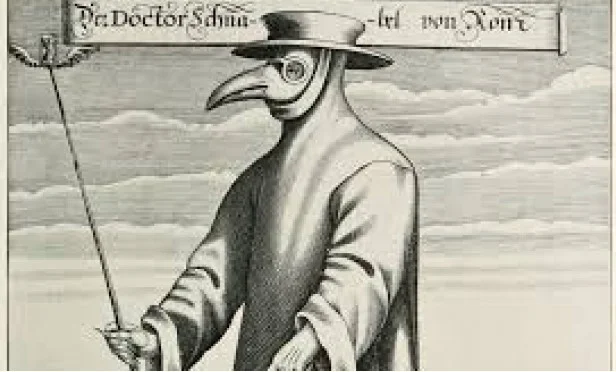
As always in times of crisis, people turned to church and doctors. Ironically, the latter increased people's sense of dread by wandering along the streets with long black coats and scary bird masks with long beaks.
However, there was a good reason (though false) for this, Kosovo passes.
Strange though, almost every part of the mask had a function. It dates back to the 17th century and has been designed by Charles De Lome, a French Royal Obor doctor and favorite doctor of the Medici family.
To protect himself during the treatment of patients with infectious diseases, he created a suit consisting of a long coat up to the ankle and a bird mask with beaks, gloves, a hat and boots.
A wooden stick was also often used to inspect the patient without touching it. Everything was usually covered in wax.
The costumes were first used in Paris and later all over Europe.
The Importance of a Bird's beak
The mask had glass glasses and a round beak like a bird.
The beak was empty inside, and in practice it was filled with strong - smelling substances of amber, lemon balsam, nenejik, carafil, opium tincture... The purpose of the mask was to protect against bad air, which was then thought to be the cause of the disease.
The bad smell that spread around the sick was also considered to be a plague bearer, and doctors believed that strong winds could prevent.
Plants placed on the mask's beak acted like a filter they believed in cleaned the air before doctors sucked it.
How is the plague transmitted?
The plague or <x0) black death” is caused by a bacterium transmitted from a flea of rodents to humans. It can also spread through physical contact as well as sneezing and coughing by infected persons.
The plague was not airbound, but the doctors did not know, and there were few who could do it to help the sick.
That is why, until modern antibiotics arrived and the discovery of bacteria, the plague was so deadly.