a minute ago
Bieber: Problems between Kosovo and Serbia not resolved without EU involvement
Periskopi(6 years ago)
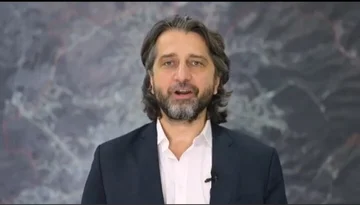
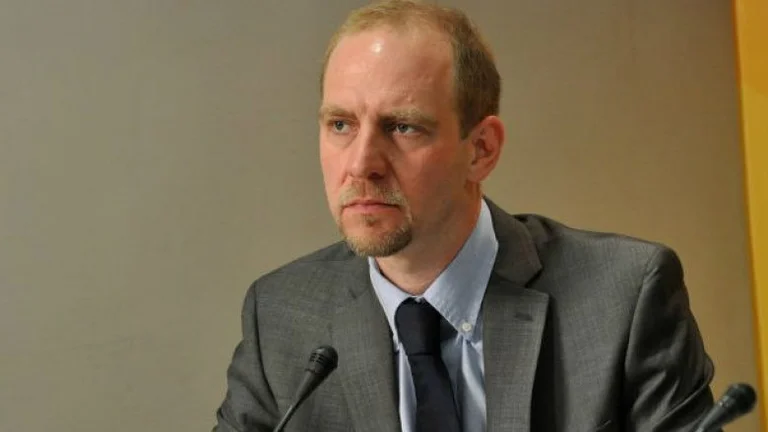
(6 years ago)The expert for the Balkans, Florian Bieber, says American officials' warnings of sanctions against Kosovo if the tariff for products imported from Serbia and Bosnia and Herzegovina does not go away, could be real under US President Donald Trump's administration. In a conversation for Radio Free Europe, Beiber, however, favours [...]
In a conversation for Radio Free Europe, Beiber, however, favours the European Union's greater role in the negotiations process between Kosovo and Serbia, saying that a sustainable solution for both sides could be secured only through the involvement of all acts in Kosovo and Serbia.
Currently, we have a situation when pressure has been increased by American officials towards the Government of Kosovo to clear the fee for products of origin from Serbia and Bosnia and Herzegovina, which was imposed in 2018. Why do you think this pressure is happening now?
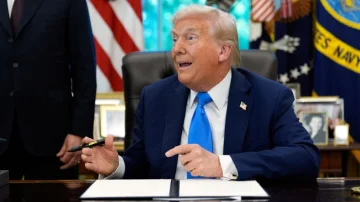
Bieber: I think it has to do with American interest to find a quick solution, so a quick solution to the reports between Serbia and Kosovo, and they know that tariffs are obstacles on this road. It is a unilateral approach, considering the fact that at the same time Serbia has not promised to stop Kosovo's campaign of recognition because this in the first place has pushed tariffs. I think American interest under the administration of President (US, Donald) Trump is to find a solution as soon as possible, and that means favouring Kosovo President Hashim Thaci and Serbia's president, Aleksandar Vuciq.
Would it be necessary for the Government of Kosovo to hear the calls of American officials and to remove the tariffs?
Bieber: I think that the prime minister's attempt, Albin Kurti, to go step by step as far as leaving the fee seems quite reasonable. I say again, the Government of Kosovo is not saying that it will keep the fee indefinitely, but that it will gradually take them away, and that it seems to make more sense, that we have a brief departure of the fee and that it would mean that Serbia too would stop the campaign of expectations.
I don't think we should have unilateral actions where only Kosovo removes tariffs and I realize that the American position is not very well understood in this direction. Also, the way Americans are favouring President (Hashim Thaci) before the Kosovo government in this process is a part that does not help much. I think it would be wiser if he continued with the position the Kosovo government has held so far on the issue.
US officials, including two senators and President Donald Trump's son, have supported measures against Kosovo. Do you believe there may be punitive measures from the US in case the Kosovo government does not respect American councils?
Bieber: Of course it's very possible because we have a disorderly American administration and we've already seen direct threats from people in the US administration that they can pull American troops out of Kosovo, but I still think it's partly a “blof”. I think the U.S. government could lose interest in this issue as fast as it has added, and so there may be no consistency, so in this direction it's very unpredictable which is one of the problems that the Trump administration currently has.
The main partner who has something to offer for Kosovo is the European Union, which I think has taken a new position in the matter. Again, the U.S. position is not very clear as to what sequences there can be, so in this respect we have to wait and see. Again I say that as a result of the global pandemic COVID-19, we can still see the U.S. government completely lose interest in this issue and be completely focused on the next six months for elections to be held in the US.
The US government has already suspended several projects worth millions, as the Kosovo government has not yet decided to clear the fee for Serbia's goods. American officials have also cited the possibility of leaving US troops from Kosovo. Is that a real danger?
Bieber: If we look further, I think it would be good to leave the tariffs, of course it would be a good solution, but it should also be based on measures the other side takes in Serbia and I believe this would be the Government of Kosovo request. But it really seems that the US is willing to use every means to put pressure on the Government of Kosovo under the administration of US President Donald Trump. But, I doubt this is an effective way because American assistance is important, the symbolic of American support is important, but there is also a limit until when it would seem reasonable to pressure the government.
Why do you believe the US administration has taken over the negotiation leadership between Pristina and Belgrade?
BieberI think there are two reasons. One is very clear that President Trump's administration is interested in easy victories abroad to show good image in the US. It's a non-progressive administration that's not very interested in sustainable solutions, of course there are people in the American State Department who may be interested in sustainable solutions, but I think that at the highest level the main motivation is quick deals and dialogue between Kosovo and Serbia seems to be one where they could reach an agreement. This is their reception.
The other reason might be that maybe there's a lobby process that we're not familiar with through which perhaps the American administration is being pushed to find a solution.
Would it be better for the dialogue between Kosovo and Serbia to be led by the US or the European Union?
Bieber: At the end of the day, I think it would be better because the negotiations of the European Union led by Federica Moghrin were not very successful, but in the end are the only negotiations that could have been able to provide Serbia with something more fundamental, as well as Kosovo, that would mean ending the blockade for recognition and prospects for membership in the European Union. Same for Serbia.
And for economic issues, the EU is much more important than the US. In that sense, I consider that the EU is the natural mediator and negotiator in this process, but unfortunately it has not yet found its new role, as it took long after elections were held in the EU. Many of the steps taken by Richard Green (the White House envoy for dialogue between Kosovo and Serbia) to a degree were meant to make the European Union look bad through quick decisions for which it did not consult the EU or the Government of Kosovo.
Kosovo and Serbia signed several agreements in Berlin with the mediation of the White House special envoy Richard Green. Do you believe that agreement on railways and airlines between Pristina and Belgrade will be implemented?
BieberWhat we need to see is substance. We have seen many agreements and many negotiations in the EU, from the EU in the midst of Kosovo and Serbia that resulted in unfulfilled. I'll only believe it when I see a plane flying or trains moving.
Do you think expectations are real that there can soon be a final agreement between Kosovo and Serbia?
Bieber: I think the United States of America does not have the long-term commitment under the current administration to negotiate an agreement because it does not only require a quick solution, but requires a real agreement involving all actors, including those of Kosovo. A principled agreement is required and I don't believe the current administration is interested or in the position to negotiate, so the European Union should be in that direction. I don't know if the circumstances are fair because I'm not convinced whether Serbia's president, Aleksandar Vucinq, is interested in a genuine agreement, and also considering the differences between the president and government in Kosovo, so it's not a good situation, so I am very skeptical about reaching a final agreement. / REL/