7 minutes ago
Weber: Kurti will be non-commoder for the EU, his political programme is dogmatic
Periskopi(6 years ago)
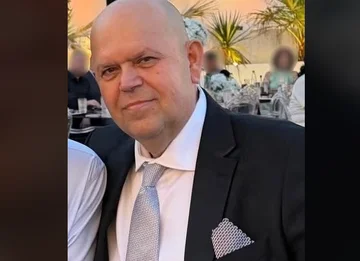
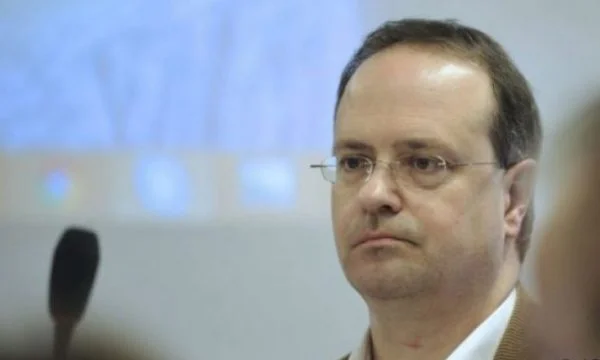
(6 years ago)Bodo Weber, Balkan expert and consultants of political parties in Germany, in exclusive interview with Deutsche Welle for the Kurti government and expectations towards it. Deutsche Welle: Mr. Weber, Kosovo's new prime minister, Albin Kurti, in relations with Serbia requires reciprocity. Is it possible to have reciprocity, when Serbia does not recognise Kosovo? [...]
Bodo Weber, Balkan expert and consultants of political parties in Germany, in exclusive interview with Deutsche Welle for the Kurti government and expectations towards it.
Deutsche Welle: Mr. Weber, Kosovo's new prime minister, Albin Kurti, in relations with Serbia requires reciprocity. Is it possible to have reciprocity, when Serbia does not recognise Kosovo?
Bodo Weber: I find it hard to answer '%s' is relatively unclear to me what Albin Kurti really means with “reciprocytes”. Initially, as far as I have understood, this requirement was linked to the removal of tariffs for goods from Serbia, which are the main obstacles to the resumption of Brussels' negotiations. But the tariffs were not imposed in late 2018 in response to Serbia's existing trade practices towards Kosovo, but. On the one hand, in response to Serbia's successful lobby against Kosovo's membership in Interpol and, on the other hand, as I understand, as a move to curb the Brussels-led dialogue, which was moving towards exchange of territories with the support of then-Maghrini mediator and some Western countries.
Now the dialogue will lead Mogher's successor, Borrell. Will Kurt be a difficult conversationator for the EU?
Kurti as prime minister will be a non-communicational co- talker, partly due to his principled democratic and in part, because his party's beliefs and programme continue to contain dogmatic-ideological elements.
Kurti and his party are constantly taking over Albanian national affiliation. In the past they even rejected Kosovo's state symbols. On the other hand, they are for a direct dialogue with Kosovo Serbs. Will that be possible?
Kurti has confirmed in various statements that Vetevendosje is constantly the party that has insisted on dialogue with the Serb community in Kosovo. It is not known how this can be accomplished when Kurti and Vetevendosje insist on their dogmatic view only to negotiate or communicate directly with Kosovo Serbs without Belgrade. The sad reality is that Kosovo Serbs currently do not constitute a separate factor. The cause for this is the unintentional consequences of political dialogue, which has allowed a one-party regime dependent on the auspices and intervention of Belgrade-controlled party-state equipment and related to crime in the 10 majority Serb communities in Kosovo. Kosovo Serbs will be a separate factor, only when an agreement with Serbia is signed, guaranteeing the full integration of Kosovo Serbs into the state of Kosovo, as well as Serbia's political-institutional in the state and Kosovo politics. So I believe that the new government will use a new and more advanced rhetoric in relations with Serb communities, but I do not expect to have much success outside the framework of Brussels-led dialogue.
Kurti wants to fight corruption, but is it possible in a coalition with the LDK, a party that in Kosovo does not necessarily relate to the clean “”.
In my opinion, this will depend much more on the concrete ideas and realisation of Vetting warned in the judiciary and police, as ideas coming from the part of Vetevendosje and the new government still seem very unclear and idealistic. It will also depend on how much the new government is willing to accept international assistance, especially from Western specialists. At the same time, the role of the former LDK candidate, the new speaker of Parliament and the prominent lawyer, Vjosa Osmani, will be of great importance in these processes.
Kurt is a principle leader. Will he remain faithful to his principles, or will he give up in the face of state? If so, what are the compromises he should make?
A softening of his dogmatic positions has been recorded since election day, similar to that during coalition negotiations in 2014, but he does not have to give up his idealistic stances, and I hope this will not happen. A partial withdrawal from the dogmatic attitudes experienced in the government's election Monday. Despite Prime Minister Kurti's first announcement that Serb List (SL) would not participate in government with ministers, the new government includes two ministers from this party, who have been approved by most SL deputies, even though the SL has not officially joined the government and has not voted for the government. It remains to be seen what these and other inevitable compromises mean in the future for work and further development of self-rule