18 minutes ago
Social Work Centers have capacity to house children
Periskopi(6 years ago)
(6 years ago)Centres for Social Work have little capacity for child shelter, where there is only one NGO that houses children and specialises in this. Other shelters available to victims of violence, however, can accommodate only a certain age of children and cannot accommodate children [...]
Centres for Social Work have little capacity for child shelter, where there is only one NGO that houses children and specialises in this. However, other shelters that are for victims of violence can accommodate only a certain age of children and cannot house boys over the age of 12.
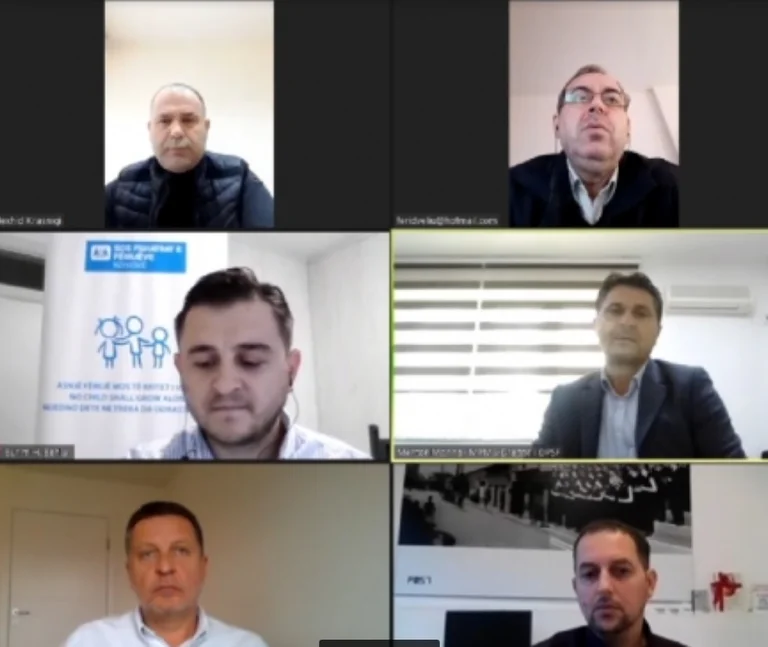
These are some of the findings of the report “Necessis on the capacities of the Social Work Centres in the field of child promotion and protection”, which is published today on International Children's Day.
This report has been funded by the EU, managed by the European Union Office in Kosovo and implemented by SOS Children's Villages in partnership with Handikos.
Petrit Soopyan, an expert, has introduced the findings of the analysis, where he said housing is one of the main challenges cited by the Centres for Social Work.
“QPS has shown very few alternatives to housing capacities, so housing is one of the main challenges that QPS mention. So, we have very little child shelter capacity, so we have only one NGO that hosts children that specializes in child housing, limited capacity, and other shelters that are housing for victims of violence can only accommodate a certain age of children and still cannot house boys over 12 years old, and this is a challenge in themselves. Social assistance schemes are often reported as small, insufficient, and there are constant complaints from customers. Social schemes are known to be managed by the central level and the QPS consider there is a very low budget at the local level for covering the operating costs of the QPS, staff and other emergency needs.
He said that the review of laws and reports has shown that there is a satisfactory legislative infrastructure, but that he said there is a need for improvement in the future for certain underground acts or administrative guidelines.
Based on the findings of the report, he said they have encountered in indicators that there are jams at different levels of implementation that are usually conditioned by certain aspects, they are lack of staff and professional profiles of service providers, non-adquate and non-consistent services, poor and inadequate financing, fragmented and unstable planning and co-ordination.
“Commissions which are decentralised from the central level to the municipality have a challenge and a challenge in terms of unstable financing of social and family services and hinders completion of the decentralisation process. So it is very important to note that the QPS give indicators that so far, the area of social and family services has not been treated as priority by municipal authorities”, he said.
Sopijan said that as long as there is an increase in the number of social work forces in the region and the world, this is not happening in Kosovo. He mentioned how when social workers retire or resign not every time they are replaced by new staff.
Centres for Social Work have also voiced complaints about internal organisation, costumes are divided between two or more officials, without privacy when they accept customers and discuss sensitive and sensitive issues with them.
It has also presented some recommendations concerning the QPS, where it said the number of officials for social services should increase. He also said that the office infrastructure needs great update, until he mentioned that offices should provide full access to all customers involved in disabled persons.
Part of the recommendations is increased housing capacities and daycare centres for different categories of children in need.
Burim Behluli from the SOS Villages of the Children of Kosovo, said this analysis would serve as the basis for advancing the other skills and knowledge of all workers in the QPS.
This analysis will serve as a basis for advancing the skills and other knowledge of all workers working at the Centres for Social Affairs in the field of child protection and especially now after the introduction of the children's protection law”, he said.
Meanwhile, Mentor Morina, head of the Department for Social and Social Policy from the Ministry of Labour and Goods, showed what actions they are taking as minister for the issue of child protection.
With the introduction of the Child Protection Law into force, we've taken action in coordination with partners, prepare the secondary legal framework for regulating and providing services for rights, protection and child services. In this direction in this almost monthly period, even though we actually had the effects of pandemic and because of the inability to develop activities as planned with our partners, the issue of approval of administrative guidelines can actually have a delay for the first part of next year, provided that by June we are prepared to start implementing the implementation with a complete secondary frame of delivery of services for child protection”, he said.
On the other hand, Mexhit Krasniqi, chairman of the League of Social Work Centres, said the Centres for Social Work have numerous needs, but who stressed the need for treatment for social workers in the field of child protection.
“Social Work Centres have been co-operative from the start, have been motivating, in support of this project that is extremely necessary for providing social services to the Social Work Centres... Social Work Centres have numerous needs especially in need of permanent training in the area of child protection and also need bilateral co-operation with non-government organisations<1>, he said.
The report “Necessis on the capacities of the Centres for Social Work in the field of promotion and protection of children” is funded by the EU managed by the European Union Office in Kosovo and implemented by the SOS Children's Villages in partnership with Handikos.