12 hours ago
Why do we develop long - term immunity for certain diseases and not for others?

Periskopi(6 years ago)
(6 years ago)Some diseases, such as measles, are once in life, and we gain immunity for life. For others, like the flu, we have to vaccinate year after year. Why is that so? How does immunity develop to a certain illness, and why does it last longer for some and less for others? Whether we develop or not [...]
Some diseases, such as measles, are once in life, and we gain immunity for life. For others, like the flu, we have to vaccinate year after year. Why is that so? How does immunity develop to a certain illness, and why does it last longer for some and less for others?
Whether or not we develop immunity to a disease often depends on our antibodies ] from the proteins we produce in response to infection. When we remove the infection, the levels of antibodies drop, but not entirely because some “preserve” in case the disease resurfaces.
The body doesn't forget. Usually, when we become infected again with a disease, it is not because our body has lost its immunity. This is because pathogen has mutated and our immune system no longer knows him or the body has a much lower immune response”, explains immunologist Marc Yankees of the University of Minnesota Medical School.
For example, the flu is a fast - changing, easy - to - change virus. Our immune system kills one version of the virus and then appears another, which the immune system does not know at all. On the other hand, not all viruses develop mutations so easily. polio virus cannot easily change its genome, which is one of the reasons why we have successfully eliminated it.
The number of polio cases worldwide has dropped by more than 99%. The World Health Organization declared Europe without polio in 2007, but it is still present in parts of East Asia, Africa, and the Eastern Mediterranean.
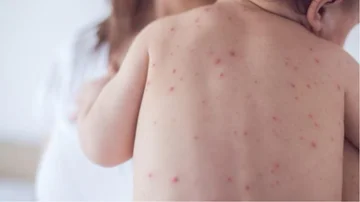
Research from 2007 showed that it must take more than 50 years for antibodies protecting us from sheeppox to disappear, and more than 200 years for them to disappear in the fight against scurrying.
This active inborn immunity produces antibodies that are produced by the immune system itself after encountering any pathogen, so they stay in the body protecting us. Nearly 90-95 percent of the general population exceeds sheeppox (varicela) to adulthood, thus reaching immunity throughout life.
Although they last much longer in some diseases, antibodies do not last for the rest of their lives. For example, tetanus antibodies fall much faster than in the fight against measles. With the help of the vaccine, we receive active immunity, so as children we are vaccinated against the tetanus, polio, tuberculosis, hepatitis B, rubella, and other life - threatening diseases.
Scientists are not yet sure why we keep an reply of antibodies to certain diseases for longer rather than to others. It is possible that some of the diseases, such as sheeppox and mononucleosis, actually infect us more often than we think and know, but that antibodies overcome the infection that results before we observe it, said Incommulologist Yankees.
Will our immunity be to the new coronary, whether by natural response to an infection or a vaccine, as long as immunity from sheeppox, or we will need a new vaccine every year?
Although many people do not produce enough antibodies, the Yankees immunologist still hopes that we will fight COVID-19 naturally because, unlike the flu, it does not change quickly, so our body can afford it more easily.