13 minutes ago
Who invented it and what are the reasons why the clock changes
Periskopi(6 years ago)
(6 years ago)Since 1981, the change of the hour on the last Sunday of October and March is an annual ritual for Europe. The main goal is to provide additional light hours for summer evenings and winter breakfasts. But critics say that changing the clock brings increased traffic accidents and problems with [...]
In fact, changing the clock is not this late. The idea belongs to renowned American politician and philosopher Benjamin Franklin, who was also an important physicist and inventor of lightning.
In the XV century III, Franklin was a US ambassador to Paris. In 1784 he wrote an article entitled “An economic project for limiting the cost of lighting” and sent it to the newspaper “Journal de Paris”. According to Franklin, Parisians could limit the use of candles and have a relative savings if they got out of bed early and began their day taking advantage of the morning. However, almost 120 years went by for his idea to be accepted and the term “summer” formulated.
It was an Englishman, constructionist William Willett, who in 1902 circulated a brochure entitled “The lost light of day”, where he appealed to authorities that “woke up citizens earlier, moving clockwise clocks to towns”.
It was Germany, which, during the first world war, on April 30, 1916, decided to implement the summer hour, “won” 60 minutes, for economic reasons. The argument was that coal use is limited and thus added to the war industry, as the Ministry of War declared at the time. For the same reasons, a few weeks later England made the same decision.
In the meantime, neither nation nor country held the summer season after the end of the war in 1918. Although they returned to that arrangement twenty years later. In the 20th century and in the early decades of the 20th century, changing the clock was not an easy issue.
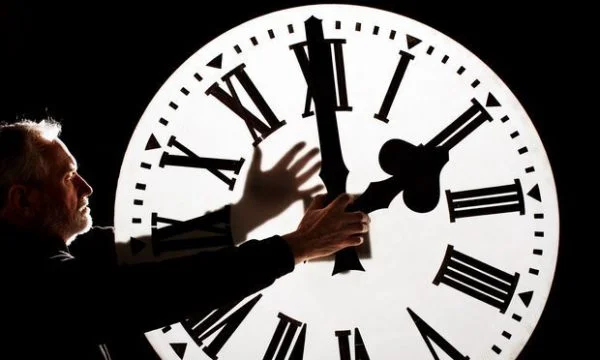
The clock caps did not move back, if you tried, the mechanism broke, and you had to postpone 11 hours to get it to summertime. This is true today with old clocks, in many churches, municipalities, and state buildings of the 18th century and earlier in Central European countries.
In March 2019, lawmakers in the European Parliament voted overwhelmingly in favour of lifting the time difference starting in 2021. Most countries have said they favour this change.
Because of pandemic, time change is not one of the priorities of 2021, but it is possible that the hour will not change.