14 hours ago
How does heat damage sperm and cause male infertility? Scientists Reveal the Answer
Periskopi(6 years ago)
(6 years ago)One of the most common causes of male infertility is damage to sperm. Among the factors leading to such injuries is exposure to heat. However, it is not known how heat damages sperm. Researchers from the University of Oregon have now identified the basic mechanism. Using Caenorehabtis Elegans, a type of roundworm, scientists discovered mechanisms [...]
One of the most common causes of male infertility is damage to sperm. Among the factors leading to such injuries is exposure to heat. However, it is not known how heat damages sperm. Researchers from the University of Oregon have now identified the basic mechanism.
Using Caenorhabtis elegans, a kind of roundworm, scientists discovered molecular mechanisms that bring DNA damage to spermoids because of exposure to heat.
They found that the moving of the transpossions involved DNA segments due to heat led to DNA damage to sperm. They also found that even the slightest temperature growth could lead to a 25-fold increase in DNA damage to sperm development.
“Both to people and to Caenorhabtis electronics, relatively small temperature increases are enough to reduce male fertility,” said Diana Libuda, the corresponding author of the study, in a statement.
The ideal temperature for producing sperms in the human body is slightly below body temperature c. 32-35 degrees Celsius. The study also found that an increase of 2 degrees Celsius over the normal diapazon in Caenorhabtis eleagans resulted in a 25-fold increase in DNA damage in the development of spermoids when compared to un exposed spermoids.
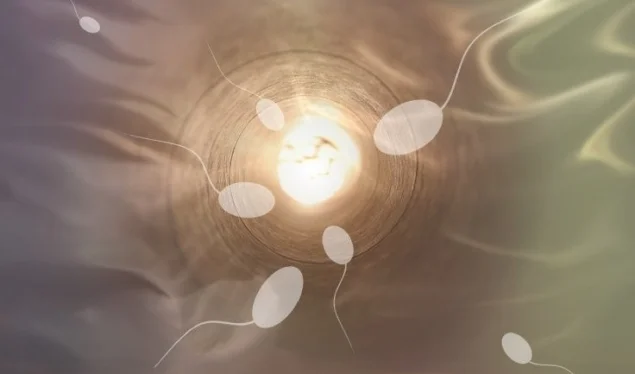
Sperma is the smallest cell in the human body. Billions of them are formed under optimum temperatures throughout the life of an adult male. The eggs, on the other hand, are the largest cells in the human body and are produced for a very short time during the stages of fetus development in women.
Transpossions are part of DNA travelling around and can reshape genetic information through their introduction to new positions. However, they also cause damage to DNA. However, scientists learned that when transplants are exposed to heat, they move especially in the development of sperm.
“We found that after the heat shock, certain transparencys are found in new and more variable locations in the male genome”, Nicolae A explained. Kurhanewitz, the lead author of the study. /Kp