4 months ago
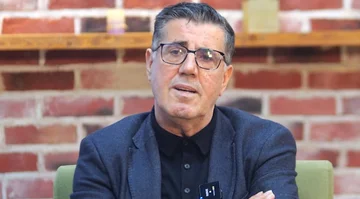
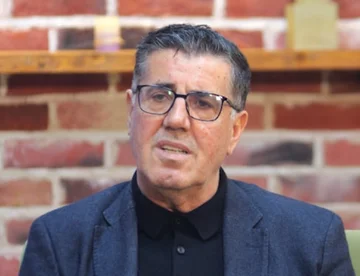
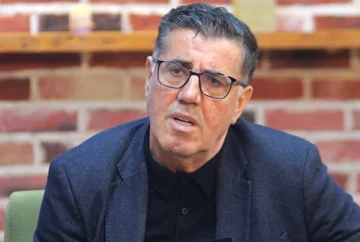
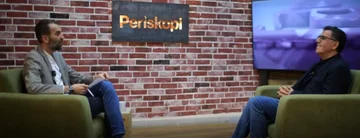
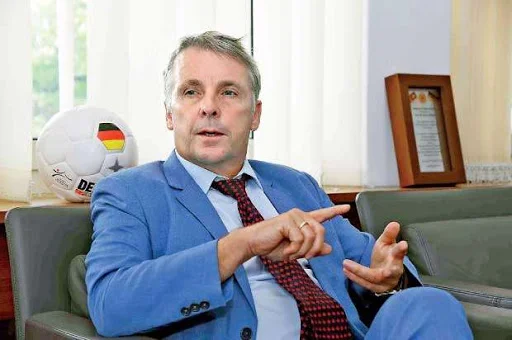
German Ambassador to Kosovo: There is no alternative but dialogue
Periskopi(6 years ago)
(6 years ago)German Ambassador to Kosovo John Rohde: Germany wants Kosovo-Serbia dialogue to lead to a legally binding agreement that resolves all issues, including that of mutual recognition. DW: Ambassador Rohde, you haven't been in Kosovo for a long time as Georgia ambassador, what are your first impressions of [...]
German Ambassador to Kosovo John Rohde: Germany wants Kosovo-Serbia dialogue to lead to a legally binding agreement that resolves all issues, including that of mutual recognition.
DW: Ambassador Rohde, you haven't been in Kosovo for a long time as Georgia ambassador, what are your first impressions of Kosovo?
Ambassador Rohde: At times, much is different, especially when it comes to limited opportunities for direct contact with people. However, I have been able to meet many political actors, and I have also met representatives of civil society.
Politically, Kosovo finds itself in a challenging period, both in domestic politics and foreign policy. I hope so. The dialogue between Kosovo and Serbia brings concrete progress for people; the same is true of visa liberalisation. For all of this it is important that Kosovo have a stable government so that it can focus on major challenges at this time of pandemic, such as fighting pandemic, helping citizens, taking into account the economic consequences of pandemic, and also an agreement with neighbouring Serbia.
At weekends I try to learn more about the country and people and try specialties from the region's excellent kitchen. A few days ago, I was on a walk in the mountains of Istog, in Prizren I took a short break, visited world cultural heritage facilities in Gracanica and Decani, and took a bicycle look at the Germia Park and the surrounding Kala area in Novoberda/Artana.
In short, there's a lot to see here and I expect to find out more. It is important that nature and cultural heritage be protected even more so that not only I but also many other tourists and future generations will experience and enjoy such beauty.
DW: Kosovo and Serbia have resumed dialogue mediated by the European Union, but recently we have seen a boost in Pristina-Belgrade political rhetoric, in exchange for mutual accusations. The question is in this emerging climate of dialogue, do you see a possible compromise for a Kosovo-Serbia final agreement?
Ambassador Rohde: We welcome the resumption of the normalisation dialogue between Kosovo and Serbia. There is no alternative to finding solutions except dialogue. Even if you stop, as has happened since 2015, you have to sit down again. Germany fully supports the EU Special Representative's efforts for Kosovo dialogue Serbia, Miroslav Lajcak. We want dialogue to lead to a legally binding agreement which resolves all issues, including that of mutual recognition, because it is utterly unimaginable, for the EU to accept members, who do not know each other. We expect all leaders involved to refrain from irresponsible statements that could harm good neighbourly and reconciliation reports, and thereby hinder the dialogue process. Both sides must now work with full dedication to reaching a comprehensive agreement that resolves all open issues. That means to me that both sides should negotiate competently and in mutual trust. To move forward, both sides must focus on the great potential of regional co-operation and the European perspective for their citizens.
DW: Serbia is insisting that within the dialogue the issue of the association of Serb majority municipalities, which Pristina is refusing. What is the German government's stance on the matter?
Ambassador Rohde: The question regarding access to previously signed agreements in Brussels had to be addressed in principle to parties and Mr. Lajcak. We think that the eventual agreement should not be compatible with already made vows. As Mr. Chairman declared. Lajcak earlier, very complex and sensitive issues should be discussed during the talks. Talks will not be easier, and both sides will have to be willing to make compromises. We think that all open issues will have to be discussed and resolved in order to fully normalise relations between Kosovo and Serbia. It may be permanent to say, but a precondition for the success of the talks is for both sides to have an fundamental belief and will for compromise. We hope it will, and not only for further dialogue talks but for other political areas as well.
DW: Ambassador Rohde, we've recently seen some developments about the Special Court, where special prosecutor's files fell into the hands of veterans of his. h - U n CK's and as a result of publishing some of them, we have persons arrested in the case. How should Kosovo behave in the face of this situation and these developments?
Ambassador Rohde: Investigation of war crimes and crimes against humanity is part of Kosovo's commitment to rule of law. There can be no lasting peace in a society without justice. Germany is convinced that fighting impunity through local and international courts is part of responsible legal and foreign policies. Together with the EU, Kosovo with the creation of Specialised Chambers, under Kosovo law has taken an important step towards that goal. Germany supports the work of Specialised Chambers as part of general efforts to address crimes during the conflicts in the former Yugoslavia.
It is important to note that specialised rooms investigate only the alleged crimes of individuals and do not prejudge an entire state, or its people.
DW: Kosovo continues to remain the most isolated country in Europe, there is no visa liberalisation, while the criteria have already met all that was confirmed in the Progress Report on Kosovo. Kosovo's hopes are in Yemen as the chairman of the EU presidency, which this issue could end this year with a positive decision by the EU Council of Ministers.
Ambassador Rohde: I have arrived in Kosovo a short time before, but of course I am extremely aware of disappointments regarding the pending decision on visa liberalisation and the importance that decision has for citizens and businesses in Kosovo.
As Germany's Foreign Affairs Minister has recently said, we are working in this direction and negotiating with our EU partners. Clearly, we must work together to convince recent critics. Here it should be clear that for us and our EU partners the key to achieving such a thing eventually remains the continued commitment and obvious results in the area of fighting corruption and organised crime, as well as strengthening rule of law.
DW: Many analysts say the isolation of Kosovo citizens produces migration, how much do you agree with the agreement?
Ambassador Rohde: Global uncertainty has exacerbated the situation for many people worldwide, including people in Germany and Kosovo. Therefore, Germany and the EU are supporting Kosovo and the Western Balkans with a package of assistance in terms of COVID-19, worth 3.3 billion euros. I understand that the economic situation at the moment is challenging for many citizens in Kosovo. Here the government has an important priority in addressing the needs of economic recovery that have emerged as a result of pandemic. In order to improve the economic situation, Kosovo also has to do the <x0-timers of the house”, that is. by urgently improving the framework of conditions so that young people can see that their future is in Kosovo and for investors Kosovo becomes a more attractive investment country and thus create employment opportunities. An important element in this direction, as can be understood by the newly released report of the EU Commission on Kosovo, is effective fighting corruption.
Germany is a long-term support for strengthening Kosovo's labour market in order to improve the situation in the country, such as through advanced professional training and through initiative to improve Kosovo exports for a broader approach to European markets. Let me stress this again: The extraordinary support of the EU and Germany for Kosovo's development on its way to joining the European family is real. We confirm our promises. We're the biggest investor and donor here. Neither can another country compare with our financial commitment to Kosovo and the entire region. During his visit to Kosovo last week, EU Commissioner Varhely presented the EU's full economic and investment plan for the Western Balkans worth 9 billion euros, while 8 billion euros of total value will be made available in the form of grants with the aim of supporting economic growth and supporting reforms needed to move forward on the road towards the EU.
DW: Many Kosovo citizens already on legal roads have won labour contracts in Germany, but they are complaining about the long-term wait for the meeting to be provided by visa. If we rule out the last phase of closure from Covic-19, why does all this time take to obtain visas at the German embassy here in Pristina?
Ambassador Rohde: The German Embassy in Pristina last year has issued more than 50,000 visas. That is even in comparison worldwide. In these figures, along with 36,000 short - term visas, there are about 15,000 visas for long - term stays (family, employment, study, and so forth). Over the past few years, we have significantly built up visa processing capacities. But further demand exceeds capacity and waiting time unfortunately is inevitable. Just in the case of national visas, we are always dependent on the necessary additional work of competent offices in Germany.
Regarding the consequences of the COVID-19 pandemic, I would like to add that the embassy since early July is again accepting visa requirements for long-term (national lines) positions on categories that are not affected by travel restrictions to Germany.
Visa demand for start-up employment under the Western Balkan Order currently cannot be accepted. Due to mandatory health and hygienic measures in terms of pandemic, the capacity of the visa office despite the extension of the time of the application until evening hours has also been significantly reduced.
Travel rules to the EU and to countries of origin are regularly considered, given the pandemic situation. When those rules can change, it depends on the flow of the pandemic situation in the EU and the states of origin.
DW: When we are at Coddy-19, a team of German experts has come to Kosovo to help Kosovo doctors cope with the pandemic. What do you think Kosovo managed the pandemic?
Ambassador Rohde: The global challenge caused by the pandemic COVID-19 requires a coordinated and common response in Europe and beyond. Germany and the EU support Kosovo and the states of the Western Balkans, which are affected by the COVID-19 pandemic.
I want to stress our excellent co-operation with Kosovo authorities in fighting pandemic. I am in regular contact with Health Minister Zemaj. Germany also helps Kosovo through long-term partnership between the Robert Koch Institute (RKI) and the National Institute of Public Health of Kosovo (IKSHPK). At request of Minister of Health Zemaj, a joint German mission and O experts The BSH has visited Kosovo for two weeks. This has so far been the largest mission of RKI experts. He has offered expertise and assistance in the field of epidemiology, laboratory work, management and risk communication. A major breakthrough with this link was that tests results for COVID-19 conducted at the IKSHPK are now officially accepted in Germany.
As we can see in various countries in Europe, we must be prepared that figures can rise again soon. It is essential that we now seize the opportunity in the coming weeks to prepare as best we can for such a case and strengthen the health sector. We have to be prepared to level the curve so that the health system is not loaded.
We finally on the global level are in this together for a while and until one is found a vaccine that will be available to everyone. So it is essential that we continue to respect all precautions and wear masks!
DW: Ambassador Rohde, once again for political developments in Kosovo. Within a short period of time, three governments were changed, while compromise on major Kosovo issues is missing, we have seen disagreements about the economic recovery law benefiting all Kosovo citizens. What is the order for Kosovo politics?
Ambassador Rohde: Both in life and in politics, stability and stability are important. Take, for example, Kosovo-Serbia dialogue: It is for Kosovo to reconcile with neighbouring Serbia that is of crucial importance to a further development, especially considering the hoped-for EU integration. It is important to, for example, that the political class have a fundamental consensus when it comes to national interests, whether it be possible for the confidence-building measures in the Kosovo-Serbia dialogue, so that the respective governments can lead the talks with the necessary support and not end up blinding each time because the government can't have reconciliation for key points in common and, thus, can hardly act on equal level, eyes, against negotiating partners.
Equally important are the confidence-building measures on both sides, which crucially contribute to the creation of a positive atmosphere for talks and thus help dispel mutual distrust. It is a good thing that the Serb side after years of hesitation has now placed personnel at the border checkpoint in Merdar. My first visit with Quinn's ambassadors in late August has been to Decan because of an unresolved dispute. From my point of view, the decisions of the Kosovo Constitution established in 2016 have finally had to be implemented. Such a step would create faith.