a minute ago
Coronavirus survives mobile phones and bills up to 28 days
Periskopi(6 years ago)
(6 years ago)Australia's Science Agency has determined that COVIED-19 may survive much longer on a different surface than thought. The most common virus is transmitted when people cough, sneeze, or speak. But experts say it can also be transmitted by particles in the air as well as through such surfaces as metal and plastic. [...]
Australia's Science Agency has determined that COVIED-19 may survive much longer on a different surface than thought.
The most common virus is transmitted when people cough, sneeze, or speak. But experts say it can also be transmitted by particles in the air as well as through such surfaces as metal and plastic.
Previous laboratory studies have revealed that the Coronobrus can survive in two to three days on bank notes and glass, and up to six days in plastic and steel.
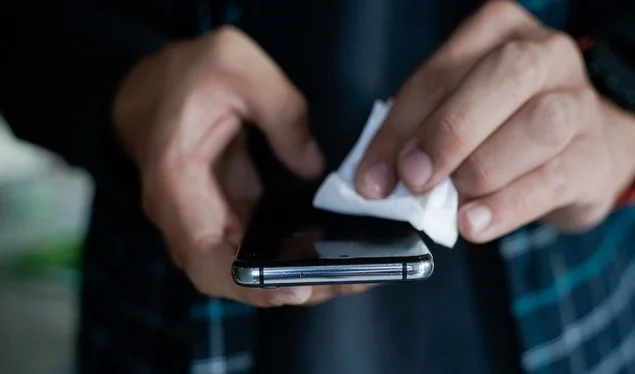
But a recent study by the Australian CISRO Agency found that the virus is “very resistant to” and can survive up to 28 days on glass - smooth surfaces on mobile phones when held at 20 degrees Celsius, which is approximately room temperature.
By comparison, the flu virus can survive for 17 days under the same conditions.
The experiments were conducted in a dark room, as UV rays destroy the virus.
If we determine how long the virus survives on the surface, we will be able to foresee more accurately the spread and better protect people,” said CISRO director executive Dr. Larry Marshak, the Kosovo Press broadcast.
The study, published in the Virology Journal, reveals that the virus is more difficult to survive at warmer temperatures, he stopped being infectious within 24 hours of exposure at a temperature of 40 degrees Celsius.
COVIDD-19 is spread mainly by air. Research has shown that more than three hours of air particles remain contagious. Less familiar is how much it can expand across all bills and screens.
Previous research into inox steel has had different results between three and 14 days at room temperature.
The new research has found how long the virus can survive in glass, paper, plastic, and steel. They found that it survives up to 28 days on all three surfaces at a temperature of 20 degrees Fahrenheit [20 ° C] more evidently than in previous studies.
The authors of the study say that COVIID-19's ability to survive in in cold steel can explain how the virus exploded in the meat processing and refrigerator industry thousands of workers are positive for the Corona virus worldwide.
CISRO researchers also claim that their research supports previous ones, which found that the virus can survive in both fresh and frozen foods.
The World Health Organization has earlier said that there are currently no confirmed cases of food infection.