20 minutes ago
Battles ] Resurrection of Paganism among Albanians
![Battles ] Resurrection of Paganism among Albanians](/cnt/019de37e-8638-7f05-9227-618bca0c0c13__m.webp)
Periskopi(6 years ago)
(6 years ago)They call themselves superstitious. A neology for their pagan faith, born in those ancient times, where instead of monotheistic religions, mankind worshiped sun and moon, and a number of gods who the Abrahamic beliefs tried to wipe out, taking their place in their pantheons. It's not just a Facebook page that [...]
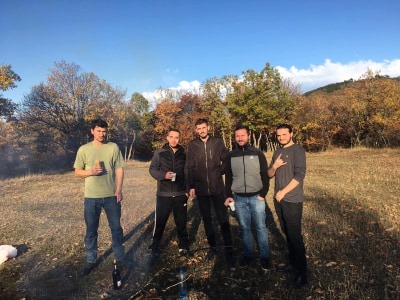
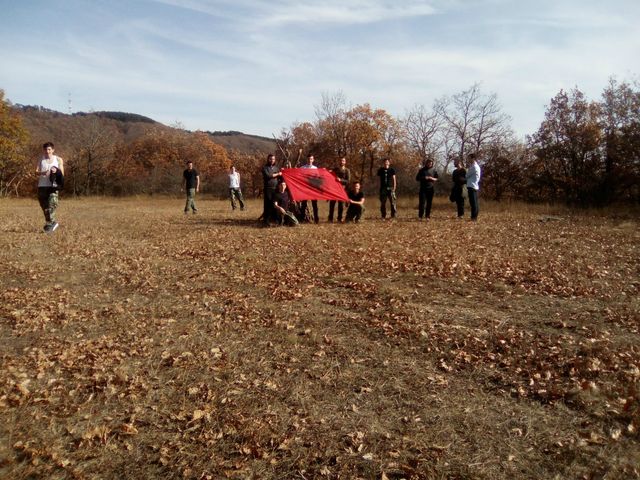
It's not just a Facebook page that collects and provides information to approximately four thousand followers about the traditions of cults that go back to Ilir and to the pellha. “We are religious communities and we function as such, even though we are in the initial stages of activity so we cannot compare ourselves with other already consolidated religious communities”, answers to the newspaper Si, Genc Kastrat, a representative of the Bassal Community, which articulates ourselves as a religious movement aimed at the revival of religion and pellacistic spiritism.
As a religious community, there are no different roads than those preaching monotheism in spreading their dogma. They say they have done it by distributing religious literature, printed brochures, where they teach creeds, and offer research, research, and scientific publications by archaeologists, anthropologists, historians, and ethnographers who support the belief that today's Albanians, such as the early Illyrians and the ancient pellaries, belong to Paganism, or as they call it the Besslathiant Religion.
We've had mainly pagan creams and the distribution of religious literature on the ground, but only in 2017 we've started with a better record with photos”, further recounting Kastrati, revealing that there are other groups bearing religious creams, “but we think we're the only ones, that we have the true faith and the complete mysticism of”.
Their centre is Pristina, but Kastrati says friends who share the same creeds have in Tirana. Despite efforts to revive Paganism, such as the fundamental religion of the civilisation of these lands, but even beyond, Kastrati says there is not much interest in the wider population “after cultural heritage is mainly foreign, and feed antipathy for what is local”.
The situation says it is not so different with other European countries, where a revival of Paganism is being experienced, but the numbers of followers are insufficient. “We believe in politicism, which means in many deities, that distinguish between the functions and the spirit they carry”, states Kastracti, while former members of the community in which he belongs call themselves superstitious, with a strong native grace that contrasts with other religions practiced in Europe, where followers are appointed in Greek languages as Christians or Persian Arabs as Muslims or Bektas.
The gods that worship the divines are Zeus or Ziss, another form of the god of heaven, rain of lightning. Next is Vidas, the goat's horned deity, the fertility of greenery, the gardens, and the like. Thana, it's the deity that escorts Vidas and many other gods.
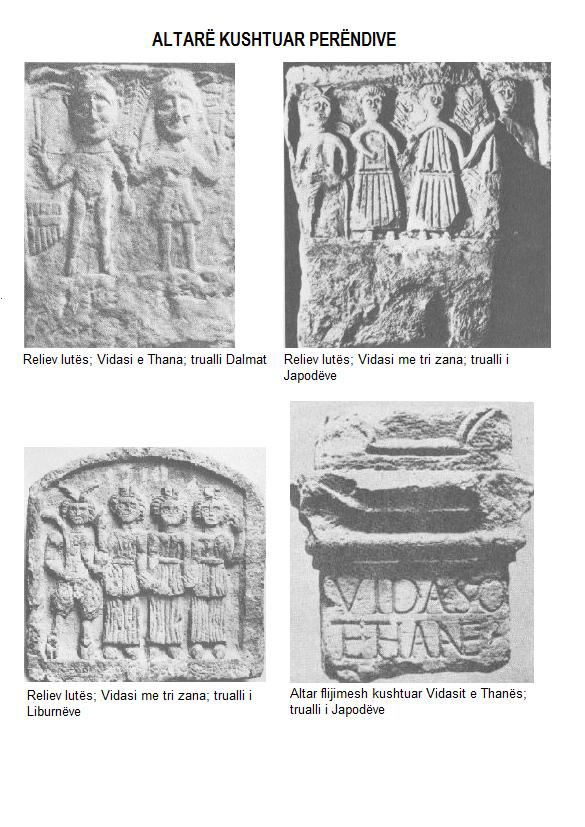
According to scholar Aleksander Stipqevic, in the book “The Illyrians”, published in 1967, the names of thirty Illyrian deities have been identified. Evidently, the Illyrians were not just a unique pantheon, but each god was worshiped by a special tribe, or three. According to Stipqevic, Vidasus was the supreme god of the freemen, and he is dedicated to certain sacred sites, one of which is the cave in Mociq, in the vicinity of old Dubrovnik.
The future must find the land with Illyrian shrines, altars dedicated to Illyrian deities, memorials of ancient heroes write in the superstitious religious brochure designed to disseminate their religion to every Albanian within and outside the homeland, believe and hope in unmistakably.
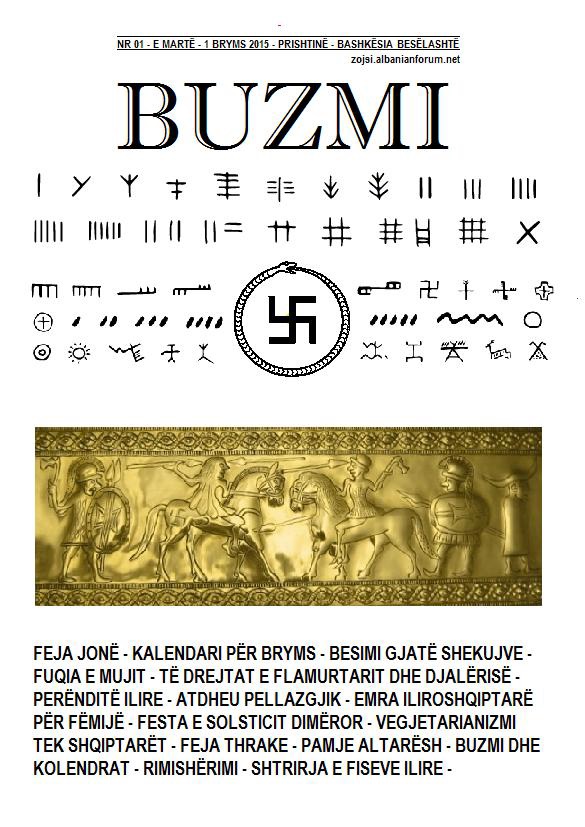
Their religious brochure, titled “Buzmi”, and the first edition dates back to 2015 at the Festival of Buzmi, which is still celebrated in Malta today. The tract with religious content from the Ilio-Albanian sphere is published periodically every pagan month, which is not 30 but 45 days. They also have their calendars divided into eight months- Spring, June, July, Djegagur, Mother, Dimnor, Bryms, Freezes. Referring to studies by Albanologist Robert Elsie, faithful people turn to Buzmi, who is beyond popular custom or ritual. Buzmi, who corresponds to the East of Christ, begins at 22 30 years of the longest night of the year. On 23 believers fast, on 24 is the night of Buzmi, and December 25 is celebrated as Buzmi's Day.
On the night of the buzmi, that is, the night of the Christmas, a family member, called the buzmar, goes out into the courtyard and calls on the householder's name, saying. The buzmi is coming with bread, cheese, all the best! ” Then the householder says, “Welcome! ” The buzmi's tree or ritual threat is brought home with ceremony from the smile on its back, and greeted by the entire family. He is treated with great honor, and everyone calls him a generous smile, like a distinguished guest. At this click of the buzmi, a full meal is served as a gesture of hospitality to the honored guest and then lit to burn in sacrifice. Once on fire, the burning should last all night. When this is over, ash is taken and scattered into fields or is laid down at the base of fruit trees so that the next year will have a good harvest.
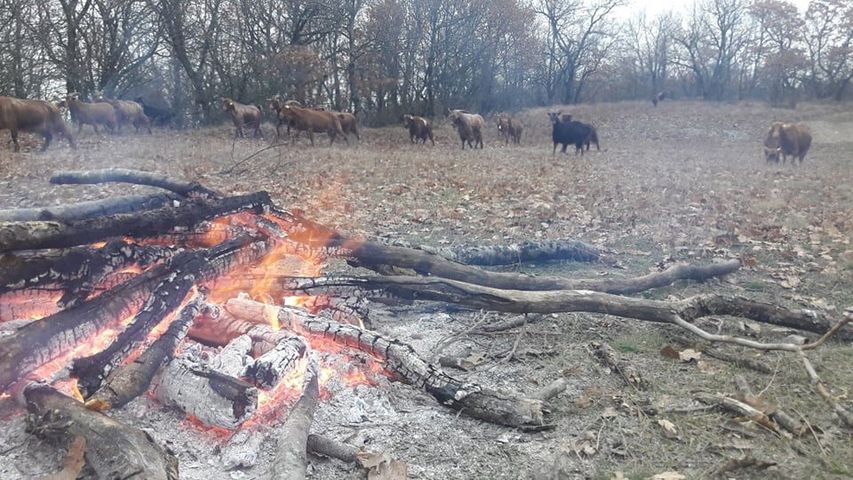
In Malta, the custom of the Christmas lip was maintained not only by Catholic families but also by Muslim ones and, as Elsie was speeding it up, no doubt coming from a pre - Christian festival associated with expectations in winter solstice days, the return of spring and natural restoration. In some parts of Albania, the buzmi grinds up on Christmas Eve and goes off again, turns on New Year's Eve, and turns on again for the third time for Epiphanes. In the Upper Remes in Northern Macedonia, the custom of the buzmi, also called Benjamin, was held on January 6, as Benic's Day, the day in the Christian faith the Orthodoxs corresponded to blessed water. In Orthodox families there, men would go to the forest before sunrise and bring down a new beech tree, seeing the wood fall would prosper. All of them tried to see the person who brought the bang to the village first. Kururi was left in the yard beside the wall until the evening. When he was finally shot into the house, he was careful to see the cut side of the tree see the sun's rays at sunset. The wood was lit only after the sun had set.
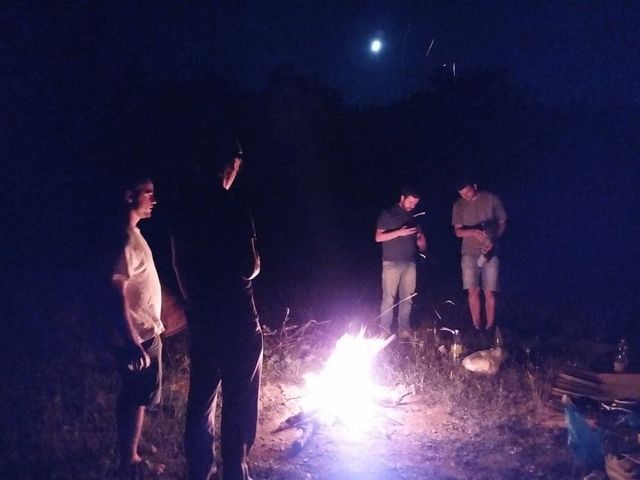
Buzmi is one of the pagan celebrations that the divines have reverbeted, and in their photos there seems to be a meal of food on the cut dance or the lip, which is placed on it to eat like a guest.
Among Albanians, there has always been a mixture of Christian religious rituals and pagan rites. To produce all the fruits in the coming season, the straw extracted from below the Christmas table was touched with axes. The owner of the fruit trees then bound the straw around their trunk, saying: “bear fruit, or cut you to the roots! ” so that the tree does not yield its fruit prematurely. The straw was also scattered in the fields so that the future harvest would come in abundance. On Christmas night, Boga's shepherds fasted by putting a pebble in their mouth and removed it only the next night, when they sat down for dinner.
According to another scholar, Mark Thirsts, the ancient Rits and Beliefs of the Krishndells or Buzem stem from the desire for fertility and successful productivity during the coming year in agriculture, livestock, family prosperity. This was the richest celebration of agricultural and bigtoral rites at all festivals of the year.
The rites of this festival are of the pagan, very ancient, pre - Christian character, no matter how much it is presented to us outside as a Christian festival. J.G. Scholar Hahn says that the clergy, in his day and earlier, have strongly fought pagan rituals that took place among our people in connection with this festival but without success. The rites of this festival were associated with collective fires on the basis of relatives and neighborhoods, which, in the old sense, gave strength to the sun. Rits relating to plant cults, expressing a desire to increase crops in agriculture and livestock, accompanied sacrifices of fire, livestock, or birds, of pine lights at night, of lucky exams, of dashing through fire for luck or coin “for luck” on bread and other ritual foods, with the first foot saluter, with cholera, with various magical actions in livestock, in fields, in fifth ears.
According to Genc Kastrat, the Bessalat Community borrowed pagan rites are not only found in the Christian or Islamic religion, as well as in Bektasism. But it needs to distinguish lending in Christianity and Bektasism on one side, where loans are canonized have become part of both officially and the pagan elements in the Sunite population where they have survived from time to time, and they have been co-edited, but they have never become a part of religion, and especially in the last two decades have been actively fought by the Islamic clergy”, Kastrati explains.
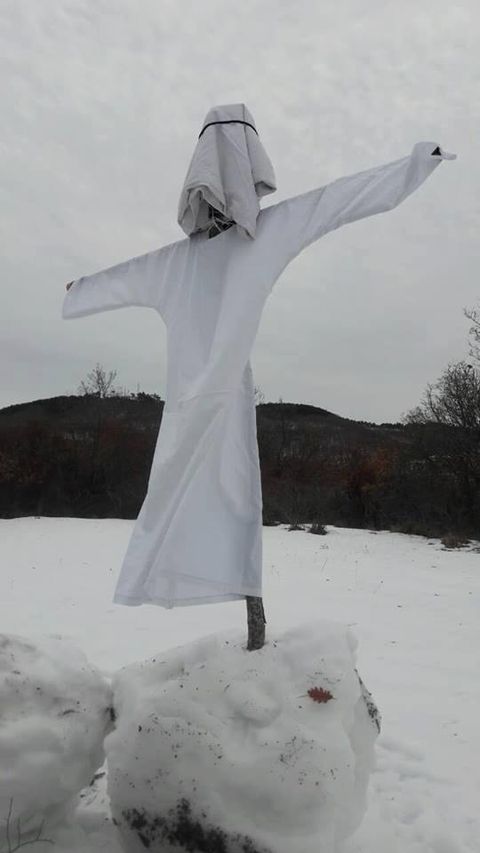
The Bassalash Community pays attention to the celebrations of the days they call the motto, while on Sunday believers gather to honor the deities. In the creed stated by them that they try to draw the Albanian to the ancient Ilio-palystic gods and prevent the foreign influence of the enemy “, their pagan religion is strongly linked to national identity.
The “Paganisms are ethnic religions because they are connected to the specific location, the language, for various customs, is an intrepid organic part of a people's culture. Like the language”, Kastrati agrees. And the divines believe in reincarnation, as one of the pillars of their religion where man has no one but lives a few lives after another.
But the superstition must know, that reincarnation occurs only inside the blood. Can't have a Illyrian reincarnated into black, slave, or Arab. The spa has always been reincarnated in Arbetor or Albanian. Present-day Albanians themselves, in a previous life, have been free, skunk, or Skenderbe's fellow allies, and some other Troyan warriors with one or the other”, they believe, where a racial and ethnic divide is observed.
Another point of faithful faith is related to vegetarianism. Referring to Strabo, they are convinced that the Illyrian peoples invented this. Thus Strabo reports that our prophet Zammonox taught vegetarian charities. Even more interesting is the report of the same author that in Myce, an Illyrian tribe living in the lower Danube, there were some priests who fed only honey, milk, and cheese. These were called theosbeisʹ, meaning worshipers of the gods”, written in one of their tracts, as they proclaim Zalmonoxin, an Illyrian priest and founder of the Zaalmoxean line of priests, close to the royal dynasty of giveers and ghettos.
“In our vegetarian religion is a voluntary choice, so there are superstitious vegetarians and others who are not. Vegorianism in our Albanian people should not be seen as a foreign influence, but of what was said above should be considered part of the local pellatric tradition, and as an inseparable element of our religion”, they explain.
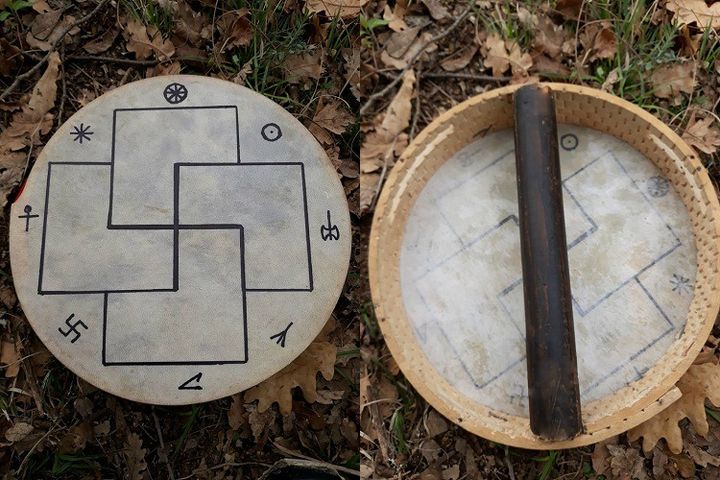
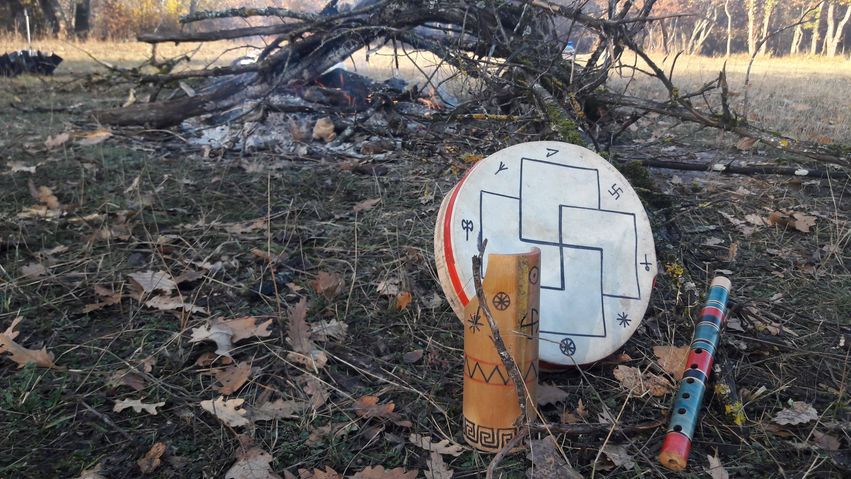
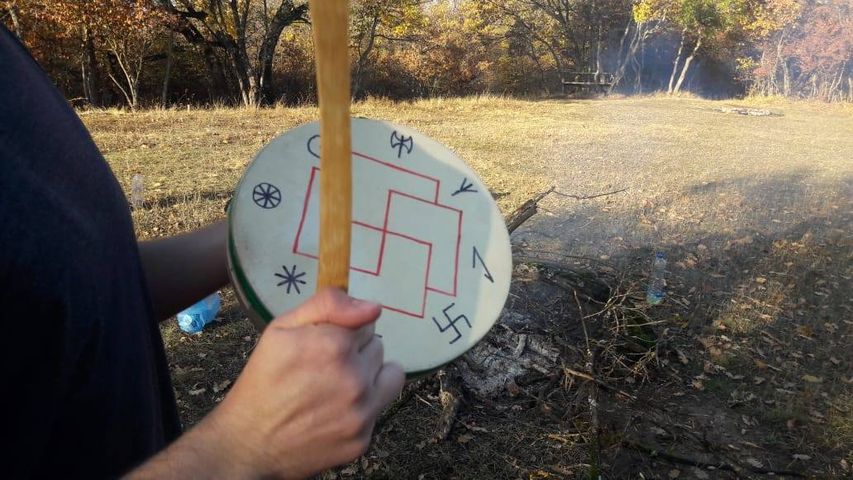
Among their pagan symbols, also displayed in religious tracts, is Swastica - the ancient symbol that received bad fame after being used by the Nazis, also known as the broken cross. But, as Kastrati explains, “Kryqi, as it is in the churches has been in the Illyrians, but in a different sense, as a simplification of the two-tah axe (labries), since it was more quickly drawn with only two lines, and the sun has been used to say throughout the world, but within Europe we have an impression that it is more densely located in the Illyrians.”
Swastics, or Sunse as they call it, has been found in countless cases, and there are many variations, there are old ages since the Neopolitical time 5,000 B.C.s in the culture of Vinci, Kosovo and Serbia today, and the modern-day “historians say that later in the Illyrian era, it has been restored or re-arranged, we think it has instead continued since Neolitti, has survived in place<1.
Pagan symbols are also seeing a resurrection in tattoos, and Kastrati claims to have an interest. Our <x0).. ..we all have at least one tattoo with the ire-pagan content that they've chosen according to personal preferences, but always on pagan subject”, he reveals. According to researcher Aleksander Stipqevic, the Illyrian religion of the preromance period is the little - known and little - researched sector, but solar symbols such as the strike cross and the concentric circles, various necklaces in the form of small water birds, as well as anthropomorfe, document a fairly primitive notion.
But how have they expected this religion, although ancient, a little widespread, in predominantly Muslim Kosovo?
According to Kastrati, foreign cultural heritage left by invaders has negatively affected. “... but also lowering the level of education, since a brief announcement of Illyrian faith, of Illyrian deities and their names and functions is found in every book in elementary and high school history, but they go unread, because education has fallen, and the book is defamable”, Kastrati believes. But, although much of it has remained loyal to religious images “sic has brought to us Turks”, there are others who are drawn by various fibers, such as the homelandrism... “some of the environmental ideas, some because of ancient peasant traditions and so on and so on, he says by ending that, despite the nature of their religion, in a renaisssance attempt when other religions have been consolidated by 2 millenniums has not found embrace in the masses, however, it does not seem to rock their faith, with ancient roots... Journal Si