4 months ago
Why are Albanian women marrying Serbian men?
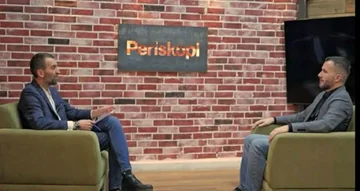
Periskopi(6 years ago)
(6 years ago)When my former student in Intercultural Communication class, Olta Murataj, at the Master's studies in the University of Tirana's Compared Literature, communicated at “Messenger” with me, I said “how long I haven't heard her news”. He explained to me that he had been there for several years and had done a doctorate at a very good university [...]
When my former student in Intercultural Communication class, Olta Murataj, at the Master's studies in the University of Tirana's Compared Literature, communicated at “Messenger” with me, I said “how long I haven't heard her news”. He explained that he had been there for several years and had done a doctorate at a very good university in Turkey in the field of sociologisty. I was happy because she already had such a rare interdisciplinary form in Albania. Then, in the conversation, she explained to me on her research topic: “Marriages between Albanian girls and Serbian men in Sandzak, Serbia”. I jumped. I said, "I, your ex-professor, will do the modest journalism and you the doctor in Sociology”." Olta, a wise, kind girl, is still without a university job in Tirana today. Nobody unfortunately knows the important findings of its rare work on Sociology, based on deeper interviews and life stories, so missing in our country. Olta Murataj probably doesn't know what great service has done to her scientific research in Albania, which suffers, but I know. She, with her modesty, with a 300-page paper that every foreign publishing house would have published right away, does not know perhaps that the Romanians spin in doctorate sentences with no meaning and no sense, while she deals with a problem as sociologist, as much as geostragic for her country.
Olta wants a job! What a shame for us who have seen him wander from door to door for a year, and delighted pigs sleep on titles that come out of pages filled with uncontaminated words! Come on, Olta Murataj!
Come on, Olta Murataj! ... the day I got up was very cold. I'm Tuesday November, and it was very cold. When I saw the place in the morning I said, “O Jesus Christ, I came to him, it's not what they described me to be” (Albanian wife, married in Serbia).
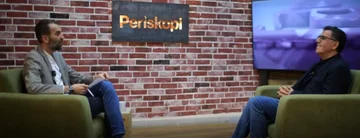
Prof. Dr. Artan Fuga Academy: Do you think Albanian-Serbian marriages are an isolated fact of the case or are we dealing with an internal need of social segments in both respective societies?
Dr. Olta Murataj: I don't see it as an isolated fact, but I think it's the inner need of actors of both respective societies. Serbian men choose to stay in the village on lands their family owns to care for the land, livestock and elderly parents. Serbian women have abandoned villages for a better life towards cities, refusing marriage in rural areas. With very few women left in the countryside, it seems very difficult for men to find wives to form families. Their marriage requirement has led to the creation of a “marriage market” between these two countries. Likewise, villages in Albania are quickly disproportionating, but, mainly, are men leaving abroad to find jobs and women lag behind. That way it becomes difficult for Albanian women, especially in rural areas, to find marriage partners. Both sides are found together to meet the shortcomings facing their societies.
Why do Albanian girls marry Serbian men, and why is there no movement towards Macedonia, Kosovo or Montenegro? How many cases have you studied and about where Albanian women are scattered in Sandzak according to municipalities or villages?
Marriages between different cultures have been very rare and often unwanted by society, as homogenous marriage has been constantly preferred, marriage to “to other”, which is similar in culture, nationality, race, trust or socio-economic status. In Albania, marriage between Albanian women and men with partners outside Albania has its beginnings after the fall of the communist system. Initially, Albanian women's marriages with Greek, Italian men and later men of various nationalities began to turn into normal phenomena. In the last ten years, men from Macedonia, Montenegro, as well as Kosovo Albanians, began marrying Albanian women from different Albanian cities. Specifically, the marriage of Albanian women to Serbian men, I name them marriage oriented by individuals who have taken over the role of the traditional expositors and marriage agencies. So it's not a personal request of the parties, but it's the <x2-beder marriage” initiated by foreign actors.
Given the confessions of male and female participants, I have been able to isolate the fundamental reasons the parties have pushed across the border in search of a life partner. These reasons are listed according to the frequency of repetition by each participant. According to Serbian husbands: (1) the absence of girls in the country where they live, (2) the refusal of Serbian women to marry and live in the village, (3) “listened to by others” that Albanian women are women who are related to their home, that they have families, that they have over two children, that they care for their husband and family, that they accept to live in the village, that they do things inside and outside the home, that they do not spend much money, (4) that they are old enough to marry, (5), that they need to have families, (6), and that they want to have children, and that fear alone. Within the space permitted to us, I am cutting off some voices from the participants of men and women regarding the motives that have prompted them to this marriage:
My brother married an Albanian girl. I liked that she was very attached to chores and cared for our mother, respected my brother and others. Looking at it, I thought I'd find a bride in Albania for myself.
In the village where I live, I was the second to have this marriage, so I had not heard much, it was a good coincidence. The fact that I would find someone who would live with me in the village made me go to Albania. Whether it's a good choice or a bad choice, you can't know without trying. Today I'm glad I did this.
The main reason was for me to have a family, not to be alone, because your father's mother is gone today and tomorrow. I wanted a wife and family.
While the reasons for Albanian girls to accept marriage requirements: (1) the age of marriage (in rural countries is an important factor in women's marriage; then after age 25, the demands for marriage are greatly reduced), (2) the fear of remaining at home <x0); the age that no one received” or “ “; the lack of Albanian boys (the rural areas of youth, especially from boys), (4) marriage as a social obligation because “needs to be found with its home”, (5) life in the village without perspective (mart) comes as a way to escape) by thinking that they will live out of Albania, especially as a better environment, and then (a) the most curious environment (a) and socialistia) comes about the best of their family (8).
I was twenty-nine years old, and the most terrifying thing when I was called “k at home”. This for the girl is the most horrible thing. When you're told, the “me has the good skee met on”. It's better if you look like an apple, and the other guy says he's got met neʹshop.
What do you mean by your brother? What to do? With the following in the service of the brother and sister, you'd have gone to your husband” You better go to your job anyway.
Albanian males have fled, and are all marrying women. There's no young man left in the village where we were, all gone. That Albanians [Albanian boys] go and take everything out of the state and leave Albanians who are gold [flower] (Pector, wife 10).
Because of the prejudices about their marriage that individuals in this study have lived, their individual sensitivity to confess married life was very high, especially among female participants. As a researcher, the most difficult part has been to gain their faith so that a discussion (interviews) can be made as friendly and sincere as possible so that we can understand the real reason why it has led these individuals to such marriages. As Patton notes (2001: 340-341) “We interview people to discover from them what we cannot directly observe...”. Deep interviews with 42 women and 31 men have been conducted in this study, totaling 73 individuals among them 30 are couples (for various reasons, it has not been possible for each interviewer to be part of the study as well as the husband).
The research cases were conducted in southwestern Serbia, the region, which at various historical times has been known by two appointments -- Raska and Sandzak (Raska and Sandzak) ♫ in six Novi Pazar municipalities, Sjenica, Tutin, Priboj, Prijepolje and Nova Varos -- whose cities bear the same names. The interviews have been conducted in the largest concentration municipalities of these marriages, such as Sjence (in nine villages of this municipality), Novi Pazar (in a village) and Tutti (in three villages), besides two interviews that were conducted in the town of Jagodin and Kraljevo. Albanian women there, mainly from northern Albania, except for several cases from Middle Albania.
What characteristics do families form? What family economies do they work on? What is the ethnicity of men, whether Serbian or Turkish? What is the age of Albanian women and the age of Serbian men, and what is the age difference between partners? Have Albanian women been married before, or is it their first marriage?
The men involved in this study had lived and continued to live near their family (with the exception of six cases that had lived a few years away from home before marrying, but by marriage time they had chosen to return to their villages). Their lives were closely linked with their farm products, their animals, and their sale. In rural areas where agricultural land was scarce, residents (as well as participants in this study) had their livelihood, not by land and livestock, but by woodwork. In some families, interviews in these areas have mostly been conducted only with women, since men were in the forest and were late home. In villages near the Sjenica municipality, where there were many fields and meadows, and so was the chromium mine, the participants in the study carried many livestock, and in addition to livestock work and in mines. Most of the men were connected to land and livestock, but depending on where they lived, some of them were engaged and with second jobs, such as mine, municipality, police, guards. But women, apart from one of those who worked in the family, were all engaged in household chores and manual work outside the home.
As for ethnicity, the participating men have claimed to belong to Serbian ethnicity and that they were Orthodox Christians. The average age of those who attended marriage was for 32 - year - old women, for 47 - year - olds. The age difference between these couples is 15 years, and the average marriage life rate is eight years. Of those interviewed by men, none of them were formerly engaged or married, and women one of them formerly engaged and another married, while others claim that they did not have a former engagement or marriage.
How many couples do they have on average? Have they formed separate families, or do they live with their husband's families? Are there divorces, and if you know, what are the reasons for divorce? If there is, what has the Albanian woman done, is she back or not?
Of the 42 women interviewed from the time the study was conducted, 6 had no children, while others had an average of 3 children each; in all, 92 children had come to life. These couples have not created a single family but have begun living in the families of Serbian husbands, mainly with their parents and often even with their spouse's siblings. If we're going to refer to the husband, wife and (if they have) the 42 female participants, from the time of this study, 17 of them were living in the nucleus family (a part of them had started their lives with at least one of their husband's parents but who was separated from life); and 25 of them lived with their marriage mates, their children, their husband's parents (at least with one of their parents) and several cases with their husband's brother/her sister.
During field time, I've heard of cases of divorce between Albanian-Serbian marriages, and according to the women I've opened this conversation, there are different reasons that lead to separation; there may be disagreements between marriage mates because of different cultures, or the frustrations that Albanian women may have about living conditions. In cases of divorce, Albanian women abandon their husbands' families and have returned to their homeland.
Do the daily conduct of these families, be it between marriage mates or other family members? Family language? Albanian women's religious faith? Children's Religious Faith? The language children use? Do the children know Albanian, and if you ask what they say? The relationship of these families with Albanian crustaceans, how is it?
During the first year, these women, every day of their lives, are in a continuous learning process, absorption and embezzlement of everything they see, hear, and experience. Especially are the first three months extremely difficult, since speech communication does not exist, only with signs, touch, and gestures. After the third month, they begin to learn words of objects, foods, greeting words, or the construction of short sentences. According to participating women, after the six months they begin to understand, but it takes a year (up to a year and a half) to start speaking without difficulty. According to participants, everything starts with “
Husbands say that the first words they have taught their wives have been objects at home and more words related to the kitchen. According to them, everything starts with “prek object” and “enter”. The men say that their first words have been objects about them (house places, kitchen dishes, food, animal names). They show that they have touched the object by telling the appointment in Serbian (some time) and their wives have written the word they have heard in Serbian and English. In some cases, women say they have used Serbian-Albanian vocabulary, saying that vocabulary has been a huge contribution. With language learning, the adoption process gradually begins. Women begin to understand and get to know the family members they live with, get to know their bedmate, begin to understand family conversations, exchange conversations with their neighbors, and shop at home. So it's the language that connects them to the place, makes them understand the world around them.
The language spoken and used inside the family is constantly the Serbian language. In addition to three women who are of Muslim faith, thirty - nine were of the Catholic faith. After marriage they have had to change their religious faith, from the Christian/myslimian religion to Orthodox religion. Most of the cases say that this change has not been desirable but has come as a request from the husband and family. When talking about religious faith, these women refer to themselves as two people -- I am Orthodox in Serbia and Catholic/mysmian in Albania.
Their religious identity was clearly shaken, but it was not yet lost. They said that their children had Orthodox faith, and they never thought that they might forward their faith. The language children used was Serbian, but they themselves showed efforts to learn Albanian. There were children who spoke and understood very well Albanian or children who understood more than they spoke, but sometimes only the basic greetings they understood and spoke. Both sides indicated that relations with Albanian crustaceans were very good and that both sides visited each other whenever opportunities arose.