18 minutes ago
Why Trump is being so committed to Kosovo, Serbia
Periskopi(6 years ago)
(6 years ago)While Washington is focused on tensions with Iran and the trial for President Donald Trump's possible dismissal, two senior US administration officials have made efforts this week in Europe and the Western Balkans for progress towards resolving a non-recognised issue for most Americans. As reports [...]
As the Voice of America reports, attention to the administration's high levels towards the dispute between Kosovo and Serbia has led some American analysts to wonder what place this issue is in American foreign policy, at the centre of which the crises in North Korea and Iran were and which has the slogan “The Paramerica centre. ”
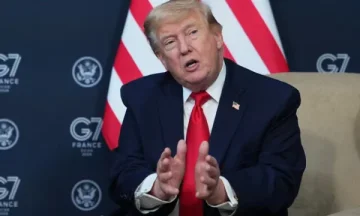
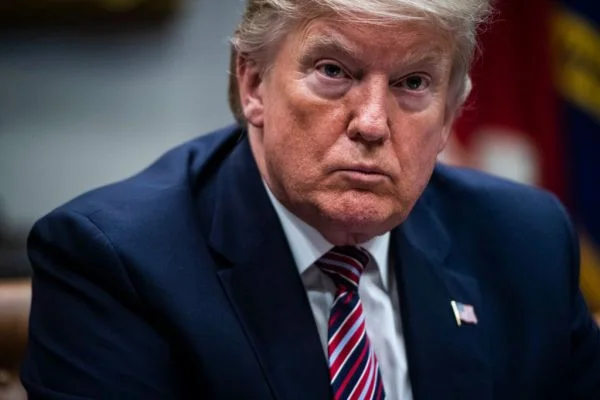
President Trump himself has personally devoted interest to this issue, expressing his appreciation on Twitter a day before the Senate dismissal trial began.
In a Twitter post Monday evening, he wrote:
Everybody said it couldn't be done. But for the first time in a generation there will be direct flights between Serbia and Kosovo. Another victory. ”
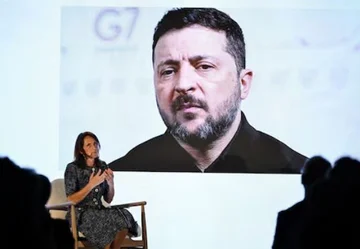
Early in the week, as US senators debated court rules for the dismissal, National Security Adviser Robert O'Brien met in Davos, the presidents of Serbia and Kosovo.
Richard Green, the US ambassador to Germany and the White House's special envoy for Kosovo-Serbia talks, visited Pristina and Belgrade this week, urging the parties to resume dialogue on normalising relations and focus on economic development.
Even State Department special envoy for the Western Balkans Matthew Palmer has engaged intensively in this diplomatic effort.
At this week's meetings, Ambassador Green called for compromise.
The tariffs must be removed. The tariffs are unacceptable, and I make the same request here, that the campaign for attracting Kosovo recognitions should be halted. So I think what we're going to do is keep moving in this direction of focus on economics”, Ambassador Green said Thursday, after meeting with Serbian President Aleksandar Vucic in Belgrade, echoing the similar statement a day earlier in Pristina.
High-level engagement
Neither the White House nor the State Department responded to the demands for comment regarding the motives of this high - level commitment.
Analysts contacted by the Voice of America see no strategic benefits from the United States in exchange for the role they are playing.
But they say it is time for this issue to be resolved and that it is enough to be an easy victory of American foreign policy, compared to other international challenges.
In my opinion, the administration is trying hard to achieve success, somewhere in some part of the world. There is no strategic interest”, analyst Daniel Cerwer of University Johns Hopkins told Voice of America.
Damon Wilson, vice president of the Atlantic Council, made a similar comment on the Serbian service of the Voice of America, citing the lack of progress in some of the American foreign policy priorities, such as Iran and North Korea.
Even in the Western Balkans, it is not easy to achieve success, but there are democratic states that want to be part of the West and have a common vision for the region as part of Europe. This gives us an opportunity to contribute, and although it may seem difficult, compared with Iran, North Korea and Venezuela, it is simple”, he said.
James Hooper, former State Department diplomat, says a success in the Balkans, would be politically useful to President Trump at this time.
“So it can demonstrate that the trial for dismissal does not distract it from its focus on national security and international affairs”, he told the Voice of America.
He adds that a success in foreign policy could help Mr. Trump in campaigning for re-election.
But Mr. Wilson says the impact on the election should not be exaggerated.
“You cannot say that it is an issue that can ensure the support of Aevas” voters, he said, referring to the state where the first votes for the election of presidential candidates will be held in early February.
Prospect for Progress
Despite the administration's motives, Mr. Hooper sees American engagement as an opportunity for progress in difficult relations between the two countries.
The “is a tangible chance because Washington is paying attention and Green is serious and has a lot of influence on the White House”, he said.
Mr. Wilson says that given developments in the world and in the United States, this commitment is even more significant because it sends the signal that...
We will engage, we will not leave empty in the Western Balkans, we have a role to play and we will play it”, he says.
Prof. New York University's Alon Ben-Meir says both Kosovo and Serbia should take advantage of this chance.
“are neighbours, should take and give each other. They must admit that some realities on the ground that they cannot change. And when they get to that point, especially Serbia, I think there will be progress”, he says.
At present, however, there seem to be no signal that this message is being heard. Serbia immediately rejected Mr. Green's proposal.
“I do not accept the draw sign between tariffs and the withdrawal from the non-recognition campaign. We have another stance on recognising Kosovo by America and Pristina. They want her independence to be recognised and we don't want it. As far as tariffs are concerned, they are following no reason”, President Vucic said.
Kosovo has not expressed a clear position and the situation there is complicated by the lack of an agreement on the government. The government, led by outgoing Prime Minister Ramush Haradinaj, imposed the tariffs in 2018, following Serbia's active and successful campaign, that Kosovo should not join Interpol.