19 minutes ago
Serbian Student: Kosovo was different from what my parents told me.
Periskopi(6 years ago)
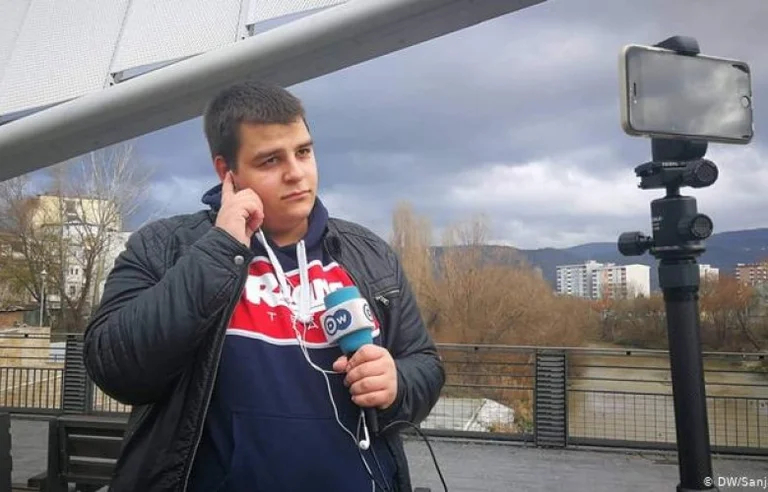
(6 years ago)Fear is the only feeling that connected me with Pristina and generally with Kosovo, south of the Iber River. DW's project #Generation99 was an ideal chance to report the real situation. It says Andrija Lazarevich. With the approach of the administrative crossing at “Merdare” (Serbian side tells the border crossings as a sign-up and administrative checkpoint [...]
Fear is the only feeling that connected me with Pristina and generally with Kosovo, south of the Iber River. DW's project #Generation99 was an ideal chance to report the real situation. It says Andrija Lazarevich.
With the approach of the administrative crossing at “Merdare” (the Serbian side tells the border crossings, as a border crossings and administration ) footnote, the feeling of concern and internal curiosity was strengthened. It's sad that this part of Cosmet (recordition: Many Belgrade Serbs and officials call Kosovo “Cosmet” or Metohija “Kosovo/Metohi”!) I am seeing it for the first time now after 20 years, even though I was born there. It took less than 50 minutes to Pristina. My feelings changed. I looked at the homes of Albanians and sought differences in all things from the number of windows to the appearance of yards, shops...
We finally arrived in Pristina. My first impression was that this town had too much light, maybe because of last year decorations or something, I'm not sure. Walking down the streets, I realized that almost every stone in Pristina preserved its first war story. From faculty buildings to library and monastery “Spas Hrista”, which is located in the centre of the city and causes different opinions on Albanians.
Slow Relaxation
Young people walked through Pristina, while my feeling of internal technology was ever smaller. The first contact with young Albanians also came. Together we took a quick course in journalism, on cell phones reporting, and we exchanged thoughts about the current situation in the country. I didn't like their approach at first. Their arguments were beautifully contradictory, on the one hand they called for peace, and on the other, they dropped statistical data on the bloodshed in Kosovo and Metohija (Kosovo footnote of Redakis!) during 1999.
Partly I understand their need. The accounts of our parents and our relatives, which have also influenced the creation of our thoughts, have been deeply embedded in our minds. Because of the things Albanians have done in the past, I never thought that “all Albanians are guilty of”. And these two days I have given myself the chance to get to know Albanians better. I became convinced that even my peers had given themselves this chance.
Visiting Mitrovica yesterday to our “ana”
In addition to Pristina, we had the opportunity to visit South Mitrovica, which from the northern part separated the famous bridge over the Iber River. We met with the deputy mayor of South Mitrovica and talked to him about the emphasis on the conversation was the past. Then we split up into several groups (participators of the project are divided into several groups and have done joint interviews or coverage .
The most important part of this visit to me was the visit to the north, that moment of passage from one side to the other, to our “an” of the bridge, when my emotions overflowed. At the end of a very conservative and tiring day, we returned to the hotel in Pristina.
Changing Thoughts
Time for your impression summary. We all radically changed our thinking in just two days. In the question (the organisers) what will you do when you return from Pristina to Belgrade, it was stated: “I'm going to tell my family and friends tomorrow a whole different story about Kosovo from what they think”. And I did that right after I returned to Belgrade!
My wish is that the enlightenment mentioned at the outset be a symbol of as bright a future as possible and that the peace confessions are not only vain political tales, but to be our future reality. In fact, I want to live in peace. / FE
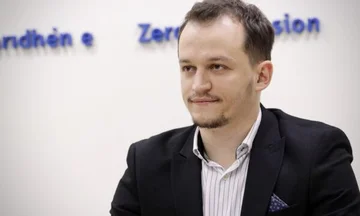
Andrija Lazarevic is a student of journalism in Belgrade, born in northern Kosovo. He was born in Kosovo, but for the first time south of the Iber River was under Deutsche Welles' #Generation99 Project, where students born in Kosovo's wartime met in 1999. The visit to Kosovo has been realised on 12-13 December. While first students from Serbia and Kosovo have met for the first time in June in Kumanovo, on the 20th anniversary of the submission of the Kumanovo Agreement.