a minute ago
Two satellites risk impacting this week
Periskopi(6 years ago)
(6 years ago)Up above our heads, in Earth's orbit, thousands of different objects are rushing. These include small waste, but even broken satellites that can no longer communicate and take orders from earth's scientists. Though, fortunately, larger pieces of space waste rarely [...]
Although, fortunately, larger pieces of space waste rarely crash, something like that can happen this week.
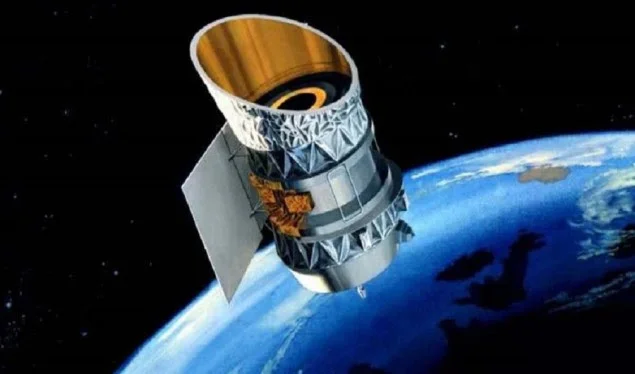
According to Leo Labs, a service that monitors orbit remains, I RAS (launched spatial telescope in 1983) and GGSE-4 (launched scientific satellite in 1967) could crash on January 29th. Concretically, that day, at an altitude of 900 kilometers, the two satellites will pass each other at just 15 to 30 feet away.
Because they are no longer operational, experts cannot communicate with them and carry out maneuvers to avoid a collision, the Kosovo Press broadcasts.
According to LeoLabs' estimates, there is a 1% chance of the crash, reports Science Alert.
They're moving at a speed of 14.7 km. These satellites have no equal weight and size. I RAS is a larger space telescope that weighs 1.083kg on the launch, and GGSE-4 is much smaller and easier to weigh just 4.5kg and connects to a larger satellite.
If they're gonna crash, G GSE-4 will be destroyed and transformed into a dump. I RAS is likely to stand in a piece, but some smaller parts can be separated from it, which would create additional waste in our orbit.