18 minutes ago
Causes and effects of polluted air in Pristina
Periskopi(6 years ago)
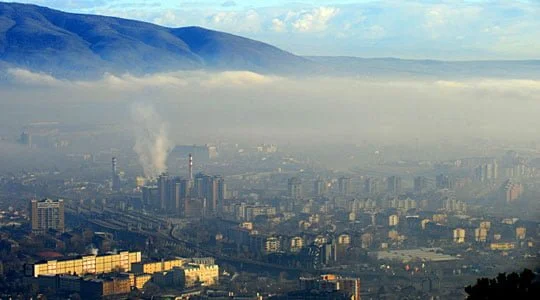
(6 years ago)Air pollution in Pristina is continuing to be high, considered to be among the most polluted countries in air quality. Environmental Science Professor Sami Makolli shows that air quality in Pristina continues to be harmful. It shows that capitals are continuing to be exposed [...]
Environmental Science Professor Sami Makolli shows that air quality in Pristina continues to be harmful.
It shows that capitals are continuing to exhibit a dangerous air that will yield health consequences.
A small town that doesn't have much industry and there's so much pollution that we have over 150 micrograms of pm 2.5, we usually refer to these in the environment. These 2.5 particles are particles, usually like these, very small ones are blown from wind into the atmosphere, and then, being such, they penetrate directly into the lungs and are not stopped by nose and throat. Even some small ones penetrate into the blood, and this affects that toxicity in our body grew and over 150 is considered unhealthy”, he says, for Online Economics.
According to him, the poor quality of air in the capital is taking place as a result of the impact of many factors, such as the large number of cars, the use of coal and thermal power plants.
I think that pollution of air comes right from burning without criteria, and when I say from underindulgence, that means, every three sources of pollution that one of three is communication. We don't have a standard of burning, namely, every car regardless of its technical state that emerges into the environment has huge gas emissions potential. Also, we have homes that burn over and over again, burn wet coals, burn wet wood, and then put in thermoelectrics and filter levels”, says Professor Makolli.
However, Professor Makoli says that improving the air depends largely on climate conditions. According to him, the parapets will continue to face poor air conditions.
I don't think that's going to be more days now if there's going to be less to the climate. I told you that we have constant pollution and that I think every year and more is growing, whether it's going to be the next few days, and so it depends entirely on the climate temperatures that reign. When there's fog and there are measures of air that don't move then the situation can get heavier and that's a little bit of luck on how we have the meteorological issue in the country”, Makolli stressed.
And this enzyme pollution, according to Professor Makollit, shortens life for 1.8 years and leaves long - term health consequences but also increases the economic cost of citizens.
This directly affects the average life expectancy of our citizens, and given that this decreases, then falls according to the World Health Organization's study that air quality takes 1.8 years, shortens life to the average population that it has distributed, but the quality of the air that is at such a level can then be multiple and much higher. Then don't mention the economic cost because all this pollution, in the end the bill of all this pollution will pay citizens in hospitals by increasing the level of cancer diseases, Makolli stressed.
He appealed to state institutions to take urgent measures to prevent this alarming air pollution situation.
In such situations, Makolli recommends citizens, reduce access to open environments and use protective measures.
“I've highlighted many more times, measures to take quickly and quickly are difficult, no such measures, no miracles that can improve the environment overnight, overnight. So we should focus on next year. Let us not discuss the matter of the environment only when it is bad. Now we have to discuss a plan during the summer so that at least in the next year they have less. Better is a bad plan than working without any criteria”, Makolli added.
According to the World Health Organization's study, the polluted quality of air cuts people's lives to an average of 1.8 years.