12 minutes ago
China emits frightening views of the far side of the moon
Periskopi(6 years ago)
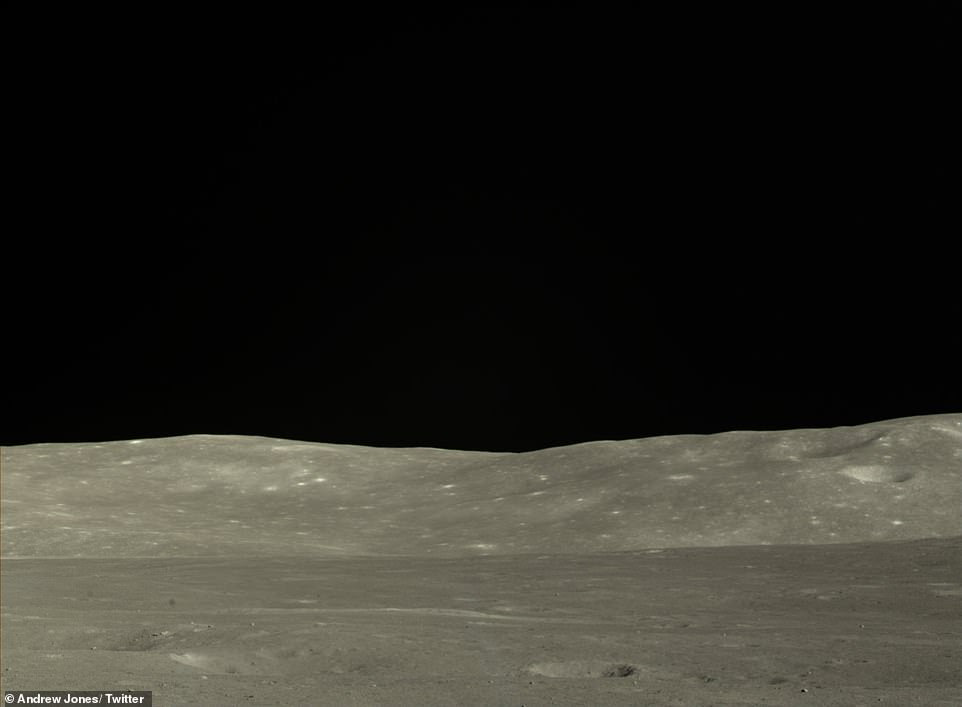
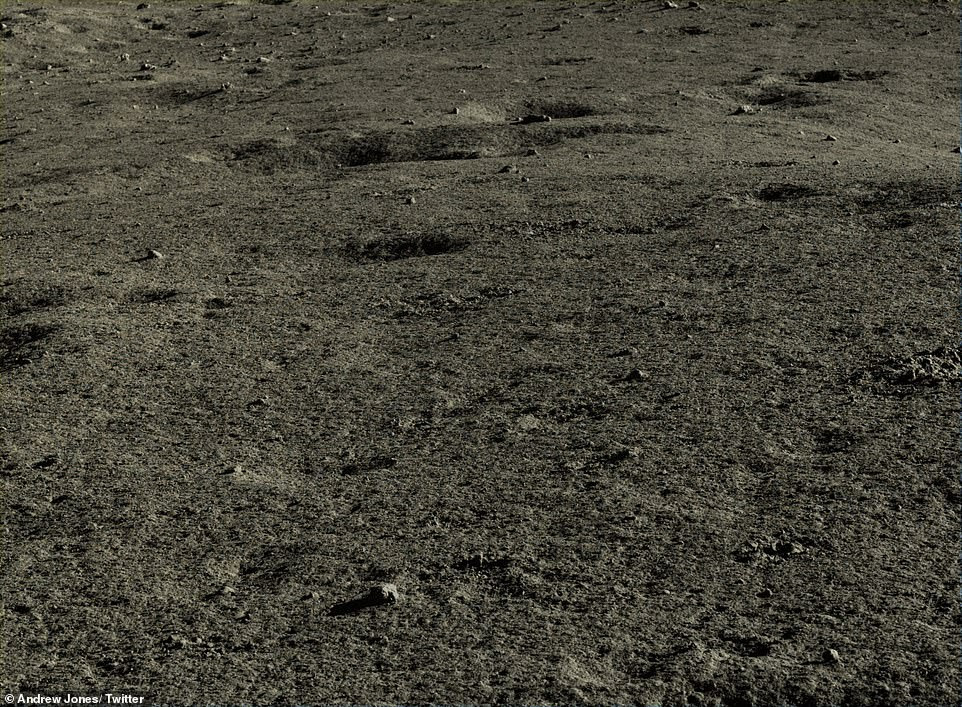
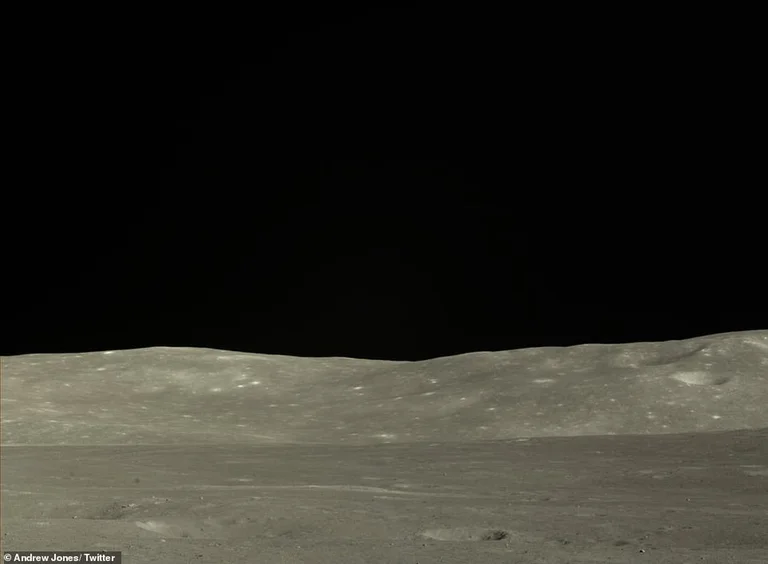
(6 years ago)China's Space Agency has produced spectacular views on the far side of the moon, revealing the beauty of mysterious terrain. High resolution images were published on the agency's dedicated website and improved by an expert NASA. Doug Ellison, who heads the engineering camera team for Cyrus Mars. [...]
High resolution images were published on the agency's dedicated website and improved by an expert NASA.
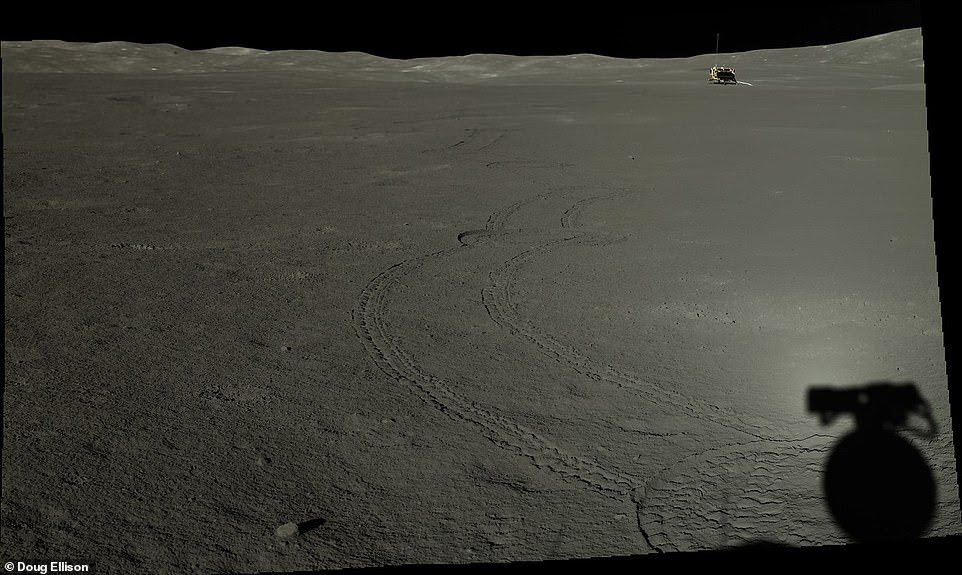
Doug Ellison, who heads the engineering camera team for the Mars Rover in NASA, processed images and posted them on Twitter.
An image of the moonland with the footprints of Rover Yutu-2 was brought to life in color using a sophisticated software.
Images were taken from Change-4's ground camera and panoramic cameras at the Yutu-2 rotorine.
The database has measured more than 10 GBs and includes images taken during its first year in operation.
Some of the images show images of the Von Carmer crater in which the Chinese mission landed.
It is the crater with the greatest impact on the entire solar system at a depth of 13km and 2,500 miles [2,500 km] in diameter.
The distant side of the moon known as the Dark Side actually gets as light as the near side, but always stays away from Earth, the Kosova Prees broadcasts.
This is because the moon is regularly closed to the earth, rolling at the same rate that orbits our planet, so that the remote side or dark side is never visible to our planet.
The moon days last 14 days of Earth thanks to its orbit around our planet and can only function during the moon day when it is warmer.
Change-4 and Yutu-2 are taking effect on their 14th lunar day.
The mission of the lunar investigation Changé-4, named after the goddess of the moon in Chinese mythology, began last December from the early southwestern Xichang centre.
It's the second Chinese probe to land on the moon, after the Rover Yutu mission in 2013.
The extraordinary images are a secondary information for the core data he's launching back to Earth via his satellite called Queqiao.
It is located in operational orbit about 40,000 miles beyond the moon and is used to send images from the far side of the moon to Earth.
Change-4's tasks include astronomical observation, moon terrain, Earth shape and mineral composition, and measuring neutron radiation and neutral atoms to study the environment on the far side of the moon.
Recently, it was discovered how a biosphere on board was used to grow a plant on the moon.
Xie Gengxin from Chongqing University devised a cylindrical garden capsule to try and bring the garden deeper into outer space.
The capsule was loaded with cotton, potatoes, seeds, a variety of weeds called Arabidopsis and fruit fly eggs.
Arabidopsis a plant that is widely used by scientists in experiments and uses the pattern of how many plants will respond to various incentives.