4 months ago
US remains engaged in Balkans

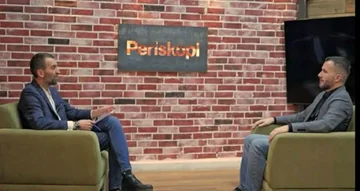
Periskopi(7 years ago)
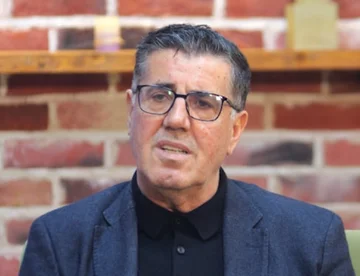
(7 years ago)Matthew Palmer, the United States' special envoy for the Western Balkans, told the Voice of America that the American administration remains engaged in the Balkans. In an interview with the VOA correspondent at the US State Department Nike Ching, he spoke on priorities in the new post as special envoy, as well as [...]
Matthew Palmer, the United States' special envoy for the Western Balkans, told the Voice of America that the American administration remains engaged in the Balkans. In an interview with VOA correspondent near the US State Department, Nike Ching, he spoke on priorities in the new post as a special envoy, as well as on US expectations for Albania, Kosovo, Serbia and Northern Macedonia.
Voice of America: What are the political priorities in your new role, given that this is a new position created under the current administration. Is there an increase in American interest and commitment to the Balkans?
Matthew Palmer: Of course, I think that the State Secretary's decision to appoint a special representative for the Western Balkans shows clearly and concretely, our commitment to the region, our commitment to being partners for the region, and our ambition to help the region, move closer to the western community of nations. Therefore, I see my role as something that actually enables me to help Western Balkan countries fulfill their aspirations for European and Euro-Atlantic integration. We are hopeful that this starts with northern Macedonia and Albania, giving them the opportunity to open membership negotiations with the European Union. We also want to see Serbia and Kosovo, return to the negotiating table and reach an agreement on normalising relations between them. And, of course, we would also like Bosnia and Herzegovina to continue the reform process and move closer on its European and Euro-Atlantic path. It's a big agenda, there's a lot of work to do, but I'm committed to staying in close partnership with the region and helping those countries move forward.
Voice of America: As you mentioned, urging Kosovo and Serbia to resume talks is one of the priorities. How so?
Matthew Palmer: I think the first thing we have to do is wait until Kosovo holds elections on October 6th. Then there will be a process of forming the government. We will make clear our expectations that Kosovo's future government will be a pro-chain government, ready to suspend tariffs which are an obstacle to the resumption of the dialogue process, ready to form an empowered and willing negotiating team, as well as to engage with Serbia at the negotiating table with the seriousness of reaching an agreement on normalising relations. The United States will be with them together in every step of this process, but Kosovo must take control of its own destiny.
Voice of America: What is your expectation of the October 6th election?
Matthew Palmer: This is really up to the people of Kosovo, but whatever political parties come out at the helm, to be able to prove to form a coalition, we hope that that party will move quickly towards forming the government and towards creating a coalition dedicated to reopening the dialogue process seriously.
Voice of America: As you mentioned, the most difficult point seems to be -- first Kosovo's tariffs on Serbian imports -- and secondly Serbia's diplomatic campaign to block Kosovo recognitions. What would the United States do? What are possible solutions?
Matthew Palmer: What we would like to see is for the future Kosovo government to accept that its priority is a normalisation agreement with Serbia and that the suspension of tariffs is part of it. We have hope that Serbia would respond afterwards with some incentives on its part and that this would include the possible suspension of the campaign for blocking recognitions. And with this as a basis -- that is, with the suspension of tariffs and the end of the campaign for blocking recognition -- the parties can return to the negotiating table in a positive atmosphere with a view towards reaching an agreement.
Voice of America: Will you revive your efforts to promote the parties, such as your joint letter and the White House National Security Council, to ask Kosovo to lift the 100 percent fee now that the White House will be the new National Security Adviser Robert O'Brien?
Matthew Palmer: When I speak in the name of the U.S. government, I do not speak simply on behalf of the State Department. As Special Representative, I will present the positions of the United States that include the National Security Council, the Office of the Secretary of Defence. We speak as an American government with a single, consistent voice and a single policy. So when I go to Kosovo and meet with Kosovo officials, I speak on behalf of the United States. This assumes that the entire American government stands behind everything I say.
Voice of America: If the stalemate continues, will it have a negative impact on US support to help integrate Kosovo and Serbia into the Western community?
Matthew Palmer: We remain committed to this, this is important to the United States. We are prepared to work in partnership with Belgrade, in partnership with Pristina, in partnership with Serbian authorities, in partnership with Kosovo authorities for achieving that goal and goal. We can't do this ourselves. It is the very parties that must lead this effort. We want a solution to be owned locally, to be sustainable, to be acceptable to both sides. A solution that the United States and others in the international community can support. We are partners for them in this process, but there are those who have to be driving.
Voice of America: I'd like to shift the interview to China, as China is expanding its initiative A Belt a Street. Some analysts say Chinese investments in the Western Balkans are gaining momentum. Is this something negative for you when you talk about American policy priorities? What is the impact of this on US relations with the region?
Matthew Palmer: Yeah. We understand that the countries of the Western Balkans are keen to find the best possible agreements for themselves and their public when they strive for large infrastructure projects. This is normal. What we do is try to make sure that the game is equal to everyone. So, for American companies, Western companies to be able to compete fairly for these possibilities, when they appear. And we're encouraging governments in the Western Balkans to investigate broadly whether some of these agreements with China are really in their interest. I mean, we've seen in other cases related to the One Belt initiative, a road to a kind of predatory approach that puts countries in debt through these programs, where the figures China offers may look very attractive to the government in question, but maintenance costs, lack of job creation that the Chinese bring along with projects, and most importantly, the debt burden that affects the ability of these countries to maintain the capital benefits they receive, in fact create long-term costs and consequences that they have not thought so carefully. So there are security considerations, there are financial considerations and issues of the broader relationship that these countries would like to create with multinational corporations that should be factored into these decision making.
Voice of America: State Secretary Mike Pompeo has often warned allies about the danger of using the Chinese firm HuaWei for the 5G networks. Serbia, meanwhile, is intensifying its co-operation with Huawei. How do you explain to countries such as Serbia, which can be seen as more attractive to Chinese financial equipment or packages?
Matthew Palmer: What we ask people to do is consider the whole issue. Of course, something like telecom infrastructure is a matter of national security, as much as is a financial investment on the part of governments in question. But do they really want to engage to do business with a company that has demonstrated that it is not safe? We encourage Serbia and other countries in the Western Balkans to give priority to their network safety, in addition to the priority given to the fact how attractive financial packages are offered.
Palmer for Albania: US don't choose winners, losers in political game
Voice of America: Let's talk about Albania, where there is much criticism against the current prime minister. What do you think of the political situation in Albania?
Matthew Palmer: We would like the current political stalemate in Albania to be resolved. We have a good and close partnership with Albania's current government, as we have had a good and close partnership with the previous government. The United States does not choose winners and losers in the political game, nowhere, and especially in the Western Balkans, where I am trying to do my job. We work with governments that emerge through democratic elections. We understand the opposition's wishes to see reform implementation and support the goal of reforms. The OSCE has made very specific recommendations on electoral reform in Albania. We would like to see a dialogue between the government and the opposition for these reforms, and, when this agreement is reached, we would like the next elections to be held on this basis. Meanwhile, it is important that Albania establish a Constitutional Court so that it judges disputes that would arise in the political sphere. But, above all, and that is very important, Albania's people can rely on friendship and partnership with the United States. Our allies, our partners are Albania and the Albanian people. Politics is politics, but the relationship between the United States and Albania is strong and stable.
Voice of America: As for northern Macedonia, what are the concrete steps with which the United States can help Northern Macedonia integrate into the Western community?
Matthew Palmer: We are very hopeful that Northern Macedonia will begin membership negotiations, following the European Council meeting on October 16th. We believe that the government in northern Macedonia has passed this criterion, many times even. In fact, the European Commission has recommended opening accession negotiations with Skopje for the past nine or ten years. So we have made that attitude clear to our European partners. We think it would be extremely useful. Of course, Northern Macedonia could help its case by continuing to follow the reform agenda, implementing the new special prosecutor's law. Their consultations and talks on the issue in Skopje are continuing. We would like to co-operate with the North Macedonia government in support of the reform agenda and want to help the country move forward. We also have hope that North Macedonia will move forward on NATO's road and that we can see that Northern Macedonia becomes its 30th NATO member since December, if things go well.
Voice of America: You've worked with the new National Security Councilman, Robert O'Brien. Do you have something to share with us? Do you see such an announcement will be good for the future US policy towards the Western Balkans?
Matthew Palmer: Robert O'Brien is a rare professional. He was an excellent partner for me and my office on a number of important issues, and I wish he was raised to the post of national security adviser. I'm sure he'll do a great job. Our relationship between the State Department and the National Security Council for the Western Balkans has always been very close and cooperative. We understand things the same way. We work very closely towards shaping and implementing politics. I expect this to continue under the new National Security Adviser.
Voice of America: Thank you.