32 minutes ago
Removing tax and dialogue, future government challenges

Periskopi(7 years ago)
(7 years ago)The challenges of future governance will be related more to international relations than to domestic problems, political analysts say. According to them, the government that will emerge from early elections should focus on the process of Kosovo-Serbia talks. They also consider the new executive to be much more stable [...]
The challenges of future governance will be related more to international relations than to domestic problems, political analysts say.
According to them, the government that will emerge from early elections should focus on the process of Kosovo-Serbia talks.
They also consider the new executive to be much more stable and with a representation of more than 75 deputies in the assembly.
Removal of tax and continuation of Kosovo- Serbia is the topic with which the future government will face early on.
The US Embassy in Kosovo has also become vocal on this issue, says political connoisseur Fadil Lepaja.
The challenge of past governance and what will be formed after the elections is the same, and it has to do with more international relations than with Kosovo's domestic problems. It is the challenge of dialogue and the obstacles that have been placed on the wheels of the negotiation mechanism, whether by changing the subject or by attempting to change the subject, or by trying to block the procedure for the negotiation process, but the elections reflect that there will be different ways of talks than before”, Lepaja told Radio Kosovo.
The future government will face the most devastating issue in these 20 post-war years, such as ratification of the possible Kosovo-Serbia agreement, says another noble analyst Halimi.
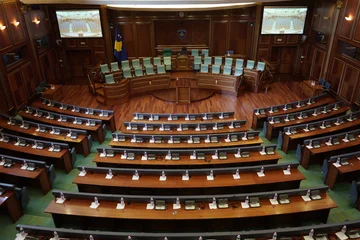
According to him, it would take a stable government that manages to have at least 75 deputies in the Assembly.
The next “government will have at least 75 deputies coming from 3 different taxis and only such a government could be acceptable to international partners, and could perform tasks Kosovo has faced on its way, towards international subjectivity towards the UN”, has added Halimi.
Artan Mujaziri says international pressure will be put on the issue of dialogue as well.
“It is expected that internationals will put enormous pressure on the election winner in order to establish a stable government that could advance certain processes, such as continuing dialogue with Serbia and completing this extremely important process. For this reason, all pressures that will be put on the next mandate are expected to go towards the creation of a stable government”, Muhramiri has indicated.
Although no election campaigns have yet been defined, political parties have begun to contact the public and show their promises, but that neither of them has been declared to lift the tax on Serbia-rpck, including the international community.