9 minutes ago
Mustafa: We will rule with those who are harming Kosovo despite program differences

Periskopi(7 years ago)
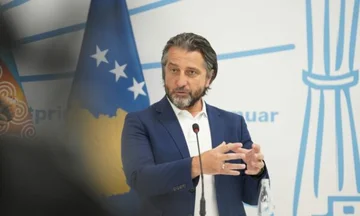
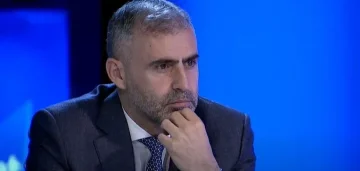
(7 years ago)The re-elected chairman of the Democratic League of Kosovo, Isa Mustafa, said in an interview for Voice of America that the government that will come out of the new elections in Kosovo should carefully assess the issue of tariffs to Serbian goods, which he said could not and should not be removed easily. Mustafa said [...]
Mustafa said his party would like to run only in elections expected to be held by the end of September or early October, but did not rule out the possibility of any pre-election coalition.
Voice of America: Mr Mustafa, on Saturday you were re-elected chairman of the Democratic League of Kosovo in a assembly that sparked criticism of some members of your party for the way of re-election. How Do You Answer?
Isa Mustafa: I think and I am convinced that it has been a very democratic process, it has been a democratic assembly with completely statuteic procedures, and that 355 delegates who have the assembly on the status of 350 delegates have attended. All of them have participated in the vote and have decided as the delegates have considered it right and it is their mood and orientation.
Voice of America: Mr Mustafa, what will your goals be during this mandate, given that the country is on the verge of early elections?
Isa Mustafa: Now the fundamental goal is to win these elections and we will try to fully activate all our internal potential, all the ways of the people who are now, the LDK structures, open the LDK doors to others as well; for experts for people who can contribute to the country's economic development, the sustainability of the country, the legal state for what we desperately need. This process to carry out and then prepare for local elections, because it follows in two years, which we are interested in holding these municipalities and winning big municipalities like Pristina, Prizren, which means objectively belongs to the LDK because it has the government and the government best. As for the LDK. I'm very interested in expanding the LDK ranks, to add the number of memberships and the number of our supporters and activists, especially from the ranks of women, young people and slowly to create a coherence of generations, because we're the only party that has been filling 30 years and there are at least three generations that are perfectly co-operating with each other, but we have to give each other space to feel that it's part of decision making and it's an important part, say, the whole LDK engine.
Voice of America: Mr. Mustafa has had much criticism that you have made domestic agreements between you and the leadership of the Democratic League of Kosovo for the division of various positions. How do you respond to such criticism?
Isa Mustafa: We didn't make deals for office sharing. Our basic agreement has been that we direct the process, organize a assembly that would work well and find a harmony between us as far as all this is concerned, and we have done this and talked with fellow workers, with members of leadership, with branch members with all those objectively directing the LDK's work. We have always declared and thus acted that we do not close the door for anyone to come and run for LDK chairmanship and all those who were declared before they would run, so the process has been open for all. The process has also been open to my men within the leadership and heads of branches, but their assessment has been how it was concluded. We have left this opportunity and I think the process has been perfectly fair and no one can say that there was no room to run and verify itself before the delegates' votes.
Voice of America: Mr Mustafa, currently Kosovo has been without government following Prime Minister Ramush Haradinaj's resignation following a call to appear before the Special Prosecutor in The Hague. How have you seen Mr. Haradinaj's action?
Isa Mustafa: Mr Haradinaj initially reasoned on the move that he does not want to go to The Hague as prime minister, but wants to go to The Hague as a private person. However, it did not actually happen because it went to The Hague as a retired prime minister, the prime minister or prime minister in the resignation again means the same position with little difference as to the act of resignation. We've estimated it's his issue and his assessments, but we haven't given him, say, another political character. There have been other assessments, in fact, that the country is now in a very bad situation because it's not defined well by the constitution as what happens after I resign the prime minister, whether it's more prime minister or not, whether it's ministers more ministers or not, whether it's government on government or it isn't, and in this case I think the rescue is to get as soon as possible to the elections and later of course we will see the constitution fulfilled in this part so that there is no further constitutional vacuum which leaves the action vacuum of the people who have first declared themselves not yet to be exercised but the prime ministers.
Voice of America: Many critics say Mr Haradinaj has passed through his resignation in a period of internal trouble by the ruling coalition. How do you see this?
Isa Mustafa: I'm convinced that if this resignation didn't happen, the government would be fired in September because we had the no-confidence motion prepared. We have calculated that it is best to go to September with a no-confidence motion so that during September, we can go to new elections, respectively. In action of resigning Haradinaj's Mr. Haradinaj has long since he was saved from being fired, not to be declared ungrateful and has done so. And of those who have expected support, the popular vote, I think, has realised them because people in one form because of their call to The Hague, so there have been twice that I consider to have been an unfair case for a man who proved himself to the law and to international justice to be called for the third time, but still the matter remains a matter of justice.
Voice of America: Mr. Mustafa, the parliamentary chairmanship, decided on August 22nd to disperse parliament. What do you think is the best time for holding elections?
Isa Mustafa: Under the constitution, it is possible for elections to be held at a deadline of 30 to 45 days. I appreciate that it would be good to use this period so that elections can be held at the time when people are in Kosovo, when students and students are in Kosovo, and when the school year is stabilised when even the academic year in Kosovo begins, and I think that parliament should have that in mind because we don't even win or lose for ten or 15 days to say it in political perspective, but the country wins because it is good to make sure that as many people participate in elections during this time period. That's why I'm going to be somewhere in late September, the beginning of October, are periods in which we should have the day of voting.
Voice of America: The outgoing government has faced months of pressure from the international factor for suspending tariffs on Serbian goods. According to you, how should a new government act that will emerge from the upcoming elections in terms of tariffs on Serbian goods?
Isa Mustafa: I think it should be well valued on the tariffs. Now not only economic issues remain, but political issues have also become related to the leverage and conditioning and not conditioning the dialogue. I think those fees can't be removed easily and should not be taken away easily, because we can't lift tariffs while we have problems moving our citizens freely. Today Kosovo citizens are waiting from four hours or five hours at the border because of the measures Serbia has taken and the unjust treatment of movement restrictions, non-tarifort measures Serbia is taking, and the international community has never warned or pressured Serbia to behave differently. So we can't say that we're taking down the tariffs and you go ahead and keep six hours and ten hours of our citizens on the border and take other non-tarial measures. So it is a very complex issue which needs to be handled well by a future government that needs to be conditioned with implementing all the agreements that have been made with Serbia, even with Serbia's normal behaviour towards our citizens and the free movement of goods and people, say in this space of the Western Balkans.
Voice of America: You, earlier met with US Ambassador to Pristina Philip Costet, what was the topic of discussion, was the issue of tariffs?
Isa Mustafa: With Mr. Costet today we haven't talked about tariffs, we've talked about future elections, and that's also about the commitment of the U.S. elections to be fully democratic, to be free and to be able to have a fair electoral process and that, of course, the criteria that he who wins in such a process, he will make the government as soon as possible, and we will implement all these criteria. We will fully try to make the process a fair, democratic one and to have the greatest participation of the citizens to get this process done, then make the effort as soon as we have a government that will start operating so that the processes that have stalled have become very stuck over this period, overcome it as soon as possible.
Voice of America: Have you discussed the issue of pre-election coalitions?
Isa Mustafa: We have not discussed pre-election coalitions, and we are basically going on our own as LDK, because we appreciate that in such orientation we will also spread our values much better before the opinion, we will receive much more accurate assessments of LDK. Any mix or any political cocktail that becomes, pre-election, then goes out of the programme because we don't have a political subject programme, we don't have full guarantees of a political subject regarding future governing policies, and that's our fundamental orientation. But of course, this orientation we have to see over and over so that they don't all get together the way they do against it. The LDK, because in this form we will be injured.
Voice of America: If they get together like you say last time, you'd prefer to make a pre-election coalition. Many of your party members prefer the Vetevendosje movement?
Isa Mustafa: I wouldn't name them in this case. I think we have to rule with those who didn't harm this country in terms of governance and with whom we might have little programming differences, but on fundamental issues we can deal with how they run, such as the case against crime and corruption and the rule of law, the question of economic development, of increasing jobs, increasing foreign investment, and that's not done without fighting crime and corruption, the question of dialogue, because this is also a process that falls a burden for future governance, and not teams like this government and European integrations, and that's a very important topic, which we have to bring to our partners in front of the US strategic support and support of the European Union.