21 minutes ago
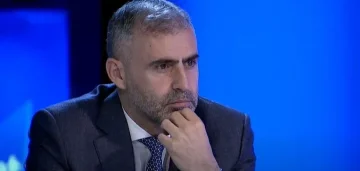
Mustafa: I'm not going to be a candidate for prime minister, we're going to pull out who did it best.

Periskopi(7 years ago)
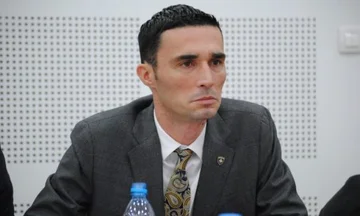
(7 years ago)The third-time elected leader of the Democratic League of Kosovo, Isa Mustafa, has said he does not intend to be this party's candidate for prime minister and that the party will choose a person who best does the job, and of course has the full support of LDK [...]
Radio Free Europe: Mr Mustafa, you have been elected for the third time chairman of the Democratic League of Kosovo. There have also been statements that the elections have not been very democratic and that the LDK is not changing. How do you evaluate these statements?
Isa Mustafa: We've developed a process that has been democratic, not only in the Parliament, but in the branches and underside for a long period of time, we haven't had an easy process, so I think we've closed it quite well and I consider that no one can find arguments that the process has not been fully democratic and completely open to anyone who wants to run or has wanted to get the assessment of LDK delegates.
Now the first challenge is the national elections, which will be about the end of September this year, then the next challenge will be the expansion and further strengthening of LDK, will be local elections and I think we will do well as LDK here, because we are unique and we are clear what we want and what we can offer to the citizens of Kosovo.
Radio Free Europe: You mentioned elections, will you be the candidate for prime minister?
Isa Mustafa: I will certainly make an effort to find another candidate within the LDK and myself to keep the LDK wheel, but we will make efforts to jointly discuss with the General Council, the Council decides on that issue and I am now oriented to this position to be a man to do well and have the trust of Kosovo citizens.
Radio Free Europe: If you don't, how will they choose the candidate from the LDK for prime minister?
Isa Mustafa: But we will find internal solutions, which lead to the man who does this job best, and of course has full support of the LDK and the citizens.
Radio Free Europe: Will LDK leadership expand?
Isa Mustafa: We're thinking of expanding, increasing the LDK General Council, increasing the number of members of headship in order to include as many people as possible, and decision-making is what the LDK and citizens expect.
Radio Free Europe: Mr Mustafa, do you prefer to make pre-election or post-election coalitions and with which parties?
Isa Mustafa: We are basically set to go ourselves and measure ourselves to the citizens, but all of this depends on what others are going to do, because if others get together then we have to think about the alternative. But basically we have invited other parties to advance opinion as a party of who comes first, second, third and so on, after the first round, after the citizens' assessment, then make coalitions depending on political programs and what we can offer the country in future governance.
Now I can't talk about specific preferences of which party we would have made the pre-election coalition, because we have to discuss it in the LDK bodies, but we will form a coalition with what we think is well running Kosovo, we will fight corruption, crime, there will be progress in economic development, in European integrations, the Euro-Atlantic ones even in the process of dialogue that is ahead of us.
Radio Free Europe: After the elections, who should lead talks with Serbia, the president or prime minister?
Isa Mustafa: The court has determined who, that is, the prime minister, is the government that has the burden of doing so, meanwhile, the president has its role of consulting the prime minister in the dialogue process.
Radio Free Europe: What would you do for dialogue on normalising Kosovo reports to Serbia, not conditioned by Serbia?
Isa Mustafa: We will also condition the dialogue itself, because we will not dialogue on issues that we are defined as the LDK that we do not dialogue, the issue of territory, the issue say third, the issue of Kosovo's citizenship, we will not allow in any case to put it on the negotiating table.
The question of progress, advancing human rights, minorities, are issues that will always find room for dialogue, issues of economic development, issues of resolving the direct problems of citizens, not just Serbs but others, will be our concern. But not the issues we've taken a stand for, and I think the attitude has been very precise and reasonable.
As for the issue of tariffs, which is also an issue that remains to be discussed, I think that issue should be a matter of reciprocity, because Kosovo cannot decide to lift tariffs, while Serbia is brought in this form to Kosovo citizens.
In this case, we have situations when our citizens are waiting for over six hours to enter the border, due to the obstacles that Serbia is becoming with non-tariff measures that no one is reacting to.
Radio Free Europe: So, you say that the percentage tax on Serbia's products should continue?
Isa Mustafa: The tax should continue until Serbia changes its stances and until it reflects on all of these blockage behaviours that it is making to Kosovo, both international recognitions and recognitions, but also on issues of everyday speech such as the free movement of citizens, the transport of goods and other issues that we have discussed in Brussels. Agreements have been reached, but Serbia is not implementing them.
Radio Free Europe: When we are of dialogue, do you think that an internal political consensus will be achieved for dialogue?
Isa Mustafa: I think dialogue cannot be developed without broad internal political consisters. And it must be done, how we will find the way to sit together at a table, all relevant political subjects of Kosovo, and find a common language and a common interest, because there are no particular interests here since Kosovo is in question. It's a matter that's going to be tough, but we still have to do it and achieve it.
Radio Free Europe: In past practices, the prime minister has usually demanded no-confidence motion on his government in the Assembly, while resignation was a new case. How have you seen Haradinaj's move and governance?
Isa Mustafa: We have given estimates that governance has been scandalous. We have a very bad government and we have the no-confidence motion ready for him to proceed in early September of this year.
This was preceded by the prime minister's move to resign, of course for a whole other reason, and we have said we would not want the government to fall for this reason of the invitation extended to the prime minister from the Special Court in The Hague.
We would like this government to go because of the malfunctions of scandals that have occurred over the past two years, which I think has been very dense and it's hard now to explain one from the other because a scandal today has covered the scandal yesterday and so on and so on has become a layer, which will certainly be seen later but can't be covered with population policies.
Radio Free Europe: Do you expect the current situation in Kosovo to reflect on EU decision-making as regards visa liberalisation for Kosovo?
Isa Mustafa: Disliberalisation is an unfair one being done to Kosovo because all European Union conditions and institutions have been met, and the European Commission has found that Kosovo has met these criteria.
I think that should happen. It hasn't happened with this government and government, but it has to happen tomorrow, the moment we finish elections and the moment we have a new government.
I think that the European Union, the European Commission, the countries of the EU since it is now in their competence, should reflect on us to allow us a free movement just as all other European citizens and separately citizens of Western Balkan countries, where only we are isolated.