4 months ago
Kusari-Lila: Haradinaj took advantage of invitation from The Hague, was Kosovo's worst prime minister

Periskopi(7 years ago)
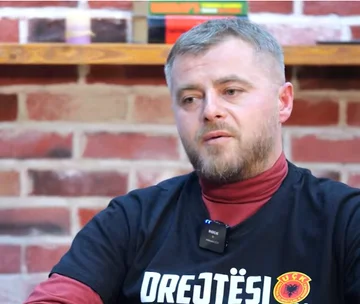
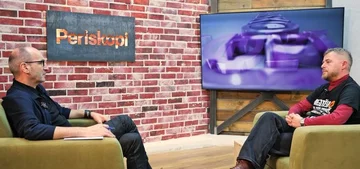
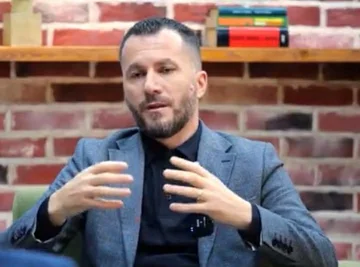
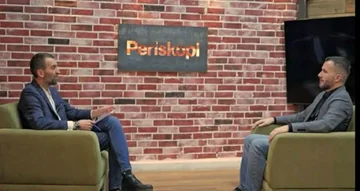
(7 years ago)Alternative Speaker Mimoza Kusari-Lila in an interview for Periscope has talked about recent developments in the country. That resignation of Ramush Haradinaj from the prime minister's post sees him as being delayed, while he says he is exploiting the invitation from The Hague on the rise of his popularity as well as the electrolytic aspect. Kusari-Lila also shows [...]
Kusari-Lila indicates even when the country will go to extraordinary elections. It talks about priorities the future Government must have and about the fate of tax and dialogue with Serbia.
Total interview:
Periscope: As you see Ramush Haradinaj's resignation from the prime minister's post. In addition to the reason he has expressed it because of the call to The Hague, was this done for his political purposes?
Kusari-Lila: The last case we have expected Ramush Haradinaj to withdraw is the invitation to The Hague. Because he had gone through this process twice before and was acquitted, since as government and government, it has been the worst in the post-war period in Kosovo. There's been a lot of scandals. In the number of ministers with charges, with a lack of responsibility and accountability for state obligations and of course lack of competence. I think Prime Minister Haradinaj has had to resign earlier, at the moment when Sjakka can control a large number of damsters in his government, because assimily has been divided in power, how many political parties have the government completely independent of the prime minister, in the damsters they have met. So what's going on now is the comment behind what's happened, is leaving a reflection both in the electoral aspect and in the rise of its popularity, because it's being called on the charter in which I know there's been a growing popularity, the fact that it's about a glorious period of people, but also a period when all of what we've been calling as a people, of course members of the Kosovo Liberation Army have felt angry. As far as it's concerned, the resignation, this should have happened a lot earlier. I consider that all those words -- that enthusiasm and that expressed love for Kosovo -- have had to be done earlier and end power when it has seen its governance, with very big decisions and damage to the country.
Periscope: When do you think the country will go to extraordinary elections?
Kusari-Lila: The country I believe will go to the elections in early September, as well as the constitutional deadlines. It will also depend on the talks political parties have with the president. But I don't think it will go too long without the elections being held, from the moment 30 or 45 days in place, as the Constitution of the Republic of Kosovo predicts.
Periscopi n: What is expected of these choices? Who should lead the next government?
Kusari-Lila: I believe it's an ideal moment to have a substantial change in Government. It will depend on agreements and opposition discussions. It is very important that they also have a strategy, as the Constitutional Court's decision on granting the government's mandate for formation by the first party with election results has set a new precedent, which is already on two sides of the election defining the form of how parties are organised. So even this is a very important point for opposition parties to jointly have a strategy in how they can be mandated together and have the mandate of the next government.
Periscope: What should be the priorities of the future government?
Kusari-Lila: The new government must, above all, have the courage to make important decisions, in particular fiscal reform and budget reform or capital spending. Also in public administration form. Including political reorganisation and reduced ministry numbers. More than necessary, there is a strategic plan as quickly as possible for reform and re-consolidating public enterprises. Already, without exception, there are no public companies that are not faced with very serious problems, such as the Telekom case. The same should be true of advisers, the number of deputy ministers and the reduction of government. This outgoing government has done a propaganda that is supposedly in preparation for a Law on Government, as long as they have violated every standard and every principle in which they are called to do it in the future. But there is no need to say that there will be Law and political decision that significantly reduces their number but also lowers privileges and expenses. Because it is a banal to talk more about spending and luxury in the poorest country in Europe.
Periscope: What should happen to the tax and dialogue with Serbia?
Kusari-Lila: The tax has exceeded itself. At first, it had an effect, but since it did not have a clear objective, then it has gradually reached its end by isolating Kosovo and bringing it into an inappropriate situation. With Serbia, there should definitely be a move that keeps Serbia at the same level as saying sanctions, the same as it sets for Kosovo. While in some elements, such as foreign policy, we are more powerless than Serbia is. We have to look at the way Kosovo has mechanisms and remind Serbia of its destructive approach all the time. But the tax on the decision, as the Government has been made, should be annulled and there will be mutual measures. This should be done correctly and clearly for each reason. While the dialogue needs to have a review of up-to-date agreements, strategies and political unity so that the political spectrum can be jointly unified against Serbia, not as we have now had the case, with divided attitudes.
Interviewed: Missini Horseyard