4 months ago
After interviews, charges by Special Court are expected

Periskopi(7 years ago)
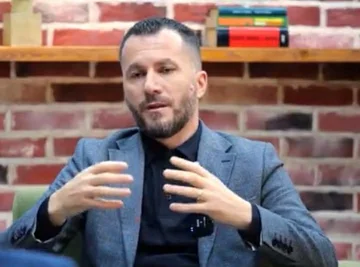
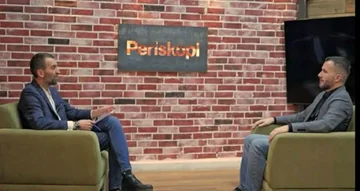
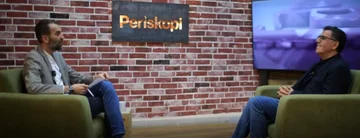
(7 years ago)After interviewing persons suspected of committing war crimes criminal acts, The Hague-based Special Prosecutor's Office, if it confirms allegations as based, then it can file charges against suspects, says in an interview for Radio Free Europe, Ismet Salihu, law professor [...]
According to him, based on the course of the work of Specialised Chambers, which is known as the Special Court for War Crimes in Kosovo, especially in the past two months, the trial procedure of suspected persons will begin soon. He says there will be no political interference against this court and that no one innocent will be punished by this court.
Radio Free Europe: Professor Salihu, The Hague-based Special Prosecutor's Office, has invited more than 40 people to interview, either as witnesses or suspects of alleged war crimes in Kosovo from January 1998 to December 2000. What are the procedures after the interview?
Salihu Ismet: Procedures after interviewing people who are invited as suspects are roughly standards like local penal codes procedures. If evidence and sufficient evidence are administered after the interview, which the court convinces there is grounds for criminal suspects who have been guilty of criminal acts, then charges arise. This is stage one.
As witnesses are invited according to standards, according to rules that are defined and built on the criminal codes of separate states, as is the Kosovo Criminal Procedure Code. Here with one exception, because a number of witnesses will have the status of a protected witness who is anonymous and he will testify, but his voice, his face, will not be identified because of the danger that can be exposed by suspected persons or other persons.
Radio Free Europe: How long can this fact-gathering procedure last after the interview?
Salihu Ismet: After the interview, this is pre-penal procedure, preliminary procedure and the procedure can continue depending on the situation, from the concrete case it can take a week, two weeks, one-two months there is no specific deadline. And when the charge is filed, then there are certain deadlines by law.
Radio Free Europe: When can the first acts by the Special Prosecutor be met and then the first trials by the Special Chambers?
Salihu Ismet: According to the general course of the Special Court's work, and especially the latest situation, these last two months, the trial procedure of the suspected persons I am convinced will soon begin, because the Special Court has been working in this direction for almost ten years, I think in investigations. You know, now there's only the third chief prosecutor who has taken this post and according to some of my recent knowledge, the Special Court beside this chief prosecutor, the chief prosecutor, there are therefore a considerable number of prosecutors who have led the investigation, and a considerable number of all these prosecutors are exactly American citizens.
Radio Free Europe: What are the differences in judicial procedures that the Specialised Chamber implements, if it becomes a comparison with The Hague Tribunal?
Salihu Ismet: Basically the procedure is the same. So well built is the law base, the court's legislation, and the judges and prosecutors themselves who have an adequate autonomy guaranteed, that there will be no episoded political interferences, etc, that no innocent person will be convicted in this court, according to all these parameters and standards that are built in legislation and in the composition of the panel and prosecutors. Someone can be released without evidence, but according to my belief, no one will be punished innocent.
Otherwise, the procedure is the same, with a substantial exception compared to the procedure and jurisdiction of The Hague Tribunal, which, as you know, has stopped working after 20 years of work. This difference consists of what is specifically foretold, in the Law for the jurisdiction of this court is said to be expressly in the relevant provisions that in cases where any person has been prosecuted, trial has been carried out and the trial has been concluded, whether of the national court of Kosovo or of the international court, such as The Hague Tribunal, that for that subject the procedure has been completed, this court (Scicial) has no jurisdiction to judge that subject. So here that principle will be respected “Non bis in idem” or not for the second time you'll be judged and punished for the same work.
Radio Free Europe: Can those to whom an accusation arises protect themselves in freedom?
Salihu Ismet: The work of this court will be carried out under the Law for the establishment of this court, where several key cases of the procedure are regulated. But this court will also work under laws that have been in force at the time of the conduct of criminal acts. In contrast, this court will also conduct the procedure under the Kosovo Criminal Procedure Code, according to the Kosovo Criminal Code, under the former law of the former Yugoslavia, hence Yugoslavia's Criminal Law, the Kosovo Criminal Law, etc.
So, in terms of the question you asked, can it be decided that any of the people suspected of being protected in freedom, that depends on their own decision, obedience, assessment of this Hague tribunal, now that I tell the Special Court. I think it can happen, but I don't think it's gonna be allowed because of the existence of danger that it can affect witnesses or endanger them because a number of witnesses who will testify in this court are protected witnesses. But they can be discovered and endangered.
Radio Free Europe: For the already tried war crimes cases -- whether in The Hague or Pristina -- can retrial procedures start again?
Ismet Salihu: Only with one exception can it happen that a person who has previously been tried and executed judgment by Kosovo local courts or The Hague Tribunal. The procedure may once again develop for the same work if new information has already been discovered that can administer evidence that the person assigned is guilty. Second, after the procedure against the particular person was completed, whether it be a free or a punishment act, whether in the meantime it has been found that the person has committed another criminal act, which the court has not known or been able to know has been committed but that, in the meantime, the same person can also be called back, conduct criminal proceedings and be tried.
Radio Free Europe: In this context, how do you see the invitation made to outgoing Prime Minister Ramush Haradinaj? He has received an invitation from the Special Prosecutor's Office to interview in the quality of the suspect. Haradinaj, has already been in two processes at The Hague Tribunal.
Salihu Ismet: We regret to have accepted this news that Haradinaj has been invited as a suspect to the Special Court. But, in all likelihood, some data or some crimes that Ramush Haradinaj is allegedly guilty of have been uncovered. We recall that in the latest trial, Ramush Haradinaj has been acquitted due to lack of evidence, data and evidence. Otherwise, he is not released as innocent, but because of lack of evidence.
In criminal law, in criminal procedure, it is a principle that for lack of evidence no one can be convicted, convicted. Even if there is doubt about whether he is guilty or not, committed or committed no offense, it is a principle in criminal justice, not only in us but also in other states, as well as in international law but also national, that in those cases it should be decided in favor of the accused. So these are situations, and Mr. Haradinaj, according to all likelihood, has been invited for alleged crimes committed during the war or eventually after the war.
This court has jurisdiction over the period it will act on, from January 1, 1998, until December 31, 2000, which falls 18 months during the war and 18 months after the war. We know, unfortunately, that there have been a number of murders that are not small after the war. It has been the highly secular murder of activists, mainly of the Democratic League of Kosovo. These individuals who have been invited (by the Special Prosecutor's Office) and who are currently at the governing levels, the appointed state and political status, who have been members of the Kosovo Liberation Army specifically having had higher levels in the Kosovo Liberation Army, according to all likelihood, these persons will be charged by this court, according to the command responsibility line. The Commander answers, pleads guilty, and is sentenced to three situations.
First, if he has ordered a person or group of people to commit war crimes. The second situation is, if the commander has known that some soldiers or groups of soldiers are preparing to commit war crimes and does not prevent or prevent them.
In the meantime, the third situation is the one who has invented the criminal responsibility of the commander or commander, whether he has not known that he is prepared and committed crime, but has already learned and reportedly is crime or crime, and has taken no measures to punish the perpetrators or hand over those justice organs to respond to crime, whether military courts (long) or after the war, local courts.