14 minutes ago
Who stands behind the serial beatings in LDK?

Periskopi(7 years ago)
(7 years ago)Democratic League of Kosovo [ The LDK is holding its internal elections. A Kosovo political party is holding domestic elections. A political party from the Balkans is holding domestic elections. Sounds a little funny to say. Usually, this is the mandatory fad of a group of people who predominate who [...]
Democratic League of Kosovo [ The LDK is holding its internal elections. A Kosovo political party is holding domestic elections. A political party from the Balkans is holding domestic elections. Sounds a little funny to say. Usually, this is the binding trick of a group of people who predominate who are subject to it. But the LDK makes a difference.
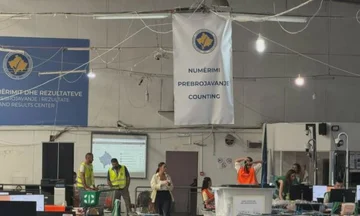
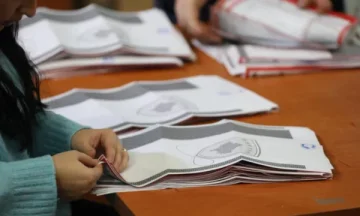
Currently, this party is in the voting phase of voters for the new chairman -- that is, the selection phase of delegates. After this process is completed, the people of this few-a-strong party will know who will be the winner of the party leadership race. Because they will know whose delegates have won the right to vote.
But, however, the LDK has a race. Internal Races. Even if we just talk about the egos of some people, about four-five people, or just two-three, then it's enough that we don't have a complete rerun of the egos of party leaders. Elsewhere, the party chairman's position is stable, incontinent, inexorable. This has offered for decades the image of a herd of people, women and men, old and young, with integrity and lack of integrity, wrinkled and undirected, who obeyed the whims of one man.
However, even these within-party LDK elections are not going well. Finally, we had a series of beatings and insults at various branches and throughout the country. Violence broke out in Matt's Undersea in the capital.
Political citizens and activists criticize and ridicule the LDK for such a thing. Inevitably, they say that such a thing could not have happened to a party that views itself as a constitutional and democraticist.
These reactions, however, are based on two deliberate forgettings. The first is that we live within a country with an extremely short history of democracy, which most parties have personalised. The second is that we are living within a moment in the evolution of our species, where violence remains present. That is, beatings and insults, intrigues, and even murders occur in the democracies of the countries we follow as examples.
Thus, if we decide not to forget the context, if we decide not to talk about the mortar then the beatings taking place in the LDK reflect an internal developed democracy and a major opening to domestic political activity.
True, political programmes are lacking, formal candidacy is also lacking to get party leader, and political struggle is only oriented on the ground, but democracy is not at odds with egos and political ambitions. Repeating that the political scene in Kosovo is too personal. The PDK belongs to Thaci and Wessel. LVV belongs to Albin Kurti. The AAK belongs to Ramush Haradinaj. The initiative belongs to Fatmir Limaj. AKR belongs to Behgjet Pacolli. And so on.
The PDK just today chose its party chairman, Kadri Veseli, following an election process where no one set foot on edge. There was no disagreement. No counterCandids. No, no, no, no, no.
While in the LDK, to take up party leader, several politicians are fighting. The most important is Ise Mustafa, the country's current chairman and former prime minister. And ambition for such a thing has expressed even the most often voted woman candidate in Kosovo, Vjosa Osmani. Another is Lutfi Haziri, chairman of Gjilan, who has backed President Thaci in the idea of mending the borders. But, reportedly present in the race is also the former leader of this party and former head of the country, Fatmir Sejdiu.
Which of the two largest parties in the country could be named more democratic?
Of course, beatings within party structures themselves are punishable acts. This has more to do with the culture of non-accession loss and overwhelming over-morment. But anyway, The LDK has testified, even through them, that it offers greater opportunities of non-continence as a basic precondition to open towards further development of democracy.
However, the only fear that triggers these serial beatings in the underside of the party founded in 1989 is that violence will also jump into the electoral assembly, to divide or simply divide again. But whoever loses the race will be aware of the 2006 assembly where violence broke out in just chairs, where the loser failed to destroy the party. So whoever loses will lose everything while whoever wins will be the leader of the greatest domestic legitimacy in the country. /Periscope