25 minutes ago
Krasniqi shows expectations by Paris Summit, says he may even fail

Periskopi(7 years ago)
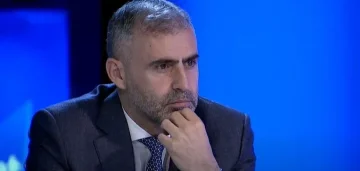
(7 years ago)Life Krasniqi from the Kosovo Democratic Institute, at the Coha.net Week Interview, has talked about the Paris Summit, which will be held in July, which he says the only change from Berlin to the one in Paris is Samit Bilateral. Krasniqi, says this Sam [...]
Krasniqi, says this Samit is likely even to fail if the Kosovo and Serbian delegation continue to humiliate him.
She says that at this meeting the parties can reach an overall agreement on further steps to the development of negotiations, but the likelihood that at this meeting, they will agree to a eventual solution between the parties are unrealistic.
Among other things, Krasniqi also talks about blocking the issue of liberalisation. According to her, the “liberalisation seems to be the only one on the part of the EU.
“This considering that Kosovo is still not recognised by 5 EU states and that until this Kosovo relationship - The EU does not change, the opening of negotiations -- namely, providing prospects for the clear European road to the state of Kosovo -- seems impossible”, she said.
Time.net: The summit in Paris will soon be held. What can be expected from this upcoming meeting, expected in July?
Life Krasniqi: The Paris summit following the Berlin Summit is a process undertaken by France and Germany to bring the parties back to the table of discussion, to provide support for a process that has been imposed under the European Union's mediation. The only difference is that this is a Bilateral Sam, as far as President Emanuel Macron and Chancellor Angela Merkel's focus is only on Kosovo and Serbia.
Viewing the positions diametrically opposite, the tax problem, but also the stubbornness and conditioning of the Serbian side, I do not expect any major change. This Samit could even fail if Kosovo and Serbian delegations continue to humiliate him, relating German Chancellor Angela Merkel's initiative and President Emmanuel Macron.
Time.net: Is there likely a solution or just a framework to be found at this meeting to discuss Kosovo's status?
Krasniqi: The issue of Kosovo's status is now a matter of Kosovo's declaration of independence in 2008, and is legally sealed with the 2010 JND act. Therefore, Kosovo's status is not a matter of discussion.
Kosovo and Serbia have a number of issues for which they should discuss meeting with the past, including the issue of the missing, war damages, judicial responsibility for thousands of civilian victims, persons violated during the war, and Serbia's request for forgiveness. They succeeded as has been done with all other federal units of the former Yugoslavia, the integration of the Serb community into the state of Kosovo and their rights, as well as the rights of Albanians in the Republic of Serbia. The normalisation agreement should be a tool for establishing peace reports between the parties, which later as two independent and sovereign states that recognise each other, work in bilateral co-operation.
At this meeting, the parties could reach a general agreement on further steps to the development of negotiations, but the likelihood that at this meeting, they will agree to an eventual solution between the parties is unrealistic.
Time.net: According to you, what is the differentness of this summit from that in Berlin, from which no concrete outcome for Kosovo and on the other hand, Kosovo leaders have greater expectations from the summit in Paris?
Krasniqi: The Paris summit comes after concrete attempts to diplomacy as well as the concrete attempts of collusionary diplomacy '% (suttle diplomacy) and the direct commitment of German Chancellorship and the French presidency with the support of the US to move the parties from the status quo position in which they are already more than 7 months, and their return to the table of discussion for reaching a peace agreement that would open a new chapter of Kosovo-Serbia relations.
The positions of the Kosovo and Serbian parties appear to be quite regidh. Serbia has conditioned the continuation of dialogue with the removal of the tax on Serbian goods imposed by the Kosovo government. On the other hand, Prime Minister Haradinaj has indicated he refuses to accept the dedication of dialogue and that the tax will be lifted only after the recognition of Kosovo on Serbia's part. That Haradinaj confirmed even after the meeting he held in Berlin with German Chancellor Angela Merkel. Even the Serbian side has posted through President Vuciq at the forum in Bratislava that it will not sit on the table of talks without Kosovo removing the tax. So there are no position movements.
One issue worth emphasising is the lack of a unique transatlantic stance, but within the EU itself about the potential resolution of Kosovo-Serbia, which has a direct impact on these negotiations.
I believe that the expectations of the parties about the Paris Summit are linked to the possibility of unlocking the situation and returning the parties to the table of dialogue, trying to establish several overall parameters under which the dialogue process will be conducted, again mediated by the EU.
Germany and France have made it clear that the mediator of this process will continue to remain the EU in the future, so it is expected to be seen after the Paris Summit what the two states will have and what their involvement in the dialogue process will be in the future.
Time.net: Do you expect to have clarification of Kosovo's position with Serbia?
Krasniqi: Kosovo's position towards Serbia must be clarified within Kosovo, and this position then must be presented unanimously by all Kosovo state representatives at any international forum.
Unfortunately, the local political scene is divided about Kosovo's position in talks with Serbia, where, in a continuation of more than a year, institutional leaders are articulating opposing positions about the potential solution between the parties, where one of the most controversial topics is related to Kosovo's territorial integrity. Kosovo's institutional leaders have lobbied for opposing positions even with international friends, and as a result, Kosovo's own position in these negotiations has been damaged. Therefore, clarifying Kosovo's unique position remains a must of the success of this process, more of preserving and ensuring Kosovo's interest in these negotiations.
Time.net: Remember that Serbian President Aleksandar Vuciq has warned strict measures against Kosovo after this summit. Can the Kosovo-Serbia report strain and deteriorate?
Krasniqi: Serbia has consistently played a destructive role towards the state of Kosovo, despite the fact that the parties are in a dialogue process since 2011. Serbia has continued its lobby against Kosovo's membership in international organisations, arguing that an agreement on Kosovo's failure to prevent has not been reached between the two sides a heavy concession this from the Kosovo side of the 2013 principle agreement. While it has found ways to block Kosovo's participation in different and regional meetings, despite the agreement on the accord that the state of Kosovo itself agrees to be neutral on its status.
Against a process of normalising the reports, in reality this normalisation has been missed that it has been seen and that Serbia's failure to implement reached agreements and continued controversial, sabotaged and ungrateful approach to the state of Kosovo.
Political rhetoric by Serbia's leaders has gone to the function of their victimisation and denial of crimes committed in Kosovo, and we have recently seen racist and degrading languages by institutional leaders against Albanians. Therefore it is expected that this destructive approach by the Serbian side will continue even in the future, especially when we see an acceptance by the international factor towards such behaviour with the aim of preserving a sense of instability between the parties. Vuciq's warnings can link directly with the destabilisation of the situation in northern Kosovo, where Belgrade's major influence on both the legal and the parapolitical and underground structures is clear.
Time.net: Promises of visa liberalisation continue, this time reportedly will occur before the autumn season. Can any news of liberalisation be expected at this meeting, and what do you think is real about this year's liberalisation?
Krasniqi: Kosovo has already met all criteria for obtaining visa liberalisation, which has been confirmed even with the European Commission's latest report for Kosovo and with voting in the European Parliament. The issue now remains with the European Council, the political decision of EU member states. Despite Germany's insistence on visa liberalisation, it seems that EU states are quite skeptical, which we have seen even in the event of opening negotiations with Albania and Northern Macedonia. This was also confirmed by the Haradinaj-Merkel meeting, when Kosovo Prime Minister said Kosovo should try to get on the serious European agenda.
It is noteworthy that, in the case of Kosovo, liberalisation seems to be the only one on the part of the EU, considering that Kosovo is still not recognised by 5 EU states and that until this Kosovo relationship - The EU does not change, the opening of negotiations -- namely, providing prospects for clear European travel of the state of Kosovo -- seems impossible.
Time.net: As you see continuing dialogue with Serbia. International voices have been added so that it can start as soon as possible, on the other hand, tax has been lifted to pave the way for continuing dialogue. How should Kosovo be acted?
Krasniqi: Kosovo should see its interest in this process of dialogue by clearly articulating its demands and lobbiing for these requirements. Dialogue is the only way in which the parties can open the peace chapter with each other, and by which they can have European roads, acting on good neighbourly principles like two independent and sovereign states within a regional but international dimension. Therefore, the Kosovo side's actions should be very discreet, actions that testify to foresight, rather than ad-hoc decisions that could harm Kosovo's position.
We have seen that the tax issue has turned into internal discussions for both political shocks and political benefits, whether before the electorate or the international factor. This is an issue that must exceed the daily political calculations and different acrobatics of state politicians, proving that Kosovo institutions can develop co-ordinated political evidence of state maturity, in the centre of which it is the interest of the state of Kosovo. On the other hand, Kosovars must consistently point to the fact that Serbia has been the one who has carried out a vicious campaign against Kosovo on the international level, imposing the introduction of the tax as necessary instruments. This, even in the absence of a genuine international response to Serbia's behaviour as the initiator of this problem. Kosovo-Serbia dialogue should be developed on the basis of trust without conditioning from either side.
Time.net: Do you think the idea of exchanging territories was removed from the negotiating table?
Krasniqi: This subject has already clearly proved that on major issues there should be a broad agreement, whether internal or internal, but, above all, international agreement to be realistic. It appears that discussions about the idea of exchange of territory have waned, thanks to strong opposition from Germany. But on the other hand, we have the insistence of the United States, so that there are no red lines and let the parties find a common solution. So we have articulation of more than a message from even Western Kosovo partners.
It is noteworthy that even more the eventual conclusion of this topic does not mean that other scenarios for Kosovo, which may affect the functioning of the state of Kosovo, will not be unearthed in the future. Therefore, it remains important that there is a genuine political and social discussion of Kosovo's position in these discussions, not violating Kosovo's territorial integrity, its internal and international sovereignty. The Kosovo side should also aim at proper professional preparation in articulating this Kosovo position, which should be unique.
Time.net: The lobby from Serbia for Kosovo recognition is continuing. On the other side Kosovo has long received new recognitions. How do you assess this tough campaign by Serbia against Kosovo, and how do you assess the position of Kosovo politicians in this regard? Is it just counter-recking on Facebook?
Krasniqi: Kosovo's position in the international arena has been particularly damaged after the start of the final phase of Kosovo-Serbia dialogue, which Serbia has interpreted as discussions about Kosovo's status. This is certainly a mistake of Kosovo institutions and the defeat of Kosovo in foreign policy. Kosovo's stay in the international arena has certainly been damaged by the lack of a genuine state diplomacy and the lack of a lobby strategy for advancing Kosovo's interest. Reactions should go beyond social networks and internal daily consumption. For Kosovo's audiences and target diplomacy, it should be the international factor, the world's top centres, but and every state that has recognised Kosovo or the state from which Kosovo seeks recognition, using all the means a state has available in promoting its position. Lack of cultivating friendly reports even with connoisseur states has damaged Kosovo's position in the international arena, which we have clearly seen even in the case of Kosovo membership efforts in the U. NESTO and last in Interpol.
Time.net: Finally, we also speak of the European Parliament Commission that has approved individual reports of countries involved in the process. When talking about Kosovo, he cites intervention in the judicial system, lack of fighting organised crime, and lack of war crimes trials. How did you guys see that?
Krasniqi: I appreciate that the report reflects progress and the steps behind that Kosovo has made in the process of European reform, where development of different sectors in Kosovo has qualified to be in early stages. This proves that Kosovo still has a long way to go in undertaking reforms needed to develop its democracy, reforms that should be regarded as central to Kosovo citizens, rather than as criteria that must be met for the EU.
A issue noted in this report concerns the Kosovo side's tax on products from Serbia and BiH, which appears to have overshadowed progress made by the Kosovo side over the past year and that reaching a comprehensive legal agreement between Kosovo and Serbia, remains a priority priority for the EU. What is disturbing for Kosovo citizens, beyond the lack of progress noted by Kosovo institutions in European reforms, is the fact that this report does not mention at all the fact that Kosovo is not recognised by 5 EU member states and that a European Commission strategy for addressing this issue is lacking directly in the way of Kosovo's clear European path.