4 months ago
Kosovo dialogue process '% Serbia is in chaos

Periskopi(7 years ago)
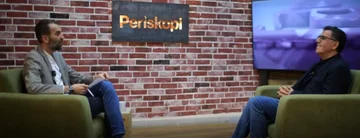
(7 years ago)Political Science Professor at “University London's Saint Mary” James Ker Lindsay says in an interview for the Balkan Radio Free Europe Service, that there is no plan for exiting the dialogue crisis between Pristina and Belgrade. According to him, the process is now in chaos, and the United States and the Union [...]
According to him, the process is now in chaos, and the United States, as well as the European Union, would have to work together to find a solution.
Radio Free Europe: Serbia's Foreign Affairs Minister, Ivica Dacic, said the annulment of the Paris Summit is evidence that the US role is key to continuing dialogue, adding that nothing is possible without US support. Do you agree with that assessment?
James Ker Lindsey: Yeah, and no. Yes, because we over the past decade have created this situation when the European Union and the European Commission took the leader's role in the process. But I still think there are differences between the way the European Commission has wanted to lead this process, and how on the other side Berlin has wanted to lead it.
Clearly, on the eve of completion of the Commission's mandate, Berlin has wanted to take leadership of this process (Kosovo dialogue- Serbia) and made a mistake in how it did so. I think there is another problem here; France's credibility in the Western Balkans at the moment is small, as France is at the helm of a bloc that opposes European Union enlargement.
Both France and Germany think they will be able to bypass the European Commission, which has been responsible for negotiations on normalising reports between Pristina and Belgrade. How can France or Germany lead when one of them is trying to close off Western Balkan opportunities and block its countries' EU membership.
Of course, this is not a good combination and it contributes to the US gaining greater authority in the talks. Pristina and Belgrade, for many reasons, would prefer US involvement in talks rather than Germany's. Of course, the problem lies in the fact that the new composition of the European Commission will be formed in the autumn, and it is questionable whether it can convince the parties again of the importance of its role.
Radio Free Europe: Do you think that for both sides, Pristina and Belgrade, Washington is more desirable partners than the European Union?
James Ker Lindsey: That's right for now. But this should not be the case. The key role must be the European Union, but the EU should not be powerless. One of the reasons for this is that we are at the end of the European Commission's mandate. Opinions are deeply divided on what situation dialogue is on and what focus should be on.
So, the United States has taken the lead, but of course this should meet the European Union. This is a process the European Union had to lead. So at the end of the day, the situation we have is chaos. This whole story is really bad. I think that's exactly what happens when you have a key player in poor condition because of the natural course of politics. EU Foreign Representative Federica Moghrini passes the mandate, in autumn we will have the new European Commission leadership. So the reason for the indomitable is always presented when we are at the end of the European Commission's mandate.
Germany and France would have to say “look while here is the European Commission, he has authority and we support him”, but they are not doing this for the very reasons mentioned above. Instead, the two countries are presenting personal initiatives. I think this is really bad. They should have a common agenda when it comes to the Western Balkans. Currently, however, Germany seems more like to show it is united in an attitude with France than it is strategically thinking about what is good for the Western Balkans. This whole situation seems kind of ridiculous.
Radio Free Europe: Do you think the US's role in Kosovo-Serbia dialogue at this moment is constructive?
James Ker Lindsey: This, I cannot answer in one sentence because it depends on many other things. We have a very complex situation right now. I think the United States can be extremely constructive and it can play a positive role. The only thing that can currently be done in the dialogue between Pristina and Belgrade is that the international community, the European Union and the United States, work together to find a solution.
We are not currently seeing this, as we are seeing divisions within the EU, we see disagreements within the key actors -- the EU, the US and France. Germany and Great Britain are in the same position that is different from the one held by the United States. Meanwhile France has its position. The United States can completely become a vital factor, but at the moment we have chaos. In fact, the United States has become part of the problem because we have a tendency to bypass the EU and that the key role of the U.S. has passed. But we know that the European Union is the host of the most important role in this process. So if the EU and the United States work together yes, the United States can play a constructive role.
If the United States plays its game, I think we will see that the participants in the process will play their games with the US, as they are now playing with the EU.
Radio Free Europe: Can it be concluded that pressure on Pristina and Belgrade has been due to the goodwill of Berlin and Paris to advance dialogue between Kosovo and Serbia?
James Ker Lindsey: Let's get back to the point, it wasn't clear what the Berlin meeting was all about, and what they were hoping to accomplish with that meeting. Some say the meeting has been held to put point points for the exchange of territories, and others say that this is exactly what happened.
The problem is that no new theories have been presented to get out of the crisis. If you do not want to talk about the exchange of territories, what is the alternative? What were you setting up at the discussion table that would enable the movement forward? Nobody presented such a thing, and I think that's also part of the problem. Nobody presented any possible solutions or new ideas. It's just that, well it doesn't like, let's stop it, but the question is what's the plan for things to move forward. As far as I can see, there is no such plan.