4 months ago
The exchange of territories is not the best solution, but there is no better solution

Periskopi(7 years ago)
(7 years ago)Diplomatic Diary Wolfgang Petritsch speaks of the possibility of final resolution of Kosovo's status and Kosovo-Serbia reports. Petritsch does not rule out the possibility of changing borders if the parties agree. Deutsche Welle: Mr. Wolfgang Petritsch, EU Commissioner Johannes Hahn, said that to solve problems in relations between Kosovo and Serbia requires a commitment of [...]
Diplomatic Diary Wolfgang Petritsch speaks of the possibility of final resolution of Kosovo's status and Kosovo-Serbia reports. Petritsch does not rule out the possibility of changing borders if the parties agree.
Deutsche Welle: Mr. Wolfgang Petritsch, EU Commissioner Johannes Hahn, said that resolving problems in relations between Kosovo and Serbia requires a great commitment. But Kosovo's status remains a major problem. How can this problem be solved, and are you sure that the solution can be found in the coming months?
Wolfgang Petritsch: I was almost a year ago, in spring and summer last year, very committed to advancing the idea of the two presidents (Thaci and Vuciq), who are apparently ready for peaceful compromise, for a major historic compromise between Serbs and Albanians. I don't think we should accept all the proposals. But Germany is now suddenly opposed to such an agreement, although a Berlin representative has been from the start on the Federica Moghrin team and has apparently supported its strategy. Now Germany, Mrs. Merkel, says: We don't want to.
I have to interrupt: You say there are ideas of two presidents to support, right? But the broad opinion doesn't know what these ideas are that they can support or not, and I don't know exactly what that idea means. Is that really the idea of partitioning Kosovo, or exchanging territories? What is it about?
Unfortunately, this is a problem, because broad opinion is not involved. I think this is a big problem for Brussels, Belgrade and Pristina. I think Brussels would be able to develop an open dialogue on the possibility of reaching a compromise. Just because there are no red lines in Brussels, the exchange of territories is possible, so it should be played with open letters. I don't think that's the best choice of all solutions. But under present circumstances, there is no better solution. There are always only difficult compromises that must be achieved to finally calm the situation. Look at what happened in the last few days and how quickly emotions can lead to tensions. Things can't go on like this. In essence, I've been thinking and I think the EU doesn't have much time. Both sides must enter a broad process, similar to Dayton or Oslo, where they can agree on a compromise. And existing opportunities have been known for years.
A little higher, you criticised Germany because it will not accept changing borders. How do you see Mrs. Merkel and President Macron's initiative for meetings in Berlin and Paris? Does this mean that the parties are leaving EU projects, or is it just their continuation?
I'm afraid this is one of those initiatives that we've seen before in various consultations and which unfortunately do not bring success. If only days after the Berlin conference we have a situation like this right now in northern Kosovo, then I have to realise that the Berlin summit has not been successful. I doubt Paris will be better.
How would you solve this issue, since there are different ideas? Even you know that ideas about exchanging territories or changing borders are very dangerous. There are people who talk about new incidents, new wars...
There are certainly many dangers, but they must be part of negotiations and compromises. I propose that something like dialogue plus be organised now.
What does that mean?
The two (Presidents Thaci and Vuciq) should not meet only once a month or less. The EU should invite both sides for intensive discussions on resolving this issue, in Brussels or elsewhere. I think he could invite even Vienna, where parties in a very intensive negotiation process would overcome differences and contradictions, and find the best solution, on the basis of proposals that exist on the table.
You're actually talking about a new Dayton, but in European frames, right?
Absolutely. This must be a European solution. I would not like Washington or Moscow to be present in this process. After all, this is a European problem, so the solution must be found in Europe. So I think this process should take place in Europe.
But you understand that Serbia and Kosovo do not want decisions made without Russia and the United States of America.
Both sides should say: We want European solutions. After all, the two countries want to join the European Union. This means that Europe's interests must be in first place. Both parties should understand that.

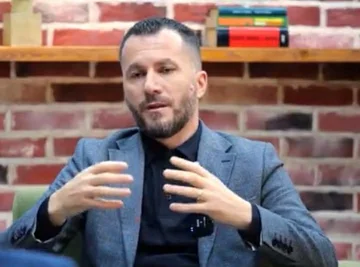
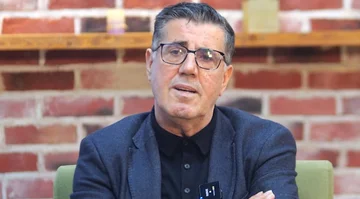
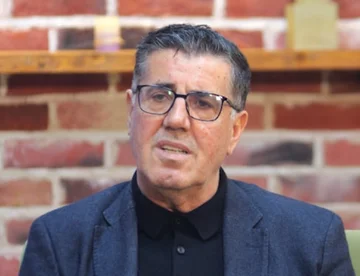
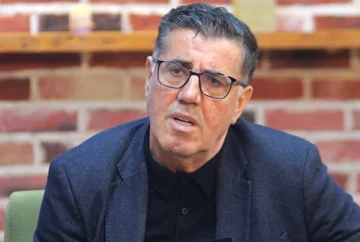
Wolfgang Petritsch has been one of the three Ramboullet deal brokers. We photos up Thaci
A few days ago in northern Kosovo, there has been a police action that has triggered harsh reactions, even violence and gunshot injuries. Fear the escalation of the situation in Kosovo?
First, I have to say that the circumstances of how it came to this action, which has been excessive. And of course, those arrested must be brought before regular courts. When it becomes known what kind of mood we have on the ground, I think it is necessary that the UN and the EU, which are present in Kosovo, monitor this process, this judicial, judicial process, so that things can really be clarified to the end.
Mr Petritsch, Belgrade has called for tax removal, while Pristina has rejected this request. How can dialogue continue under these conditions?
I am convinced that the parties must meet certain conditions.
Which ones?
Of course, it is primarily about Priscilla and the government there. We know tax attitudes are different. But I think the situation is very clear: Tax must be suspended to start a meaningful dialogue. This is the prerequisite. And then we have to talk about real solutions to problems and not just separate measures, which seem more like excessive reactions.
Yes, but Prime Minister Haradinaj has stated that with the introduction of the tax, the idea of partitioning Kosovo or exchanging territories has been prevented. People are afraid of this idea because the idea can be dangerous even for the countries of the region.
In negotiations for the submaraean solution, you need to get open. You must start by the fact that Brussels' dialogue has prepared some details, at least on paper, not formally, and that there have been advances in five-year dialogue. These advances are the basis for finding the final solution. All others that have already occurred are unilateral shares, which must be withdrawn. So even taxes 100%.
If Serbia and Kosovo really agree on changing borders, why should Republika Serpska remain in Bosnia and Herzegovina, if the principle of changing the external borders of the current states is accepted?
Here I can quote Bosnia and Herzegovina President Zelko Komsic, who says there is no connection between B-H and the situation in Kosovo. Why? Because if they change Kosovo's borders through a negotiation process, then that's a accepted result from both sides. While Dodik in Sarajevo does not have any partners with whom he could negotiate such a solution. International norms must therefore be applied, under which agreements on changing external borders between sovereign states can only be made by consensus.
First, there is no consensus in Bosnia on this. And secondly, it is very important to say that Bosnia exists at the borders set out with the Dayton Agreement. This international agreement has enabled the creation of Republika Serpska and any Serbian side effort to change the Bosnian border would automatically mean the loss of the international status of Republika Serpska. This should be taken into account, for little is considered in this matter.
How do you think Republika Serpska could lose its status?
Because the international borders agreed on by Belgrade and Zagreb are defined under the Dayton Agreement. So the two crucial powers are competition of the Dayton Agreement and they are obliged to recognise their signatures.
You think that changing borders in Kosovo would not result in the change of borders in the region's other countries?
That's right. If you look a little better, these are two different things and you really have to look at them as separate things. Unfortunately, even diplomats and politicians who deal with these issues often forget that these things were located 25 years ago in Dayton. While the only open issue has remained the border between Kosovo and Serbia. And the solution to this problem requires two sides. European contests for the recognition of the border between Kosovo and Serbia are also required for recognition of the borders between the two sides. In addition, borders must all guarantee and support Belgrade, Zagreb, Sarajevo, Washington, Moscow and Brussels.
But at the Bellini summit, besides President Vuciq and President Thaci, all others have opposed the possibility of changing external borders and divisions. You still think that's possible?
No, no... I don't ask at all. This is irrelevant.
Okay, but?
Repeat: I want to give priority to the solution that both sides agree with. Compromise in the Balkans is an unknown word. Here for the first time, we have two presidents who have arrived and signed a compromise on which they have come with much effort but peaceful ways. Marked from a historical standpoint, borders have always changed by military means.
And in Bosnia and Herzegovina's example, we have the imposed Dayton Agreement, with which one side is not identified, not even after 25 years. The international community, Europe, must learn lessons from this. We want a solution for Kosovo, we want a compromise that both sides accept.