4 months ago
Kosovo- US at lowest level in the last 20 years

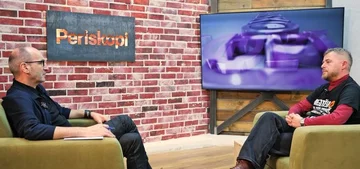
Periskopi(7 years ago)
(7 years ago)An experienced Balkan analyst says relations between Kosovo and the United States are at the lowest level in the 20 years of the change due to the tariff issue. James Hooper, former State Department official, said in an interview for the Voice of America that negotiations with Serbia should be seen in [...]
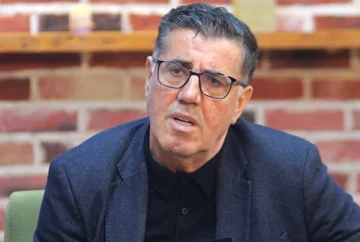
James Hooper, former State Department official, said in an interview for the Voice of America, that negotiations with Serbia should be seen in the view of building a relationship rather than an transaction. Mr. Hooper said 20 years after NATO's intervention, he considers Kosovo a success story, but cautions that there is still a long way to go.
Mr. Hooper, US Deputy Assistant Secretary of State Matthew Palmer said yesterday in Albania that the United States would support any solution Kosovo and Serbia would agree to. Although he did not mention the idea of exchanging territory or changing borders, he said it could be an element of the talks. Where do you think we are at the moment regarding the issue of negotiations and borders?
James Hoor: I think Deputy Assistant Secretary Palmer was trying to encourage the forward movement of negotiations. They have been stuck in recent months due to the tariff situation, but I think the United States, the US government understands this is a historic chance for Kosovo and Serbia to reach an agreement. And that is not well understood by Kosovo politics in general, perhaps even by the people of Kosovo. These are negotiations for a comprehensive agreement, for Kosovo and Serbia to establish a relationship that has never existed before. It is very important for Kosovars to realize that in 2016 a new reality was created in the United States, with the election of President Trump. This president is not as committed to protecting Kosovo, to become a Kosovo shield such as the Democratic Party, or other republic, so it is a more dangerous situation for Kosovo, because it is dangerous to have a hostile neighbour on the northern border at a time when he cannot take the same shield, an umbrella on the part of America. Therefore, this is an excellent opportunity, even extremely necessary, to negotiate an end to hostility, or at least a significant reduction of hostility, because that is the situation.
But I think that the people of Kosovo and many policy factors misunderstand what kind of negotiations we are talking about. They view these talks with Serbia as an transaction, namely: the more Kosovo gets the better for it and the less Serbia gets, the better for Kosovo. And that's how they see the border issue. But establishing a relationship is different. For example, in a transaction negotiations, territory is a goal in itself, while in a territory relationship it is a means of achieving purpose. The territory itself is not safe, it can provide instruments for security, and in this case it is a means of legitimacy, recognition through membership in the United Nations. So Kosovo has to think without a doubt to secure its benefits from the agreement, but also to get Serbia sufficient to ratify and implement it.
I don't believe the prime minister is understanding the negotiations as I am explaining, as a way to build a relationship with Serbia instead of getting everything you can for yourself. Kosovo benefits if Serbia thinks it has benefited enough to ratify an agreement and implement it, and I believe it can reach an agreement.
But you say it is Kosovo's responsibility to contribute in such a way to create an agreement that would curb Serbia's hostilities. But from what we have seen Serbia's actions have not been reaction to what Kosovo has done, but has been part of its policy towards Kosovo...
James Hoor What the prime minister and many Kosovars are saying is that we “will not remove the tariffs until the other side recognizes us”. So they set a precondition for the talks. But I think recognition I don't mean in the sense of establishing embassies, but recognition would be more a result that Kosovo would be accepted as an independent state, that is, a result of negotiations not a precondition. What Kosovo negotiators have to do is to understand what the other side needs, just as Serbia's negotiators need to understand what Kosovo side needs. Both sides must understand the minimum the other side needs in order to accept an agreement, ratify and then implement. These types of negotiations for a relationship are not easy, they want a level of maturity and solidarity, which I think the Kosovar side has demonstrated so far, because it's about how to deal with the United States.
You already said what you think of the prime minister's tariffs and stance. How much do you think they have historically damaged the good relationship between Kosovo and the United States?
James Hoor: I'm surprised how much the relationship has damaged. I think that relations between Kosovo and the United States are now at the lowest level since NATO intervention 20 years ago and I see no indication that this situation is changing. What surprised me is that Kosovars seem open to tolerate it, to accept it, at a time when they have to work even harder for the American security commitment to Kosovo to remain just as strong. It's almost like they're throwing it away. It's as if they're carelessly fingering America because Americans have made it clear that it matters to them, it's important that negotiations move forward and that the relationship between Kosovo and Serbia move forward and I think that the United States wants it to move forward in a straight way for both sides. I think if that doesn't change and if negotiations don't resume, the relationship with the United States will get even worse.
Do you think this situation has damaged your relationship with this American administration or with America in general?
James Hoor: It damaged the structure of the relationship. What I hear in Washington, the State Department and found in government and the White House, they now see Kosovars as the most nationalist, causing problems that become difficult for Americans to deal with. And I repeat, I'm not saying that when Americans tell Kosovo to do something, they do it by ignoring their interests, but when Americans let Kosovo know it's a very important issue for them, we expect some kind of co-operation and a constructive response and find a way to answer and that hasn't happened.
Why is it now time for a deal? We're often hearing this, including President Trump. Why right now?
James Hoor: Because the moment the window closes in Belgrade, there will be no more negotiations on the agreement. Progressives are in power in Belgrade, and Mr. Vucic understands Kosovo, and as far as it can go and what needs to be done and he wants Serbia to be part of the EU and he knows that this is the way to achieving that goal. That's why. If this opportunity is not exploited, if Kosovo plays to buy time ... I've seen it in other places. The Palestinians repeatedly rejected opportunities to negotiate agreements with Israel, and each time they withdrew, they returned for the same and had lost the opportunity.
There are times that are crucial, there are times when a window of opportunity is open and you have to act, and this is such a moment.
Do you think that the idea of exchanging territory or changing the border, though there seems to have been relatively a silence about it recently, is still on the table and what are its chances?
James Hoor: Yes, there will be one aspect of territory in the deal, and there must be a way for this to work for both sides. I don't believe Macedonia will be dissolved because of the territory element in an agreement between Kosovo and Serbia. I even believe it will consolidate stability in Macedonia. Nor do I believe that Mr. Dodik in Bosnia will use such an agreement as an excuse to get Republika Srpska out of Bosnia and make it independent. Therefore, I consider an agreement with territory an element, as an essential factor, stabilizer of a new relationship between Kosovo and Serbia.
There has always been a haze about why Mr. Haradinaj could not come to the United States. The fact that he visited the United States in recent days is symbolically important. But he still went to Detroit, didn't come here to Washington. How do you view this visit?
James Hoor: I don't know all the details, but I hope the prime minister had a good time in Detroit. But he came to the United States, Americans allowed him, and he had no visa problems, which I think means that the United States means they want a continuation of relations with Kosovo. But I noticed he didn't come to Washington and I don't know why, but I don't think it would make sense from the American side to welcome him (on these conditions). If he came to Washington, he'd have to have meetings. If he came to Washington and there were no meetings, it would be an inappropriate position for Prime Minister Haradinaj and it would be a step backwards and it would seem even worse than the relationship really is. Why should Americans love him in Washington and when he is refusing to be part of the negotiation process that Americans have said is important to them? This is not a small issue, it's important for the United States and we expected Kosovo to be at least constructive and that didn't happen. So my guess is that maybe he wasn't able to provide meetings in Washington with officials and he didn't want to be in a difficult position, so he decided to go to another town, where he would at least keep his relationship with Americans, and not deal with their problems. That would be my test.
20 years after NATO's intervention would you call Kosovo a success or more complicated story than that?
James Hoor: I certainly consider it a success story, but it's a long way. The war ended ethnic cleansing by Serbs in Kosovo and Serb rule in Kosovo. So Kosovo entered a period of autonomy, under international law, then declared independence. I think now is the time for Kosovo to build a relationship with Serbia that will give a strong position in the region, permanent security as an independent country, so UN membership is so important.