4 months ago
Macedonia is state, but is not republic

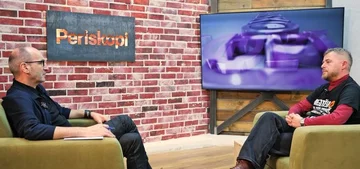
Periskopi(7 years ago)
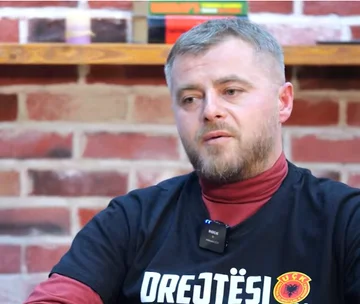
(7 years ago)The fact that for 15 hours over 11,000 signatures were collected, more than the number needed for independent candidacy for president of northern Macedonia, for Blerim Reka, besides translating into enthusiasm has two other aspects. He links the first one with the fatigue of the people by the uninhibited promises of politicians and [...]
At “, the traditional Albanian secessional syndrome” finds part of “fejit” why the Albanian political factor in northern Macedonia did not join for a single candidacy. But it is surprising how the same parties applaud the unification of the Albanian factor in Tuz for the joint victory.
In the April 21st elections, he says he expects not only the votes of Albanians, but “from all those who want a real republic”, while expressing confidence that Macedonia is a state but still not a republic.
Beyond what he has already said, in his interview for Koha.net, Reka gets two reasons why he was led to race for president. The first is intellectual, and the second is national.
In short, his vision of Macedonia can be compounded. As he himself says, “for a multiethnic and Euro-Atlantic republic”.
In the interview, he also speaks of reports with Kosovo, in case the president is elected.
“Fundi, Skopje and Pristina are the two closest capitals in the Balkans”, he says.
Time.net: Mr. Reka, for less than two days, collected the signatures needed for independent candidacy for president. How did you translate this into popular enthusiasm for an Albanian president?
Reka: It would not be modest on my part to talk about the speed of signing, but in 15 hours, 11,000 signatures were collected or the number required by law. I agree with your qualifications for popular enthusiasm, because citizens were tired of recycling politics and politicians, who in every election cycle promised what they did not do. Or it may be that my independent candidacy seemed courageous signatories in the face of two other candidates -- one supported by power and 31 political parties; and the other by the main opposition party in the country.
Time.net: What do you think prevented the unification of the Albanian political factor about a common candidacy, and how much do you think it will reflect on Albanian voters?
Reka: However, traditional Albanian divisive syndrome, which remains the general explanation, in this case the failure of the Albanian political factor has particular explanation. When the two Albanian political parties -- the Alliance for Albanians and the Besa Movement -- initially demanded that all parties come up with a common candidate, this was rejected by the ruling Albanian parties. After I declared my independent candidacy, these two parties again appealed to other parties for support of my candidacy by all as superparty, but their appeal was rejected. Even one of the leaders of the two parties that supported me had asked Prime Minister Zaev himself to support me as a common candidate. It is not mine now to comment on the Albanian ruling parties' decision why they did not support the only Albanian candidacy for president, while the same days welcomed the unification of the Albanian factor in Tuzla for the joint victory. I would let the Albanian electorate say its word on April 21st.
Time.net: Besides Albanians, who else do you expect votes from?
Reka: Of all those who desire a true republic. So I expect votes from the citizens of Northern Macedonia, who 11 years had a state captured by the former government and a 10-year private state by the current president. So, of all those who believe in my season for depersonizing the state. Macedonia is a state, but is not a republic. The Republic is done only when the law will rule, not the individual. Of course not: with politicised judiciary, with the suspended Special Prosecutor, nepotised administration, and with the Assembly Amnistoning criminals and immunating accused MPs. I believe that as I think most electorates in northern Macedonia regardless of their ethnic affiliation.
Time.net: You've cleared up with a Facebook post, but we'd like more detail telling us why you decided to join the race for president of Northern Macedonia?
Reka: Yes, not to repeat the post with which I announced the decision to run for president, I will try to unscrew the following one. So there were two reasons. The first one was intellectual. This was because postcommunism really freed intellectuals from criminal bonds, but it ignored critical intellectual thinking as well. Not that as an intellectual all these years I haven't written, spoken, or criticized. Well, not that I haven't had a political attitude, but that's what the power of the FB. So I decided from virtual criticism to challenge politics with criticism in a real world, in real policymaking and not just digital. Three decades after the fall of communism, intellectuals must be more politically active in stripping silent imitation of communist practices by post-communist politicians. I don't know how this will end: as the intellectual intellectual intellectual intellectual intellectual intellectual intellectual intellectualization, but the time was for action and not for observation. The second reason, meanwhile, was national. Asking for the country's first vote by the Albanian electorate and not offering any Albanian candidate is ignoring one third of the country's vote. With only two Macedonian candidates with no Albanian North Macedonia risk slipping from a multiethnic society, (what is really in content) into a monoethnic state (in shape). So where Albanians would be turned into a voting car for selecting Macedonian candidates. Or just as voters, but not vote. Eventually, I thought another story should be written. However, only statesmen write history, yet intellectuals only write about history.
Time.net: At short points, can you tell us what your vision of Northern Macedonia is?
Reka: In two words: for a multiethnic and Euro-Atlantic republic. Returning the republic is the essence of the political programme of my presidential candidacy. Macedonia is a state but not a republic. The real Republic is made up: rule of law, democracy, independent judiciary and respect for human rights. The individual's rule already erodes the republic, making it a private state. Therefore, the return of the republic and depersonisation of the state are the goal of my presidential mandate. The state is not private property, but the legacy of all its equal citizens. Therefore, North Macedonia, as a multiethnic society, must also be the multiethnic republic. At least it can function with the doses of “allowed” for individual and collective rights. The Republic does not recognise the proposed democracy and neither the subx2 national statistical sub>”, which is allowed as much rights as they are percentaged. There are no “relations “rights, because they are rights born as citizens of this state, not the “gift” The discretion from the power that rules: who, when, and how many rights will be allowed. This goal for a real republic would be lived through the direction of my presidential programme from: stabilising interethnic relations (in domestic politics) to the foreign Euro-Atlantic policy and regional neighbourly co-existence; all of these as preconditions to restore the life perspective in the country and to halt the country's empty process. Thus, the first goals will be in the function of the latter: the prevention of emptying the state. Otherwise, in the EU ahead of the state, “intensating to” citizens fled, while the Republic of Northern Macedonia from the member state would remain an empty state.
Time.net: With you at the head of the state, what would change in the position of Albanians in particular and citizens in general?
Reka: As I said in the preliminary response, it will aim to lead a truly Euro-Atlantic and multiethnic state, and restore the lost perspective of citizens. Why? Because if North Macedonia loses another five years, it risks being without a population. So far, a quarter of the population has fled the country. By 2030 the predictions are that 23% could be displaced. So for a decade the country can be halved. Not only are unemployed citizens fleeing, but also those with relatively good jobs and positions. The newly-educated brain, doctors, is going away. IT and engineers. Actually, we're in a paradoxical situation. If this trend of deportation continues, Macedonia will probably also join the EU, but as an empty state, because its citizens will be physically embedded “in the EU. So my goal is to restore confidence and the prospect of living in the country, and this certainly will not be achieved with a captured state and a private state. Further reforms are needed, and not even why the EU requires it, but primarily for us and our children. Meanwhile, as for the position of Albanians in particular, it will aim to change the artificial concept of the statistical nation and percentage rights. So, changing the current status of Albanians, which is more mathematical: 20%. But what if tomorrow Albanians get less than 20%? Does this mean that you must now lose the rights guaranteed to this percentage? Or what if 30% comes out tomorrow? Should their rights Corps expand then? There is no desired democracy, no less statistical rights. Northern Macedonia should be the multinational republic of equal citizens. The current system of electing the president is self-blocking. On one side, an Albanian candidate can hardly secure even Macedonians' votes to win the race, but neither can the Macedonian candidate win for president without securing Albanian votes. In the future, it should be thought of a change in the presidential election system. If not from the Parliament, then in the upcoming presidential elections citizens will elect (both most voted) and vice president (second for the winning votes). Given that the second, according to the electoral power, will be the Albanian candidate, this instrument of Albanians as vice president with constitutional authorisation to decree laws affecting Albanian rights could be a constitutional guarantee that these rights cannot be violated, (as happened unfortunately late with the nonsignation of the Law on Language by the current president).
Time.net: But as for reports with Kosovo, what changes could we expect?
Reka: Fine neighbourly relations continue with the Republic of Kosovo. After all, Skopje and Pristina are the two closest capitals in the Balkans, while the capital of the Republic of Northern Macedonia is only 13km from the border with Kosovo. The completion of the “Arba Xhaferi” highway on the part of Kosovo and the start of the highway from Macedonia to go regarding that of Kosovo will bring closer not only the two capitals, but generally the two states and peoples. Historically Kosovo and Macedonia have always been close, then about 40% of the population has families on both sides of the border, trade has always been alive between the two countries, as well as educational and cultural co-operation. I expect that more intergovernmental co-operation will be intensified in the years to come.
Time.net: RHow do you view the odds of victory or runoff?
Reka: I got in the race for victory and I expect on April 21st to celebrate.