20 minutes ago
Local tax producers: Don't take it off, our businesses are building up.

Periskopi(7 years ago)
(7 years ago)Local producers are the ones most benefiting from the tax imposed on products imported from Serbia and Bosnia and Herzegovina. Local companies since the tax settlement period have increased production, while at the same time increasing the number of workers. Representatives of some local companies call that [...]
Local companies since the tax settlement period have increased production, while at the same time increasing the number of workers. Representatives of several local companies call on Prime Minister Ramush Haradinaj not to give up tax imposed on Serbian and Bosnian products, saying it is thus empowering local producers.
The company “Liri” is one of the largest candy producers in the country, which after the tax is imposed has employed 40 workers, increasing the number of employees from 120 to 160, reports Cosovapress.
The manager of this company, Arben Trsnjak, has indicated that since the establishment of the tax as a company, it has had to increase production.
After the tax was imposed on our company, there have been significant impacts since most of our competition is known to come from imports from Serbia, it has not affected us negatively since we have not imported any raw materials and no products from Serbia. This has affected that we have expanded greatly in the market at this time, where only after the tax is we've employed 40 workers and with the last statistics we've received from them we've had a rise somewhere around 101 percent... it's a good climate of patriotism recently on the ground, of all the tests we've done on the ground, it's a very good atmosphere of people boycotting them, even though there's still a lot of Serbia's products are boycotting them, deciding more to buy local products, in this case not just the freedom of Kosovo's ] but all Kosovo1x producer, he has indicated.
Trsnjak says that citizens offer products to many qualitatives and that they have not taken advantage of the opportunity to increase prices, he even says that over all these months they have come up with different discounts.
The number of workers after tax is imposed has been added to the company “Meka”, which deals with products from chicken and beef.
Company owner “Meka”, Burim Piraj, has said the company he runs has employed eight workers since the tax was imposed, sending the number of employees to 85.
Similarly, it has shown which product produced by the company “Meka” is influenced by the tax imposed on Serbian and Bosnian products.
“Even though last year we have had constant product hikes, the tax has affected and had impact and after the tax application we have been forced to employ new workers. It doesn't mean that employment was due to the tax, but it connects to the tax after tax has been applied we have employed approximately eight new employees... a product has been directly influenced by taxes and that is the chicken state, since the citizenship has been imported from Bosnia and with the tax application has been banned by Bosnia. That product has had enormous growth of over 50 per cent in sales, but even now that the sale market has stabilised, it has declared.
Piraj says that although the tax has been a political decision has brought good to local producers, and therefore he says the tax should continue to remain in force.
But besides the Piraj tax, it says that an impact for empowering producers has been made and has had to lay the flags of countries of origin. In this way, consumers are, according to him, choosing more easily to buy local products.
Besides setting up taxes at the same time, there was also the setting up of flags of states of product origin. These two things have raised consumer awareness and there is an economic patriotism that has long been lacking in the country. The upgrades of this recent patriotism are designed to buy more local products. But not only do they earn much more, that local products have extremely high quality, and we can boast about local production. It is not a product that we can say is weaker than that of the Serb or other countries, but it is a product worth”, he has said.
Neither has the company “Meka”, according to Pyright, increased product prices.
For the tax to continue is the owner of the company “Frutex”, Shaqir Palushi, who for Kosova Preris has said the tax setting has been positive for the company he runs.
“The introduction of these taxes for products in Kosovo and in this case for our company have had positive impacts, because we have continued to have an increase and greater growth has been observed especially during December, but also January and February. I think that this has had an impact on two plains, on the first level of being replaced by those Serbian products, and the other level that is perhaps even more important is raising consumer awareness of the consumption of these products. This has contributed to an increase of about 30 percent... Of course, for us as a producer, it's important that we continue this tax, but on the political level I think the Government should make decisions there. But as for the economic side, of course the effect has been positive”, he said.
It has been five months since Kosovo has taxed 100 per cent of products imported from Serbia and Bosnia and Herzegovina, and for these months the value of imports from these two countries has dropped to 99 per cent.
So has made known about KosovaPress, Kosovo Customs spokesman Adriatic Stavileci, who has shown there is an increase in import from the state of Germany and Italy.
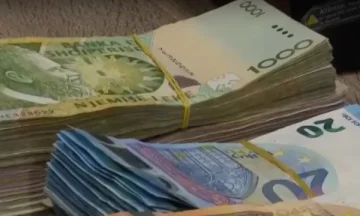
Serbia and Bosnia's import of these products are down to minimal value, we have a 99 percent reduction. If we can sum it up as a value, about 1m euros have been given since the establishment of import tax from Serbia, but if this is compared to the pre-tax period we've had 1.2 million to 1.4 million in one day. We only have one million... Kosovo exports have increased, 2019 compared to 2018, with a slight increase of around 8 per cent”, he has indicated.
As for the manufacturer's concern, it decides that despite five months of taxing still on the market, there are numerous products originating from Serbia and Bosnia and Herzegovina, Stavileci says citizens have been boycotted, and for that reason products are still being present.
“We have seen Serbian product stocks end by half of February, but what happened in this period is that even consumers have not continued to buy these products. That's why we're going without life expectancy of these products, because legal imports don't and it's impossible that the amount of products in 40 maunas per day which have been imported from Serbia to be replaced by smuggling”, he stated.
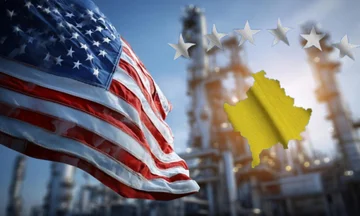
Ramush Haradinaj's government, on November 21st, has taxed 100 per cent of the products imported from Serbia and Bosnia and Herzegovina, and this tax according to Prime Minister Haradinaj will not be lifted until Kosovo's recognition from Serbia occurs. He has even refused to remove the tax even after the numerous pressures he received from local and international representatives.