8 minutes ago
The Guardian: How did Milosevic challenge Kosovo's autonomy?

Periskopi(7 years ago)
(7 years ago)In March 1989, then Serbian President Slobodan Milosevic launched constitutional changes to create “Greater Serbia” and his victim was Kosovo. As part of the Yugoslav federation in 1974, Kosovo's province was granted full autonomy, granting almost the same rights as the six republics of Yugoslavia. Fifteen years [...]
In March 1989, then Serbian President Slobodan Milosevic launched constitutional changes to create “Greater Serbia” and his victim was Kosovo.
As part of the Yugoslav federation in 1974, Kosovo's province was granted full autonomy, granting almost the same rights as the six republics of Yugoslavia. Fifteen years later, Serbian chief criminal Milosevic proposed changes to Serbia's Constitution, which would take the autonomous power of Kosovo.
Britain's Guardian newspaper commemorates in a modern writing that it triggered violent protests, and on March 3, 1989, a state of emergency was declared, imposing direct rule by Belgrade over Kosovo.
On 23 March 1989, the Kosovo Assembly voted to accept the proposed amendments and five days later, Serbia's Assembly adopted constitutional changes, effectively removing the autonomy granted in 1974. Milosevic would further continue Serbian nationalism, which eventually led to the breakup of Yugoslavia and the subsequent wars of the 1990s.
Constitutional amendments were adopted by the Communist Party and Kosovo was now an occupied province, where Serbia's fear of armed Albanian war could become self-fulfilling, the paper recalls, which tells of the then deployment of federal police on the streets of Pristina, while all mass gatherings of Albanians against the loss of autonomy were banned.
While the strike by Trepca miners had erupted, the Serb-dominated federal Army units were moving. Kosovo Albanians demand that constitutional reform, which threatens to deprive them of autonomy, should be handed over to democratic discussion. And they call for an end to the treatment of second grade citizens, very aware of Serbian propaganda, which under Milosevic's leadership had adopted an increasingly racist tone, writes Guardian.
“could easily sympathise with the Albanian minority a majority within their province but threatened as the other autonomous province of Vojvodina with submission to Serbia. For the past two years, they have been living under narrow security, with severe penalties for wrongdoing and restrictions on land purchase and free movement. They have long suffered from the uneven north-south division of federal resources. But Milosevic has been using hard old Serbian myths in order to advance his bid for federal power”, writes Guardian.
Constitutional changes gave Serbia control of police, courts and civil protection, and a free hand to change Kosovo's status. They also gave Serbia control of Kosovo's relations with other countries, including neighbouring Albania, while around 100 tanks and 15,000 troops were deployed in Kosovo in an effort to intimidate protesters in obedience.
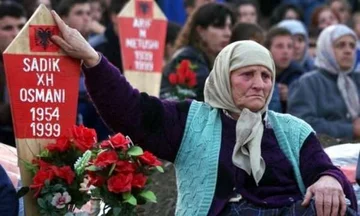
The Guardian recalls that against Albanians who were protesting as a sign of dissatisfaction with the abolition of Kosovo's autonomy, Yugoslav forces intervened, leaving 21 Albanians killed and many injured. But that did not prevent chief criminal Milosevic from adopting constitutional changes on March 28th in Serbia's Parliament
The Yugoslav leader decided to send additional forces to Kosovo to crush nationalist “fanatism”, as they called opposition by Albanians to the threat of autonomy, established by former Yugoslav chief Tito in 1974.
Serbia, meanwhile, called Kosovo its property, and chief criminal Milosevic issued special units and heavily armed paramilitary ones on the road in response to Albanians' discontent.
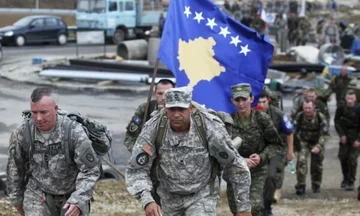
Serbs celebrated constitutional changes in the streets of Belgrade, calling it a victory for Serbia, which would later turn it into a boomerang after the glorious war of the KLA and NATO intervention, forcing the chief criminal Milosevic to chapter in June 1999 and Kosovo to be declared an independent state in 2008, thus imposing justice in the country for the Albanian autocratic people.