21 minutes ago
Serwer counts “platform strengths for dialogue” with Serbia

Periskopi(7 years ago)
(7 years ago)Analyst and Crisis Management Professor at “John Hopkins”, Daniel Serwer, has published an analysis of the “Platform Dialogue” document, which the negotiator team delivered to the Assembly last week, on the eve of the 11th anniversary of Kosovo's declaration of Independence. In this case, Serwer has indicated the strengths [...]
Analyst and Crisis Management Professor at “John Hopkins”, Daniel Serwer, has published an analysis of the “Platform Dialogue” document, which the negotiator team delivered to the Assembly last week, on the eve of the 11th anniversary of Kosovo's declaration of Independence.
In this case, Serwer has told of the strengths of this document, which he claims are:
A clear statement of Kosovo's negotiating goals -- recognition of Kosovo by Kosovo as a sovereign and independent state.
The next important point is also “Rebuilding the validity of Kosovo's constitution on the entire territory of the state and the clear refusal of any invasion of territory”
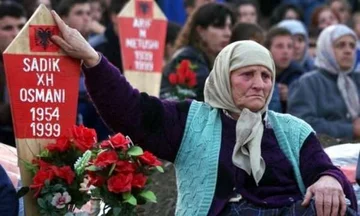
Reciprocity: to deal with Albanians in Serbia, as well as Serbs in Kosovo, for war crimes committed by Serbs to be treated as war crimes committed by Albanians, including in a special exhibition.
Serer's analysis says “Rejecting the creation of every layer of governance between the central one and the municipalities (read every association of Serbian municipalities with authority or governing responsibility)”.
Other strengths favouring the Kosovo side in negotiations are also:
The adoption of the final agreement in a referendum and by parliament in Kosovo and Serbia.
- Access to transparency, involvement and access to the state negotiating team.
- Solving outstanding wartime issues (for missing persons, return of displaced persons, return of property, compensation, compensation, sovereign debt sharing and so on).
End of UN Security Council Resolution 1244 and adoption of the final agreement on the Council and the General Assembly.
-Confirming progress in EU accession in implementing the final agreement.
In addition to the positive points in this analysis, the professor of conflict and crisis management highlights the missing points on the platform:
The emphasis on how and when UN membership will occur. It may be implied in reference to the UN's adoption of the agreement, but it will have to be clear before negotiations are concluded. Control powers are China and Russia: how will they behave to allow a breakaway province to enter the UN? China won't like it because of Tibet. Russia may like it, but it would like a quo in Crime and perhaps South Ossetia, Abkhazia and Transnistria”.
Analysis also shows the risks of developing dialogue if these points are not in the document.
Any indication what Serbia can get in the deal. It is not Pristina's responsibility to worry about it on the first scale, but will have to worry about it at the right time. What would be useful is for Serbia to publish a similar platform. It has never been clear what Belgrade wants from talks with Pristina, except for Washington and Brussels' conviction that Serbia is willing to speak. This itself is of value, especially since it has been done on equal grounds that significantly recognises that Kosovo has a legitimate and independent governing structure (also known in the April 2013 Brussels Agreement)”.
Daniel Serer did not fail to mention here the Serbian state's ambitions regarding dialogue that, according to him, and there is no clear strategy on how recognition of independence will be achieved.
Of course, Belgrade also seems to want territories, especially the Serb majority municipalities north of the Iber River. The platform, however, is not clear in the search for Kosovo's “recognition of independence and citizenship within existing limits”.
However, many issues have remained unresolved and urgency is required to be resolved, because it does not suit Serbia:
“The composition and capabilities of the Kosovo Army, the functions (resident to governance) of the Serbia Communist Association still created and the taking of the part of Kosovo from Yugoslavia's debt (mentioned in Platforma). But I doubt these will be enough to lead to an early agreement. More likely, Serbia will not engage seriously until it reaches an agreement with Kosovo significantly slows its progress towards EU accession. Then it will be too late -- all the leverage at the end of the EU accession match are individual member states, which must ratify accession, not candidate country”, concludes this analysis, writes Periscope, broadcast Periscopi.