6 minutes ago
Kosovo missing participation in regional initiatives

Periskopi(7 years ago)
(7 years ago)Recently, for various reasons, Kosovo has either been overlooked or not at all a part of regional initiatives and forums, business community representatives say. The latest case was the first ten days when some Balkan countries -- namely, Albania, Serbia and Northern Macedonia -- signed a joint declaration, [...]
Recently, for various reasons, Kosovo has either been overlooked or not at all a part of regional initiatives and forums, business community representatives say.
The latest case was the first ten days when some Balkan countries -- namely, Albania, Serbia and Northern Macedonia -- signed a joint declaration based on the implementation of the free movement of goods, capital, people and services.
The agreement, presented in the opinion as well as the “Mini Schengen”, is expected to begin implementing in 2021, and is signed in Novi Sad of Vojvodina, respectively, Serbia.
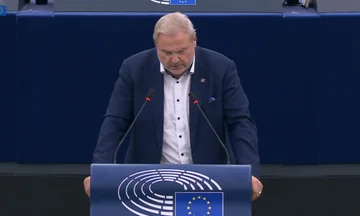
And in July, Kosovo did not participate in the Southeast European Co-operation Process summit SEECP, which was held in Jahorina, Bosnia and Herzegovina. At the time, Kosovo President Hashim Thaci had not been invited to the quality of the president, as well as other counterparts from countries in the region, what the response came to the refusal to participate in this summit on the part of the president of Kosovo, calling the invitation from Sarajevo as <x0*ukrek and denigretre”.
At the same summit, the region's participating countries, without Kosovo, reached several more agreements, while only a week after, Kosovo took the lead in this summit.
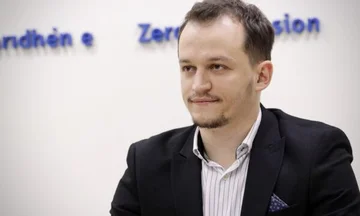
The executive director at the American Economic Ode in Pristina, Arian Zeka, tells Radio Free Europe that any regional initiative of any character should jointly include all states aimed at membership in the European Union. According to him, good bilateral reports among Western Balkan countries are preconditions for these states to become members of the European Union.
“in this regard, whatever regional initiative, whether with the character of political co-operation, security, or economic empowerment, should include all states of the Western Balkans. All states that have aspirations for integration into the European Union”.
In this regard, Kosovo's failure to include Kosovo in the latest initiative, in what is known as the Balkan Mousni Schengen '%s' is unreasonable. As is unreasonable as the non-involvement of other states”, Zeka said.
One of the most important trade agreements Kosovo has signed is the Free Trade Agreement with Central European countries (CEFTA), an agreement that has not rarely faced obstacles from its member states.
Zeka says the latest initiative by the three states (Serbia, Macedonia and North and Albania) has the same character, except at this trilateral meeting, the conditions are set for citizens of these states to cross the borders of three countries with IDs.
Kosovo's obstacles to involvement in regional initiatives are often linked even to its reports either with Serbia or with Bosnia and Herzegovina, which do not recognise it as an independent state. Meanwhile, from November 2018, with the deployment of the 100 per cent customs tax to all imports from Serbia and Bosnia and Herzegovina, Kosovo was also criticised by the European Union for violating EU principles and the CEFTA agreement for free trade.
With the European Union, Kosovo has only signed a contractual agreement. It's a Stabilisation and Association Agreement (MSA), which has entered into force in 2016, enabling Kosovo businesses to infiltrate the European Union market.
The European Union, on the other hand, has consistently urged Western Balkan countries to develop joint projects with European standards in the field of road infrastructure, railways, but also customs, with the aim of facilitating the circulation of people and goods. Such projects, according to the EU, would then find the support of Brussels, respectively, EU member states.
But economic-regional integration for Kosovo is not rarely seen as a difficult process. Government officials, now on the run from Kosovo, have free Europe Radio that the lack of freedom of movement, as well as obstacles presenting themselves for free flow of people and goods with several countries in the region, are the main problems Kosovo is facing in the economic integration processes in the Western Balkans.
An agreement among Western Balkan countries, which has found immediate implementation, is about Romang tariffs. This agreement reached between six states -- (Albania, Bosnia and Herzegovina, Northern Macedonia, Montenegro, Kosovo and Serbia) -- was signed in April of this year at the second Digital Summit, held in Belgrade, where the Minister of Economic Development, Valdrin Luka, was also in attendance.
The chairman of the Board of Electronic and Postal Communications Authority of Kosovo (ARKEP), Kreshnik Gashi, tells Radio Free Europe that they have made assessments on the ground to implement this agreement and that, until now, this agreement is being implemented.
After the start of implementation of the agreement, during July and August, ARKEP has made assessments and measurements on the ground with the aim of extracting that a report on implementing the start of lifting Roma fees, as the agreement in Kosovo and in the countries of the region envisions. And from those measurements has resulted that operators are implementing the decision to fully reduce and remove the Romang among the countries of the region”, Gashi said.
Other initiatives that are under way and, according to representatives of the countries of the region, are aimed at empowering co-operation among Western Balkan countries, are also those from the area of rule of law, security, issues related to migration, transport, energy sector and others.