2 minutes ago
What awaits Kosovo's next government?

Periskopi(7 years ago)
(7 years ago)Dialogue and the process of normalising relations with Serbia are expected to be one of the main challenges for the future Kosovo government, which will be formed as a result of the 6 October parliamentary elections. Meanwhile in the domestic plan, the government, according to experts, expects many challenges from economic development to those of [...]
Meanwhile in the internal plan, the government, according to experts, expects many challenges from economic development to that of rule of law and law.
Representatives of civil and business society address many priorities that should be at the next government's table.
The normalisation of relations between Kosovo and Serbia, fighting corruption, empowering the rule and law, as well as visa liberalisation are just some of the issues they think should be addressed by the new government.
The United States of America and the European Union have consistently called on Kosovo and Serbia to resume dialogue, since it has been stuck since Kosovo has taxed 100 per cent of the products imported from Serbia in November last year.
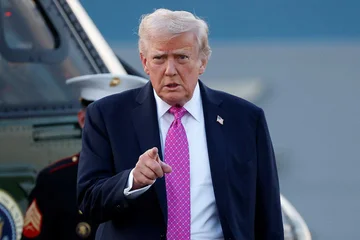
United States President Donald Trump, days ago selected US Ambassador to Germany Richard Green, sent to his administration in dialogue between Kosovo and Serbia.
Demush Shasha of the Kosovo Institute for European Policy (EPIK), speaking of Radio Free Europe, says dialogue on normalising relations between Pristina and Belgrade is the main issue for the future government.
According to him, dialogue for normalising relations is the prerequisite of any integration process.
The next government is the issue of visa liberalisation and in that direction a positive climate in terms of normalisation of dialogue for normalisation of relations between Kosovo and Serbia, even though normalisation of relations is not the official criterion for visa liberalisation, but is the prerequisite of any integration process”, says Shasha.
The next government's second task, Shasha adds, should be to take concrete steps in fighting high-level corruption and removing policy influence on the justice system.
I say this in context that for the past three years Kosovo has not had a single high profile case in terms of the fight against corruption. As much as affecting the overall integration process in Kosovo's future institutions should put emphasis on implementing the Stabilisation and Association Agreement and the European agenda of reforms, where a number of areas expect significant progress”, Shasha says.
Apart from the political aspect, a large number of tasks awaiting the new government are economically.
The executive director of the American Economic Ode in Kosovo, Arian Zeka, tells Radio Free Europe that the future government's first priority should be to improve rule of order and law.
Within the first 100 days of the government, Zeka adds, a national economic development strategy would have to be drafted, which would be a guide for reforms to be made in the overall economic development.
The priorities that should foster this strategy should be those related to empowering rule of law and rule, to see greater efficiency not only in dealing with commercial nature disputes that have been business concerns but also in actual law enforcement. When talking about empowering rule of law and law, concrete results should be seen in fighting all forms of corruption”, Zeka says.
Important attention from the new government, Zeka adds, should be devoted to developing human capital, starting with reforming the education system at all its levels, with the aim of promoting entrepreneurship among future generations, but also improving the report between demand and labour market supply.
Also, addressing the gap in transport and energy infrastructure, according to Zeka, should be the priorities of the future government.
When talking about transport infrastructure, it should be stressed that there have been investments in road infrastructure, but it's stuck behind modernising the railway network, and that's what needs to happen in the new government, so continuing investments in the railway network that would facilitate the operation of many businesses and exports. Energy infrastructure is important that, as such, enable the diversification and energy resources not only to depend on electricity consumption, but to see other sources, though not on Kosovo's key to the international gas supply networks”, Zeka says.
Early parliamentary elections in Kosovo will be held on 6 October. From the voting process, the new composition of the Kosovo Assembly is expected to be resolved, from which, after which, the winning party or coalition will receive the mandate to form Kosovo's next government.