4 months ago
American analyst: The White House believes Green will persuade Germany to exchange territories

Periskopi(7 years ago)
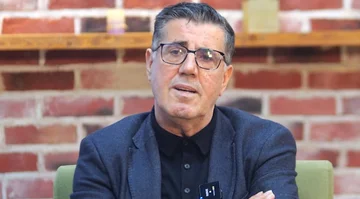
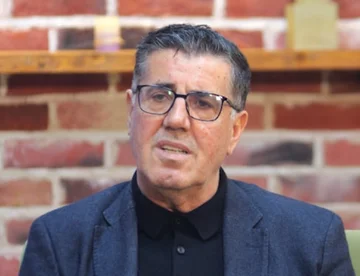
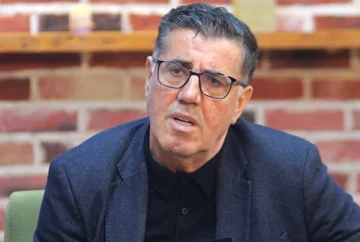
(7 years ago)American analyst Edward Joseph says that with the appointment of Richard Greenell special envoy for the Kosovo-Serbia dialogue, the White House believes it can persuade Germany to support the earlier controversial idea of exchange of territories between Kosovo and Serbia. Green, along with the other American envoy for the Balkans, Matthew Palmer, stay [...]
Green, along with the other American envoy for the Balkans, Matthew Palmer, stay in Kosovo on Wednesday. In the interview given to Radio Free Europe, Joseph also speaks of the outcome of the 6 October elections, which he describes as striking President Hashim Thaci, of the immediate challenges of the new government and others.
Radio Free Europe: Mr. Joseph, how do you see the growing involvement of the United States in the Kosovo-Serbia dialogue?
Edward Joseph: It's both positive and disturbing. Positive, because each American administration that shows intense interest in the Balkans is a good thing. It has been years since the United States has distanced itself from the Balkans and removed (that region) from its priorities. But this issue (dialogu) clearly requires high-level commitment so that both Kosovo and Serbia can make progress. At the same time, it's strange and disturbing. Why Ambassador (Richard) Green has been appointed (in the position of envoy for Kosovo- Serbia) when Matthew Palmer was recently elected to the position of special envoy (for the Balkans)? Palmer, of course, has long experience in the region, while Ambassador Green has worked in the United Nations, has knowledge of the region, but not on the same level. It's a good thing that the White House, in the time of many other crises, is interested in solving this issue, but, on the other hand, it's strange and remains to see what it means to American politics in the region.
Radio Free Europe: So it's not a common thing to have two envoys?
Edward Joseph: It is unusual, especially when you have a newly appointed emissary and then name another. It really creates confusion. But, on the other hand, it's not all bad. Grenelli is ambassador to Germany and, although there has been disagreements there, he is aware of Germany's concern about the policy that former US National Security Council John Bolton has established, which appears to be in favour of exchange of territories (between Kosovo and Serbia). It is possible that the White House continues to be engaged in the Balkans and believes Green is the person who can convince Germany. But in the views of key leaders in the region, the exchange of territories would be dangerous and destabilizing.
Radio Free Europe: What's the mood in the United States?
Edward Joseph: The US commitment is not related to issues in the Balkans. If we look internationally, the US is now focused on withdrawing troops from Syria, on continuing disputes with Iran and, among other things, in the trade conflict with China. No US mood for the Balkans. Those who follow this case are concerned and in confusion with the appointment of Ambassador Green. Those who think that his appointment could reflect Bolton's approach to partitioning Kosovo would, of course, create many serious problems in northern Macedonia, in Montenegro, in Bosnia and within Kosovo itself... for us who think so, (his appointment) does not provide much security.
Radio Free Europe: But how do you see the US solution to Kosovo-Serbia disputes?
Edward Joseph: This is a political question that we do not know the answer to, but we need to read the signals. When John Bolton has been adviser to national security, I think there has been support for the idea favoured by (EU foreign policy chief) Federica Moghrini for exchange of territories, for a kind of partition of Kosovo, apparently in the north, on the Iber River, where the four northern municipalities would pass Serbia and an undefinated part of southern Serbia, which is the Presevo Valley, will pass Kosovo. Kosovo President Hashim Thaci, and Serbia's Aleksandar Vuciq, have also discussed this for several months. Moghrin has supported this, but we all know that (German stager) Angela Merkel has strongly opposed him, as have other leaders in the region who would be directly influenced. For example, Northern Macedonia President Stevo Pendarovski has repeatedly repeated objections to this idea. On one occasion, he has described it as the most foolish idea he has heard. Montenegro has expressed concern about this idea, Bosnia as well, and not to talk about many uncertainties about how it would be implemented in Kosovo. There would likely be massive movements of the Serb population living south of Ibri. It also questions Serbian religious locations in Decani, Gracanica... All of this is left without the answers of those like Moghrin and American officials of Bolton's day. They have not explained how this would be addressed.
Radio Free Europe: His envoy for the Kosovo- Serbia is also expected to appoint the European Union. Isn't it gonna be, like, a little trouble?
Edward Joseph: They'll have to cooperate. There is no doubt about it, because the U.S. alone cannot direct the parties towards an agreement. I repeat, this may be a reason for the appointment of Ambassador Greenell, because Merkel's objections have been harmful to the access of Mogher and Bolton and Thaci and Vuciqi to partition Kosovo.
“The elections weakened Thaci's position in the talks”
Radio Free Europe: What does the outcome of the October 6th elections in Kosovo mean for dialogue with Serbia?
Edward Joseph: On one side is a clear blow to (Kosovo) President Hashim Thaci. No doubt about it. The idea that he may have a mandate from Kosovo voters to follow his path together with Serbia's (Aleksandar) President Vucinq for partitioning Kosovo clearly does not exist. On the other hand, it could happen that Albin Kurti of Vetevendosje becomes prime minister. Even his approach is mixed because he, for years, has insisted on uniting Kosovo with Albania. He does not want Kosovo to be an independent state, but to join Albania. This would be possible in exchange of territories. Kurti has also said he opposes handing over any territory to Serbs. He said that several times, but we have to see.
Radio Free Europe: Where would that lead?
Edward Joseph: It doesn't matter much what I think or others who have worked for years in the Balkans. The important thing is that those who would be affected by these decisions (possibly for exchange of territories) think. For example, Northern Macedonia President Stevo Pendarovski has repeatedly warned of the consequences of such decisions. They would also question the very borders of northern Macedonia. Then, what about Montenegro, its Albanian minority? If the international community would accept the precedent of ethnic territorial division, then why would Milorad Dodik not continue with the campaign perhaps even more dangerously for the division of the Republika Srpska?
Radio Free Europe: So how do you see the further flow of dialogue with Serbia? So far this has been an issue more than two presidents...
Edward Joseph: Thaci's position has weakened now. He can no longer lead negotiations as a reliable individual without consultations with the prime minister. If he tries to do so, there will be no credibility in Kosovo. Any agreement I can reach will be divisive and will be serious questions if Kosovars accept it. If Albin Kurti is prime minister, I have no doubt that he will be fully involved in these talks, along with President Thaci, who, I repeat, has been weakened by the elections because his party has been very weak.
Radio Free Europe: Mr. Joseph, do you expect the Vetevendosje Movement and the Democratic League of Kosovo to coalition for co-governance?
Edward Joseph: They're very different. But we have seen it in many countries with parliamentary democracy, even though we do not have it here in the United States. In many other countries, politics becomes strange partners. So, anything is possible. Arithmetics exist. The main issue of course is who will be prime minister. But, if they agree to the coalition, it means they understand the importance of this issue well, as well as tackling corruption and economic issues.
Radio Free Europe: As soon as the issue of corruption, the economy... there have been many promises of fighting corruption and unemployment. Can they achieve the winning parties?
Edward Joseph: Albin Kurti must do so because if he fails to do so, he has no credibility. These are issues on which he built Vetevendosje's name. This is not just another Kosovo party, it is a party that has made fighting corruption essential issues. Not the LDK, but Vetevendosje, under the leadership of Albin Kurti. Therefore, Vetevendosje has to realise this -- otherwise, it will face serious consequences in the upcoming elections.
Radio Free Europe: What are the immediate challenges of the winning parties?
Edward Joseph: The immediate challenge is forming the government, of course, and quick action to gain population confidence. The government (new) in Kosovo must quickly testify that it is really different from its predecessors and that it is truly committed to rooting out corruption and the policy of exploiting government governments to appoint friends and relatives to high positions. It has to act quickly, and it testifies to voters that this is a different government, which listens to the people and responds to their concerns about corruption. At the same time, it must work with the United States and the European Union, together with President Thaci, to find a lasting solution to Belgrade's opposition to Kosovo independence/ REL.