4 months ago
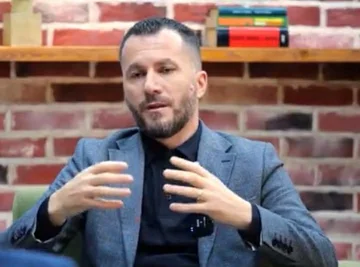
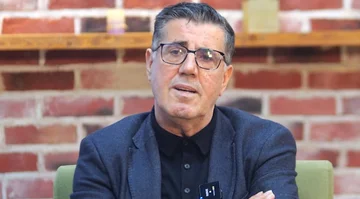
Walker advises Kosovo politicians not to listen to internationals anymore, but people

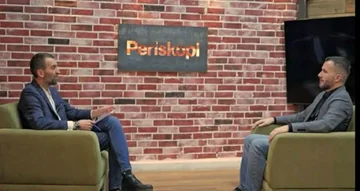
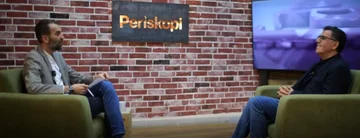
Periskopi(7 years ago)
(7 years ago)On the morning of January 15th 1999, Serbian forces undertook an attack against the village of Recak, in the municipality of Shtime, in the central Kosovo regions, entered from house to house, separated men from themselves and executed about 45 of them. The next day, former head of O'O's Versatile Mission The SEU in Kosovo, Ambassador William Walker, went [...]
On the eve of the 20th anniversary of the Recak massacre, Ambassador William Walker says he remains loyal to his assessment of the event, which shed light on what was happening in Kosovo and which eventually led to NATO's intervention against Serbian forces. 20 years later, Ambassador Walker sees the situation in Kosovo as turbulent and new ideas in negotiations on normalising relations with Serbia as unfavourable for Pristina.
Voice of America: Kosovo next week marks the 20th anniversary of the Recak massacre, which you on January 16th 1999 named a crime against humanity. How do you remember that day 20 years later?
William Walker: I remember it exactly as I saw it only hours after I witnessed the outcome of the massacre. I often think of that scene and have changed nothing in interpreting what I saw or what had caused it.
Voice of America: What does remembering such events matter?
William Walker: In my opinion, I may overreact but do not think so, what happened in Recak and the subsequent events led to the formation of the Republic of Kosovo. That incident, my reaction to him, and then the government's response to my response, produced an international tsunami of what was happening in Kosovo, which then led to the meeting of foreign ministers -- later meetings in London -- that followed with the bombing campaign, which eventually freed Kosovo from Serbia's control. I think it's very important to remember as often as possible whenever I face new information I check to see if my initial conclusion was correct and, until now, 20 years later, I'm still convinced that the assessment I gave was true.
Voice of AmericaYour assessment marked a turning point in the approach of Western diplomacy, which was involved in the processes preceding NATO bombings. Belgrade has declared itself undesirable and insists today that Recak has turned up otherwise to create an excuse for the bombings against Serbia. How do you respond to such attitudes?
William WalkerIt's absolutely ridiculous. I know why I went to Recak that morning on January 16th. I arrived just hours after the massacre. I saw in the middle of that cold winter day the bodies and what had happened to those men and boys. The Belgrade government emerged on the first day with various versions that adapted them to what the world taught about that event and has constantly changed its opinion. They came to the point of claiming that I had gone and had changed the clothes of more than 40 victims and stabbed them with bullets. These were ridiculous explanations. It's one of many from Belgrade. Once again, I have not seen any information from reliable sources that went against my initial assessment of what happened that night.
Voice of America: Twenty years later, when you consider the situation that reigned in Kosovo, was it possible to avoid such a massacre?
William Walker: No. She wasn't the only massacre, there were others. The difference with Recak's was that international observers arrived there within hours and so the fabricated stories of a battle between the KLA and Serb forces were challenged. They were all peasant boys and men in their agricultural clothing. I don't think the massacre could have been avoided. It simply shed light on what the government in Belgrade was doing to Albanians in Kosovo who were not only in Recak but in many other villages.
Voice of AmericaAmbassador, a year ago you said in Recak that “is desperate, as these people did not give their lives to see Kosovo where it is now”. Where do you think Kosovo is twenty years after that massacre?
William Walker: I'd say in a troubled situation. The day that independence was declared I was in Pristina that day and the next in Pec, and I remember that river of people celebrating freedom and independence. The expectations were high, maybe too high. But even if they were at a lower level, a very large number of people in Kosovo today are very disappointed with the current performance. Many people say it takes time to build a new state born of nothing, that Kosovo politicians had no experience being politicians, and that much more presidents or deputy ministers, or deputies. But I think the situation is disappointing, there's a lot of corruption, a lot of crime, a lot of uncertainty about the future. Brain flows that have affected all Balkan countries, but especially Kosovo, youth unemployment is very high and they are losing many capable people. I was involved with the American University in Kosovo in trying to train young people by the way the world works today. We had good results. There are many good and intelligent students, but once they graduate they go to Germany or here to the United States they look for luck elsewhere because in Kosovo opportunities are very few. So many people expected more progress 20 years after what happened.
Voice of America: Kosovo marks 11 years of independence this year, but is still in a process of talks on normalising relations with Serbia. During the following year, ideas have even been given about an agreement that could affect its borders. How do you see this process and ideas like that?
William Walker: I see it this way: One side is willing to negotiate and talk about the future, while the other is very unchanged in its stance that Kosovo is still part of Serbia. Given the way Slobodan Milosevic's government in Kosovo treated the Albanian majority, I cannot imagine the people of Kosovo accepting any kind of restrictions on freedom on Belgrade's part. At the same time, it is a problem both countries are neighboring. Serbia continues to provoke problems in northern Kosovo with the Serb minority. I have not yet heard a possible solution from the negotiating table to be applicable to solve problems. They hear about exchange of territories or other ideas. I know the European Union wants a solution, a negotiated agreement, I know the White House wants a solution. It was recently declared that we will support any agreement the parties agree on. I think this is unfair to Kosovo. Serbia is in a more powerful position. They have Russia's support and other countries on their side. Kosovo is in poor standing. I just hope that whoever negotiates for Kosovo will remain insistent that everything that is less than recognition of independence from Belgrade would be unacceptable than the fact that Kosovo exists as an independent state in Europe. I'm somewhat concerned that the current political class, some of its members, is concerned about another cloud weighing on their shoulders, which is the Special Prosecutor's Office. Some of them may feel that if they do not do what the European Union or the United States tells them, they may easily be accused. The Special Prosecutor's Office has long been up and I have not heard of charges filed against anyone, but I know that some in the current leadership are concerned that they could personally be charged with war crimes.
Voice of America: You see Kosovo in a weaker situation than Serbia, which according to you has Russia's support. How do you see the U.S. involvement in this process?
William Walker: I think the United States has tried to withdraw from its previous strong commitment to Kosovo as an independent state for many reasons. Attention is turning to other problems in other parts of the world. Kosovo is a small country. The United States does not rely on Kosovo for anything, so interests are not the same. I would not say that the United States has lost interest but are losing the enthusiasm they had to help Kosovo develop as a country that many wanted would be. In the current American administration, I don't think there are people who have been involved in Kosovo's liberation or independence or who are aware that what happened prior to the Recak massacre. It is difficult to explain how bad the situation was for the people of Kosovo under Slobodan Milosevic. And I haven't seen any sign from the Belgrade government to change its attitude towards Kosovo, while the United States has passed into the stance that any kind of agreement is acceptable to us. This disappoints me! !
Voice of America: What would be your advice for Kosovo's ongoing leadership of this process?
William Walker: I would advise not to hear as much as they have so far heard from the international community and to hear more people in Kosovo. If they were to hear more people vote, choose and enable titles, good jobs, travel and all others that come with public office. They don't listen to what people say. As I said, there is great disappointment and anger that things have not gone well. I think the political class in Kosovo since the president, to the prime minister, to the ministers many of them are seen as war heroes, who fought the KLA. Yes, they were rewarded, they took political office. But the time has come for them to depart. It is time for a new generation to come who knows what the world is now. I don't see different faces in public offices from what I saw 20 years ago. The world has changed, the Kosovo situation has changed, and they need a direction that has people's faith.